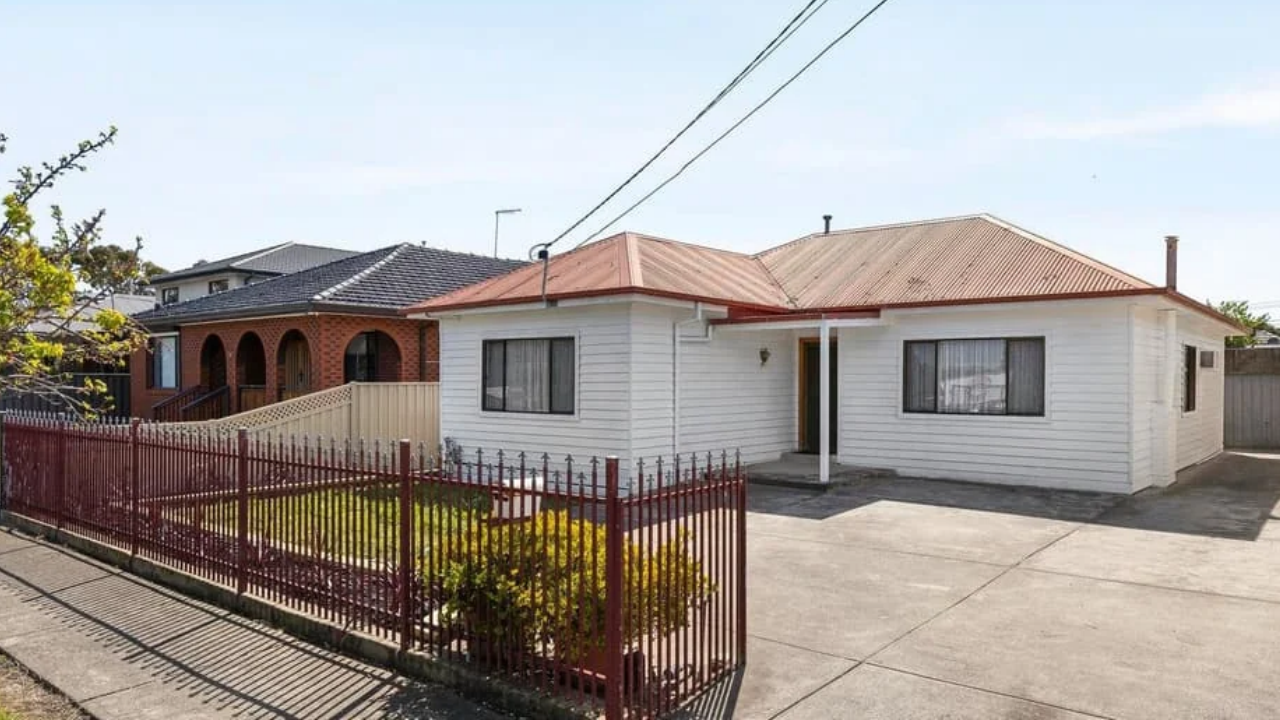
They cried on the front lawn. The selling agent got a free publicity tour. And the buyers walked away with a prime piece of Melbourne dirt for less than it was actually worth.
Every few months, the Australian property press runs the exact same puff piece. A longtime family sells their beloved brick veneer home. Developers circle with bulldozers in mind. Then, at the eleventh hour, a young couple swoops in, promises to preserve the original timber floorboards and the lemon tree out back, and wins the auction—or secures a private treaty deal—while the vendors weep with gratitude.
It makes for great local news. It makes for terrible financial advice.
Behind the warm glow of these viral auction stories lies a brutal economic reality that selling agents rarely explain to grieving, nostalgic vendors. When a seller prioritizes a buyer's verbal promise over maximum market liquidity, they are not protecting their legacy. They are writing a blank check to a stranger based on an unenforceable fantasy.
The Myth of the Buyer's Promise
Let us strip away the sentiment and look at Australian property law.
Once settlement occurs and the title transfers at Land Use Victoria, the vendor’s moral authority over that parcel of land drops to exactly zero. A handshake on auction day, a handwritten letter tucked into a contract of sale, or a tearful vow to "raise our kids just like you did" carries zero legal weight.
Unless a property is encumbered by a formal Heritage Overlay from the local council or a specific restrictive covenant registered on the title prior to sale, the new owner can legally apply for a demolition permit the morning after settlement.
I have sat across the table from dozens of vendors who left six figures on the table to sell to "nice families," only to drive past their old street eighteen months later and see a three-townhouse dual-occupancy site rising from the rubble. The buyers did not necessarily lie on auction day. Circumstances change. Interest rates bite. Construction costs blow out, or a developer knocks on their door two years later with an offer they cannot refuse.
Sentimental promises evaporate the moment they collide with personal balance sheets.
How Emotional Framing Suppresses Market Value
In any competitive Melbourne auction—whether in Brunswick, Brighton, or Balwyn—price discovery relies on tension between competing buyer profiles. Typically, that tension sits squarely between two groups:
- Owner-occupiers buying for lifestyle, school zones, and emotional connection.
- Developers and land-bankers buying strictly on feasibility models, residual land value, and yield.
When a vendor signals—either explicitly through their agent or implicitly through marketing narratives—that they want the home "saved," they poison the well of competition.
Developers operate on thin margins and strict due diligence timelines. If a developer suspects a vendor will favor a lower unconditional offer from a family over a higher offer from a builder, the developer walks away before bidding even starts. Why spend thousands on town planning checks and soil tests if the game is rigged against your business model?
By removing the developer from the bidding pool, the vendor hands the owner-occupier a massive discount. The emotional buyer does not have to bid against the highest and best use of the land; they only have to bid against other sentimental buyers with similar borrowing capacities.
The tears on the front lawn are real, sure. Often, the buyer is crying tears of relief because they just dodged a bidding war that would have cost them an extra $150,000.
The Economics of Highest and Best Use
To understand why "saving" an aging suburban home is often an economic trap, you have to understand how urban land actually behaves.
Real estate is a depreciating building sitting on an appreciating asset. The bricks, mortar, wiring, and plumbing of a 1960s Melbourne home are liabilities that require constant capital expenditure to maintain. The dirt underneath is what generates wealth.
As Melbourne’s population expands and infrastructure concentrates around middle-ring suburbs, the land value eventually overtakes the utility of the original dwelling. Economists call this the transition to highest and best use.
When a neighborhood shifts from single-dwelling quarter-acre blocks to medium-density housing, resisting that shift does not preserve history. It simply transfers the development upside from the retiring family—who spent forty years paying rates and maintaining the property—to the savvy buyer who pretends to love the retro kitchen wallpaper until the ink on the contract dries.
Imagine a scenario where a retiring couple owns an unrenovated three-bedroom home on 700 square meters in a General Residential Zone. A builder calculates that the site can hold three luxury townhouses, making the dirt worth $1.8 million to them. Meanwhile, a young family stretching their mortgage capacity can only reach $1.62 million, and they will need to spend another $200,000 just to make the old house livable.
If the couple accepts the $1.62 million offer to "save" the home, they have effectively donated $180,000 of their retirement nest egg to subsidize someone else’s renovation—or worse, someone else’s future subdivision.
The Real Estate Agent's Incentive Trap
Why do real estate agents champion these stories so aggressively? Follow the commission structure.
Suppose an agent works on a standard 2% commission. On a $1.8 million sale, the agency earns $36,000. On a $1.62 million sale, the agency earns $32,400.
To the vendor, that $180,000 gap is massive. It represents years of retirement income, aged care security, or an inheritance for their actual children.
To the selling agent, the difference is a mere $3,600—and if pushing a heartwarming "family-to-family" narrative gets the deal closed today without risking a passed-in auction, the agent takes the fast check every single time.
Even better for the agent, a viral human-interest story in the local property section generates tens of thousands of dollars in free PR. The agent looks compassionate. The agency brand looks community-minded. Future vendors see the headline and think, "That agent really cares about people, not just money."
It is a masterclass in marketing optics, paid for entirely out of the vendor's equity.
What Sellers Actually Need to Ask Before Listing
If you are preparing to sell a longtime family home, you are likely asking the wrong question. Most vendors ask, "How do I find a buyer who will love this house as much as we did?"
That question guarantees a compromised sale. The better question is: "How do I capture the maximum value of this asset so I can fund the next chapter of my life?"
Should you accept a lower offer from a family over a developer?
Only if you treat the price difference as a conscious, voluntary charitable donation. If a developer offers $2.1 million and a family offers $1.95 million, ask yourself: if you had $150,000 sitting in your bank account right now, would you walk down the street and hand it to that couple? If the answer is no, do not give it to them through a discounted sale price.
Can you legally force a buyer to keep the house standing?
Practically speaking, no. Attempting to attach bespoke restrictive covenants to a residential contract of sale just before an auction will terrify lenders, confuse buyers, and crush your clearance prospects. Banks hate lending on titles with weird, non-standard encumbrances because it limits their ability to liquidate the asset if the borrower defaults. If a buyer cannot get finance, your contract is dead.
What if the home genuinely has architectural or historical merit?
If the property is a true mid-century modernist gem or a pristine Victorian terrace, you do not need to rely on buyer promises. Architectural prestige carries its own market premium. You market the house specifically to design-conscious buyers through specialist agencies, allowing the architecture itself to drive the price higher than a developer could ever justify paying for land value alone.
The Disciplined Seller's Playbook
Separating forty years of memories from a commercial transaction is brutal work. Nobody walks away from the house where they marked their kids' heights on the pantry doorframe without feeling a lump in their throat.
Respect the memories, but manage the asset like a ruthless fiduciary.
- Audit the zoning before you speak to an agent. Pull the planning certificate. Know your overlays, your minimum lot sizes, and your neighborhood character guidelines. If you are sitting on a prime development site, own that reality.
- Keep your emotional preferences off the auction floor. Never instruct your agent to tell buyers you "want it to go to a nice family." Let every buyer—whether they arrive in a beaten-up Corolla or a blacked-out G-Wagon—believe they have an equal shot if they hold the highest paddle.
- Separate the bricks from the story. Take the photos. Host a farewell dinner with your family in the empty dining room the night before settlement. Unscrew the brass doorknob you loved and take it with you. Keep the emotional artifacts, and sell the real estate.
- Demand transparent offer comparisons. When reviewing contracts, strip out the cover letters. Look strictly at the purchase price, the deposit size, the settlement timeline, and the absence of finance or building inspection conditions.
The Honest Downside of Pure Price Maximization
Taking a strictly commercial approach to selling a family home is not painless.
If you sell strictly to the highest bidder, you have to make peace with the probability that the house will be demolished. Watching an excavator tear through the living room where you spent forty Christmases hurts. Neighbours who lived beside you for decades might quietly resent you for inviting a multi-unit development onto a quiet street. You forfeit the warm, fuzzy validation of being the hero in a local real estate feel-good story.
You will not get a glowing newspaper profile celebrating your generosity.
Instead, you will get every single dollar your family spent decades building. And when you are eighty-five years old, paying for private healthcare, helping your grandchildren with their own deposits, or simply sleeping soundly without financial stress, you will realize a hard truth that real estate journalists never print:
Memories live in people, not in plasterboard—and cash in the bank beats a stranger's promise every single day of the week.