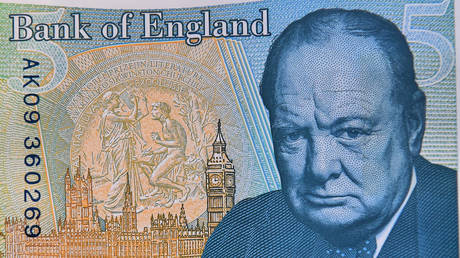
The transition of the United Kingdom’s physical currency from portraiture-based iconography to ecological motifs represents more than a stylistic update; it is a calculated pivot in national branding and a response to the diminishing utility of cash in a digital-first economy. When a central bank replaces historical figures with flora and fauna, it moves from a retrospective validation of the past to a normative signaling of future priorities. This shift functions on three distinct levels: the mitigation of political risk, the psychological reinforcement of the "Green Pound," and the logistical optimization of the note-making process.
The Taxonomy of Value Displacement
To understand why the Bank of England would deviate from a century-long tradition of featuring "Great Britons," one must analyze the increasing volatility of historical reputations. In a hyper-connected information environment, biographical figures carry inherent "reputational debt." Any individual selected for a banknote is subject to historical revisionism, which can lead to costly and embarrassing recalls or public relations crises.
By contrast, biological entities—such as the red squirrel, the English oak, or the Atlantic salmon—are politically neutral. This transition serves as a risk-mitigation strategy for the Treasury. Flora and fauna offer a "perpetual relevance" that human figures cannot match. The logic follows a clear causal chain:
- Selection Risk: Human figures require exhaustive vetting against modern ethical standards.
- Obsolescence Rate: As societal values shift, historical figures can become liabilities within the typical 15-to-20-year lifespan of a banknote series.
- Neutralization: Ecological symbols bypass cultural friction, ensuring the currency remains a unifying rather than a polarizing medium of exchange.
The Economic Psychology of Biophilic Design
The move toward environmental imagery aligns with the concept of "Biophilic Design" within behavioral economics. Physical currency is increasingly a "prestige product" rather than a primary tool for high-frequency transactions. As digital payments handle the bulk of UK commerce, the remaining physical notes serve as tactile ambassadors of national identity.
The "Three Pillars of Monetary Aesthetics" define how this shift impacts consumer perception:
- Trust through Permanence: Unlike political regimes or historical interpretations, the natural world is perceived as an immutable constant. This reinforces the psychological stability of the currency.
- The Green Premium: By embedding environmental symbols into the literal fabric of the economy, the state reinforces its commitment to net-zero targets and conservation. This creates a subconscious link between "Value" and "Nature."
- Counterfeit Deterrence through Complexity: The intricate patterns of organic structures (veins in a leaf, the texture of fur, the fractal nature of branches) provide superior substrates for micro-engraving and holographic overlays compared to the relatively predictable lines of human clothing or architecture.
The Cost Function of Currency Overhauls
A change in banknote design is an industrial undertaking of massive scale. The Bank of England must balance the Design Iteration Cost against the Security Lifecycle. The transition to polymer (biaxially oriented polypropylene) has already extended the physical durability of notes, but the "visual software"—the imagery—must keep pace with the hardware of security features.
The cost of producing a new series is not found in the printing itself, but in the systemic updates required across the private sector. The bottleneck in any design change is the Calibration Gap: the time and capital required for ATM operators, vending machine manufacturers, and self-checkout providers to update their optical recognition software.
By shifting to a theme of flora and fauna, the Bank can create a "modular design language." Instead of redesigning the entire architectural frame of the note for each new historical figure, they can swap biological assets within a standardized geometric template. This reduces the long-term design overhead for future iterations.
Strategic Friction and the Digital Displacement
The push for new physical icons occurs at a moment when the UK is debating the implementation of a Central Bank Digital Currency (CBDC), often referred to as "Britcoin." This creates a paradox: the Bank is investing in the visual prestige of a medium that is technically in decline.
Total cash payments in the UK fell from roughly 60% of transactions a decade ago to less than 15% today. The "National Icon" strategy is a play for Remnant Value. As the banknote becomes less of a tool for daily life and more of a "collectible" or an "asset of last resort," its aesthetic appeal must be heightened.
The Identity Transition Mechanism
| Former Standard | New Ecological Standard | Structural Impact |
|---|---|---|
| Portraiture (Monarch/Historical) | Flora (The Rose, The Thistle) | Moves from institutional to geographic identity. |
| Narrative (Scientific discovery/War) | Fauna (The Red Deer, The Kingfisher) | Shifts from human achievement to systemic endurance. |
| Hierarchical (Order of Merit) | Ecosystemic (The Red Squirrel) | Promotes a decentralized vision of national value. |
The Logistical Logic of Design Stability
The "Three-Phase Transition Model" outlines the steps required for a successful currency overhaul:
- Phase I: The Aesthetic Pivot. Introduction of the New Elizabethan-to-Carolean era themes. This allows for the simultaneous introduction of the new King’s portrait while laying the groundwork for more radical thematic shifts.
- Phase II: The Ecological Anchor. The replacement of secondary figures (e.g., Jane Austen, J.M.W. Turner, Alan Turing) with environmental symbols. This is the stage where the currency moves from a "Who’s Who" of British history to a "What’s What" of British geography.
- Phase III: The Uniform Ecosystem. A unified series where every denomination represents a different biome within the UK (Highlands, Wetlands, Coastal, Woodlands). This creates a cohesive "visual currency" that is instantly recognizable and harder to spoof.
The second limitation of the current portraiture model is its inherent Regional Imbalance. Selecting a historical figure from England can alienate populations in Scotland, Wales, or Northern Ireland. Conversely, the selection of regional flora (the flax flower for Northern Ireland, the daffodil for Wales) allows for a decentralized but unified visual lexicon.
The Financialization of the Environment
This redesign is not merely an artistic choice; it is a branding of the nation’s "Natural Capital." In modern macroeconomics, the value of a nation’s ecosystem is increasingly being quantified as a balance-sheet item. By placing these assets on the literal face of its money, the UK is signaling its transition toward a Natural Capital Economy.
The strategic play for the Bank of England is clear: decouple the currency from the risks of human history and attach it to the permanence of the natural world. This ensures the physical note remains a high-value, low-risk symbol of the state, even as its role in the transaction layer of the economy continues to shrink.
To execute this transition effectively, the Treasury must now accelerate the rollout of high-security biophilic designs that integrate with existing optical-recognition hardware. The focus should not be on the "who" of the next note, but on the "how"—specifically, how these organic patterns can be leveraged to increase the threshold for counterfeit complexity while reducing the friction of public acceptance.