The headlines are predictable. They are scripted. Every time a high-ranking Iranian official meets a kinetic end, the media apparatus churns out the same tired narrative: "Iran Threatens World Tourism Sites." It paints a picture of a cartoonish villain twirling a mustache over a map of the Louvre or the Colosseum.
It is lazy. It is wrong. And it fundamentally ignores how power actually functions in the Middle East.
If you are reading the mainstream coverage, you are being fed a diet of surface-level alarmism. You are being told that the "cradle of civilization" is suddenly interested in smashing the world's pottery because they are angry. I have spent years analyzing geopolitical risk cycles, and I can tell you that the "threat" to global tourism isn't a military strategy—it is a sophisticated piece of psychological theater designed for an audience of exactly one: the internal Iranian hardliner.
The West treats these threats as tactical precursors to a bombing. They aren't. They are linguistic chess moves.
The Myth of the Vandal State
The "lazy consensus" suggests that Iran is a nihilistic actor ready to incinerate its own standing in the international community by targeting UNESCO sites. This ignores the $224 billion the tourism industry contributes to the region’s broader ecosystem. Iran is many things—calculated, ruthless, and patient—but it is not stupid.
When an Iranian spokesperson mentions "sites," the Western press immediately visualizes the Great Pyramids or Big Ben. They miss the nuance. In the Persian rhetorical tradition, "sites" often refers to symbols of Western hegemony, not literal vacation spots. The threat is directed at the prestige of the West, not the physical stones of a cathedral.
We saw this play out in 2020 and we are seeing the same pattern now in 2026. The rhetoric escalates to the point of absurdity because escalation is the only currency left when your conventional military options are capped by a massive technological deficit. If you cannot sink a carrier strike group, you threaten the things the West claims to value most: its history and its leisure.
The Tourism Industrial Complex Needs a Villain
Why does the media buy into it every time? Because fear sells plane tickets—or rather, the insurance for them. The travel industry and the news cycle share a symbiotic relationship. A "threat to world tourism" generates more clicks than a "dispute over regional maritime boundaries."
People ask: "Is it safe to travel to the Middle East during an Iranian-US flare-up?"
The brutally honest answer? You are statistically more likely to be injured in a car or bike accident in London or Paris than you are to be caught in a "retaliation strike" on a cultural site. The premise of the question is flawed because it assumes Iran operates on a timeline of emotional pique. They don't. They operate on a timeline of decades.
Targeting a world-famous tourist site would be a strategic suicide note. It would trigger Article 5-style responses and alienate the very European partners Iran needs to bypass sanctions. Tehran knows this. Washington knows this. The only people who don't seem to know this are the pundits on your television.
Cultural Architecture as a Shield
There is a deep irony that the "insiders" won't tell you. Iran actually uses its own cultural heritage as a shield. By emphasizing the sanctity of historical sites, they create a moral high ground. When a Western leader—most notably in 2020—threatened to hit Iranian cultural sites, the international backlash was so severe it effectively granted those locations immunity.
Tehran learned a valuable lesson: Cultural sites are the only areas where the West's "Rules Based Order" actually has teeth. By threatening the West's sites, Iran is simply mirroring the rhetoric used against them. It is a cynical, effective "Tu Quoque" argument.
Imagine a scenario where a state actually followed through on these threats. The diplomatic isolation would be absolute. Even China and Russia, Iran’s primary economic lifelines, would be forced to sever ties. The preservation of the past is one of the few global "religions" that every superpower still attends. Iran is a member of that church; they have no intention of burning it down.
Stop Asking if the Louvre is Safe
If you want to understand where the real danger lies, stop looking at the monuments.
The real threat isn't to the Parthenon. It’s to the fiber optic cables under the Red Sea. It’s to the Strait of Hormuz. It’s to the digital infrastructure of the global banking system. But "Iran Threatens SWIFT Connectivity" doesn't have the same visceral, cinematic impact as "Iran Threatens the Taj Mahal."
The focus on tourism sites is a distraction—a shiny object waved in front of the public to keep them from looking at the grinding, grey reality of asymmetric warfare. This is cyber-attacks, proxy funding, and high-seas harassment.
I’ve sat in rooms where risk assessments are drafted. We don't spend five minutes on the "threat" to the Eiffel Tower. We spend five hours on the threat to the Jebel Ali port in Dubai. The former is a headline; the latter is a catastrophe.
The Actionable Reality
If you are a traveler or a business leader, here is the unconventional advice that actually works:
- Ignore the Rhetorical Peak: When the threats are at their loudest, the actual risk of a kinetic strike is often at its lowest. Loud threats are a substitute for action, not a prologue to it.
- Watch the Insurance Premiums: If Lloyd's of London isn't hiking rates for cultural heritage coverage, there is no threat. Follow the money, not the microphones.
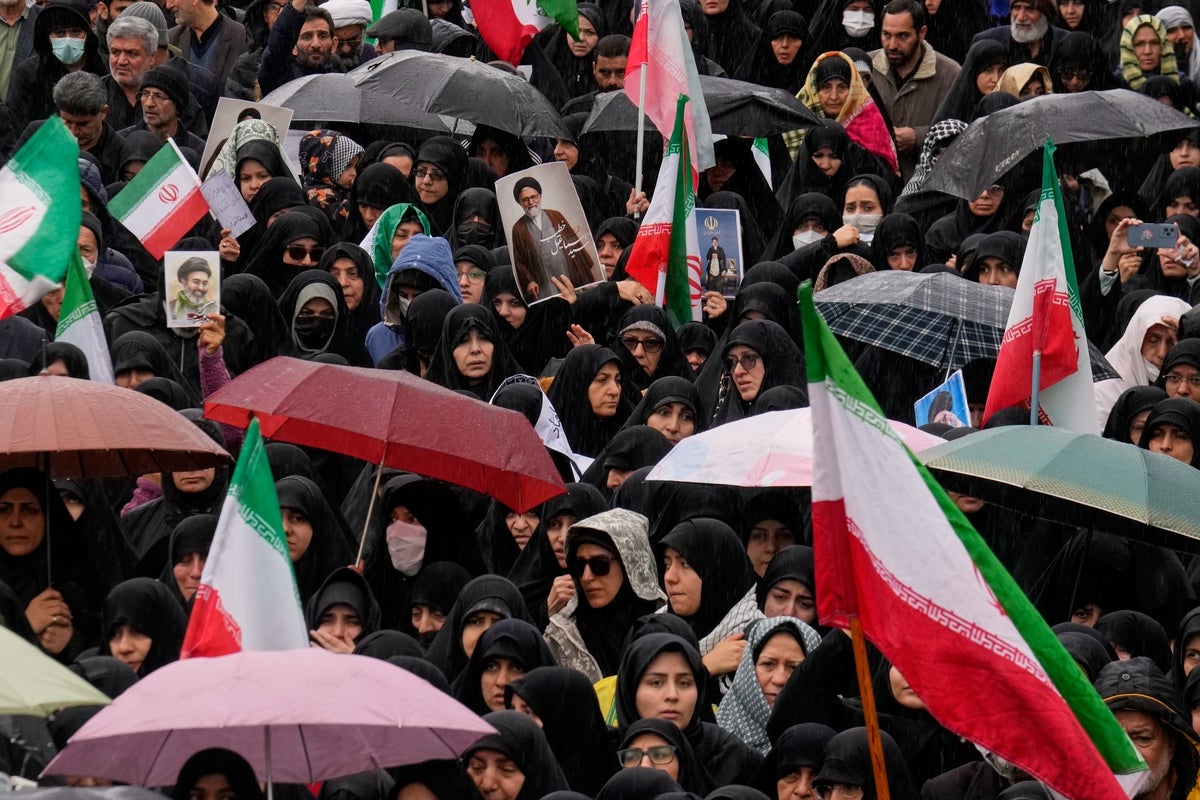
- Understand "Face": In the Middle East, "saving face" requires a verbal escalation that matches the perceived insult. If a leader is killed, the response must sound apocalyptic to satisfy the domestic base. It rarely translates to the flight path of a missile.
The West’s obsession with its own "sites" reveals a staggering narcissism. We assume that in the middle of a high-stakes geopolitical struggle for the survival of a regime, the Iranian leadership is thinking about our vacation photos. They aren't. They are thinking about the survival of the Islamic Republic. Smashing a statue in Florence does nothing to achieve that. Maintaining the threat of chaos, however, keeps the West distracted while the real moves happen in the shadows.
The next time you see a headline about Iran "targeting" world tourism, recognize it for what it is: a press release for a war that isn't happening, written by people who don't understand the people they are reporting on.
Stop worrying about the ruins of the past. Start worrying about the supply chains of the present.
The monuments are fine. The world they stand in is what’s actually on fire.