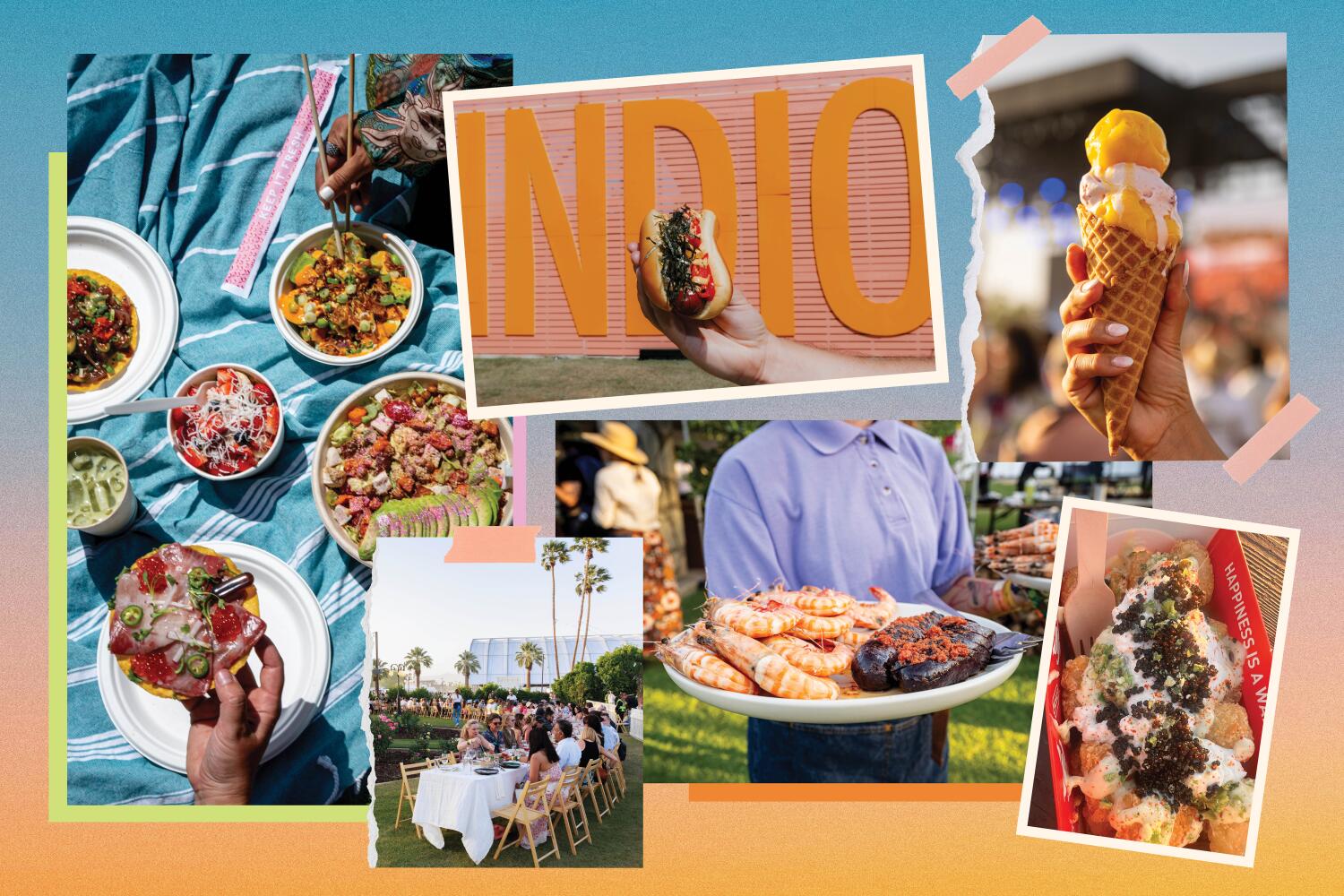
Twenty-five years ago, the inaugural Coachella Valley Music and Arts Festival offered attendees little more than dusty patches of grass and standard-issue stadium hot dogs. Today, the festival is a massive logistics engine where the food earns more social media impressions than many of the bands on the second stage. For 2026, the strategy has shifted from mere nourishment to a high-stakes branding exercise. The goal is no longer just to feed 125,000 people per day but to curate a sensory environment where a $24 spicy vodka pasta serves as a status symbol. This year’s lineup of over 100 vendors represents a calculated merger between street-food authenticity and corporate scalability.
The pivot toward high-end dining in the desert isn't accidental. It is a response to the changing economics of live music. As touring costs skyrocket, promoters look to "ancillary spend"—the money you drop after you’ve already paid $600 for a wristband—to pad the margins. Food is the most reliable lever they have. Meanwhile, you can find related stories here: The Cruel Illusion of the Parent Cooking Class.
The Economics of the Coachella Plate
To understand why a cheeseburger costs what it does in Indio, you have to look at the vendor contracts. Most premium food stalls at Coachella operate on a percentage-of-gross model. The festival takes a significant cut, often between 25% and 35%, before the vendor even pays for their staff, transport, or the astronomical cost of hauling ingredients into a triple-digit heat zone.
For a small Los Angeles pop-up, the festival is a brutal gauntlet. They aren't just battling the heat; they are battling the "convenience tax." When you see a famous chef behind a counter, you aren't just paying for their recipe. You are paying for the massive refrigerated trucks parked behind the fence and the temporary plumbing required to keep a kitchen running in the middle of a polo field. To understand the complete picture, check out the excellent article by The Spruce.
Why the Lineup Rotates
Goldenvoice, the promoter behind the curtain, treats the food lineup like a record label treats its roster. They need a mix of reliable "headliners"—think Spicy Pie or Paella—and "indie darlings" like the newest Michelin-recognized taco stand from Echo Park. The 2026 selection leans heavily into regional exclusivity. If you can’t get a reservation at a specific spot in Manhattan or Tokyo, the festival promises you can find them here, provided you are willing to wait 45 minutes in the sun.
The VIP Divide and the Death of the General Admission Experience
The real story of Coachella’s food evolution is the widening gap between the tiers. In the General Admission (GA) areas, the focus remains on speed and high-calorie hand-helds. You want something you can eat while walking to the Outdoor Theatre.
However, the VIP Rose Garden and the Safari campgrounds have transformed into a different world entirely. This is where the "Outstanding in the Field" dinners take place—long, communal tables where the price per plate rivals a down payment on a used car. Here, the "celebrity chef" isn't just a name on a sign; they are part of the performance.
The Rise of the Hidden Menu
In 2026, we are seeing the emergence of "speakeasy" dining within the festival grounds. These are unlisted, semi-private locations that require a specific app notification or a certain tier of NFT-based membership to enter. It’s a brilliant, if slightly cynical, way to manufacture scarcity in a place that is already built on the idea of being "in."
Logistics in the Dust
Maintaining food safety and quality when the mercury hits 105 degrees is a feat of engineering that rarely gets the credit it deserves. Most festival-goers don't think about the cold chain. Every piece of raw fish in a high-end poke bowl has to be tracked from a temperature-controlled warehouse in Ontario, California, through a series of checkpoints, into a staging area, and finally into a service fridge that is being blasted by industrial fans.
Waste Management Realities
The festival makes a public show of its sustainability, and to be fair, the composting programs are extensive. But the sheer volume of single-use items is staggering. Even with "biodegradable" plastics, the carbon footprint of trucking in millions of gallons of water and thousands of tons of ingredients is the elephant in the room. The industry term for this is "green-stacking"—layering eco-friendly messaging over an inherently carbon-heavy operation.
The Survival Guide for the Strategic Eater
If you are heading into the desert, stop looking for the "best" food and start looking for the best utility. The veteran move is to ignore the viral items that look good on camera but taste like cardboard by the time you find a seat.
- The Morning Window: Eat your heaviest meal between 2:00 PM and 4:00 PM. The lines are shortest, and the kitchens haven't been slammed by the dinner rush.
- The Hydration Trap: Avoid vendors that only sell sugar-heavy sodas. Look for the stations offering electrolytes; your body will thank you during the 11:00 PM headliner set.
- The Secret of the Side Stages: Often, the food stalls located furthest from the main stage have the highest quality because they aren't optimized for the sheer "churn" of the headline crowds.
Identifying the 2026 Trendsetters
This year, the trend is hyper-regionality. We are moving past generic "fusion" and into specific micro-cuisines. You’ll see stalls dedicated specifically to the street snacks of Mexico City (CDMX) or the night markets of Taipei.
- Direct-Sourced Seafood: Several vendors are now marketing "dock-to-desert" programs, attempting to prove that sushi can exist in the Coachella Valley without being a liability.
- Functional Mushrooms and Adaptogens: Expect to see a massive uptick in beverages that claim to mitigate the physical toll of a three-day bender. Whether they work is secondary to whether they sell.
- The Return of the Sourdough: Artisanal breads have replaced the standard brioche bun as the mark of a "premium" vendor.
The Branding Trap
For a restaurant, being at Coachella is often a loss leader. After paying the festival fees, staff housing in Palm Springs, and ingredient transport, many vendors break even at best. They do it for the data and the tag. A single photo of a popular influencer holding a specific brand of ice cream can result in a 300% spike in followers and future investment for a brick-and-mortar location.
This turns the food court into a trade show. You aren't just a customer; you are a data point in a marketing campaign. Every time you scan your wristband to pay, that data is logged, analyzed, and used to sell sponsorship slots for the following year.
Authenticity vs. Scale
The tension remains: can a kitchen produce 2,000 "authentic" wood-fired pizzas a day without losing the soul of the dish? Usually, the answer is no. As the scale increases, the nuances of the cooking are the first things to go. Salt levels go up to compensate for lost flavor, and textures are modified to survive longer hold times under heat lamps.
The Industry Verdict
Coachella is no longer a music festival with food; it is a lifestyle platform where music provides the soundtrack to a weekend of high-velocity consumption. The food lineup is a mirror of our current culture—obsessed with the aesthetic, driven by exclusivity, and managed by cold, hard data.
The vendors who succeed are those who understand that they aren't selling food; they are selling a moment of relief and a trophy for the digital grid. If you want a truly great meal, go to the restaurants in Los Angeles or San Francisco on a Tuesday night when the chef isn't worried about feeding a small city. But if you want to see the peak of the modern culinary industrial complex, there is no better laboratory than the Empire Polo Club.
Grab a $9 bottle of water and find some shade. The spectacle is only getting started.
Would you like me to analyze the specific profit margins of the top three beverage sponsors at this year's festival?