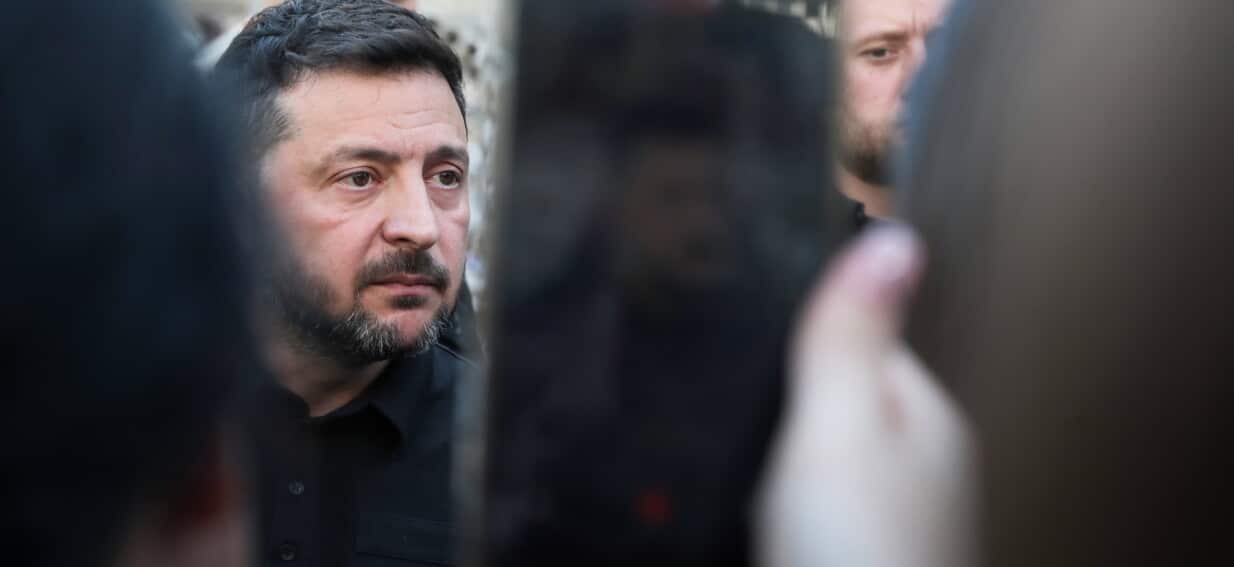
Havana isn't flinching. If you thought decades of economic stagnation and severe energy crises would make Cuba's leadership bend to threats from Washington, think again. Cuban President Miguel Díaz-Canel just made it clear that his government is preparing for the absolute worst, including direct military confrontation with the United States.
"We don't want the war, but we're not afraid of it," Díaz-Canel stated during an interview with Sky News. He didn't mince words. The Cuban leader went as far as saying the island's population is ready to fight "to the very last drop of blood" to protect its sovereignty.
This isn't empty posturing. It's a direct response to a massive shift in American foreign policy under Donald Trump, whose administration has radically altered the geopolitical dynamics of Latin America. Following the dramatic U.S. operation that captured Venezuelan President Nicolás Maduro, the White House has turned its gaze directly toward Havana. Trump recently teased that the U.S. "may stop by Cuba," sending shockwaves through the region. For Havana, the threat of an American invasion is no longer a hypothetical Cold War throwback. It's a pressing national security reality.
The Friction Between Havana and Washington
The rhetoric coming out of Washington has intensified rapidly. Trump recently stated that Cuba is "coming our way," hinting at massive changes on the island after decades of communist rule. U.S. Secretary of State Marco Rubio, a long-time Cuba hawk with deep personal and political roots in the Florida Cuban-American community, has pushed for an aggressive stance to dismantle the Havana government.
From the perspective of the White House, Cuba is a failing state running on fumes. The island is enduring a devastating economic crisis, made significantly worse by a stringent U.S. fuel embargo. Washington figures that by cutting off Cuba's economic lifelines, the system will collapse under its own weight without the need for prolonged military intervention.
Díaz-Canel sees things differently. He accused Washington of executing a "strategy of media-driven intoxication and psychological warfare" to trigger internal panic and civic instability. By publicly declaring that Cuba will meet any military offensive with fierce, unified resistance, the Cuban president wants to shatter any American illusion of a quick, bloodless regime change.
Historical Defiance Shapes the Current Stance
You can't understand Cuba's stubbornness without understanding its history. Díaz-Canel didn't just rattle off modern military logistics; he explicitly invoked the legacy of 19th-century independence hero Antonio Maceo. Maceo famously warned that anyone attempting to conquer Cuba would "only be able to take the dust of his soil drenched in blood."
That sentiment runs incredibly deep in the Cuban military apparatus. Havana views the 1961 Bay of Pigs invasion as absolute proof that they can successfully repel American intervention. For the leadership in Cuba, surrendering to U.S. pressure means undoing everything the 1959 revolution fought for.
The Cuban government is also using recent losses to rally its base. Díaz-Canel pointed out that 32 Cuban personnel died defending Maduro's government during the U.S. raid in Venezuela. He warned that those numbers "can be multiplied to millions" on Cuban soil if American boots land on the island.
Geopolitical Realities on the Ground
Beyond the fiery speeches, Cuba is playing an aggressive diplomatic game. Foreign Minister Bruno Rodríguez called for a special emergency session of the United Nations General Assembly to challenge the decades-long U.S. embargo. Havana claims Washington is enforcing an "energy siege" that amounts to collective punishment of the Cuban people.
The U.S. has frequently accused Cuba of hosting foreign military assets, specifically from China and Russia. Díaz-Canel flatly rejected these claims, stating unequivocally that "there are no Chinese bases in Cuba."
What we're looking at is a dangerous game of brinkmanship. Trump prides himself on being an unpredictable dealmaker who values swift, dramatic foreign policy victories. But Cuba has survived eleven previous U.S. presidents, severe economic isolation, and the collapse of its Soviet backers. They've built an entire national identity around resisting the superpower next door. If Washington thinks Havana will simply fold under the threat of force, they're miscalculating a regime that has spent nearly seventy years preparing for this exact fight.
The practical reality for regular people watching this unfold is clear. Keep an eye on the upcoming UN General Assembly session. The diplomatic fallout will dictate whether this situation de-escalates or pushes both nations closer toward a catastrophic miscalculation in the Caribbean.
Cuba President Defiant Against Trump
This video provides the direct interview footage and context of Cuban President Miguel Díaz-Canel addressing the military threats from Washington.