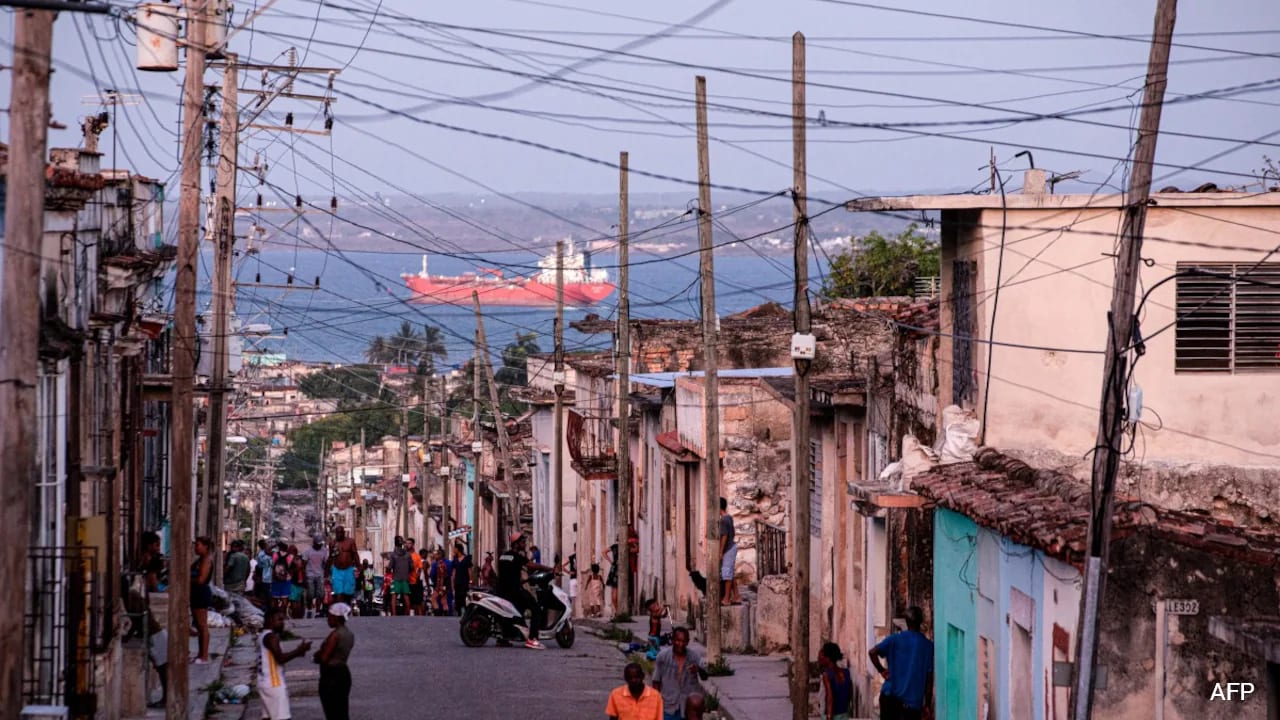
Cuba just went dark. Again. The entire national electrical grid collapsed on Monday, plunging nearly 10 million people into a total blackout. The state-run Electric Union confirmed the failure, and while officials claim the exact cause is under investigation, anyone paying attention knows the real culprit. It's a toxic mix of zero fuel reserves, crumbling Soviet-era infrastructure, and a punishing economic chokehold.
This isn't a temporary inconvenience. It's a systemic failure. The island's energy crisis has reached a point where the government can no longer guarantee the most basic human needs. When the power goes, everything else goes with it. Water pumps stop working. Food rots in non-existent refrigeration. Hospitals cancel all but the most desperate emergency surgeries. Public transit has ground to a halt.
The immediate trigger for this latest collapse fits a pattern we've seen throughout the first half of 2026. The grid simply cannot handle the strain when fuel reserves hit rock bottom.
The Oil Pipeline Has Dried Up
You can't run oil-fired thermal plants without oil. It's that simple. Cuba produces only about 40% of the fuel it actually needs to keep the lights on. The rest has to come from the outside, and right now, those outside sources are vanishing.
Historically, Venezuela threw Cuba an energy lifeline. But Venezuela's own domestic refining capacity is a total mess, forcing them to slash shipments to the island to avoid shortages at home. Mexico and Russia used to fill the gaps, but those shipments have slowed to a trickle.
To make matters worse, Washington intensified pressure earlier this year. The threat of heavy tariffs on countries providing oil to Cuba has effectively paralyzed the island's supply chain. In January, oil imports dropped to near zero for the first time in a decade. When you rely on a continuous stream of tankers just to keep the boilers firing, a week without a delivery means total system failure.
Decades of Band-Aids on Soviet Machinery
Even if a fleet of supertankers arrived in Havana harbor tomorrow, Cuba's grid is too broken to handle it. The backbone of the island's power generation relies on 16 major thermoelectric plants built between the 1960s and 1980s. They were constructed with Soviet, Czech, and Japanese technology that belongs in a museum, not a modern utility grid.
The Antonio Guiteras plant in Matanzas—the largest and most critical unit on the island—trips offline constantly. A single boiler leak or a false sensor signal at Guiteras can trigger a cascading failure that knocks out transmission lines from Pinar del Río all the way to Camagüey.
The numbers tell the real story of this decay:
- Total Installed Capacity: Around 3,000 Megawatts (MW) on paper.
- Effective Output: Barely 1,800 MW on a good day because of broken machinery.
- Recent Deficits: Peak demand shortages regularly exceed 1,500 to 1,700 MW.
Think about that math. During peak hours, more than half of the country's electricity demand simply goes unmet. The government tries to manage this with rotating 18-hour blackouts, but the system is too fragile for controlled shutdowns. It just breaks.
The Human Cost Behind the Megawatt Deficit
Statistics don't capture the sheer exhaustion of daily life in Havana or Santiago right now. When the grid collapses, the clock starts ticking for everyday Cubans.
Without electricity, municipal water networks fail. People are left scrambling to find bottled water or trying to figure out how to cook meals before the food they spent days queuing for spoils. Charcoal has become a hot commodity because standard cooking gas is just as scarce as electricity. If you don't have charcoal, you don't eat.
The state has tried stopgap measures like leasing floating power barges from Turkish companies and scattering small diesel generators across the country. But these distributed generation tactics require constant logistics, steady fuel delivery, and expensive maintenance. In a country short on foreign currency, it's an unsustainable strategy.
The Cuban government points the finger squarely at the US embargo, calling the situation a genocidal energy blockade designed to incite social unrest. Washington counters that the crisis is the natural result of decades of economic mismanagement and a refusal to allow direct foreign investment.
The truth is, both forces are grinding the island down simultaneously. The political blame game doesn't change the reality for millions of people sitting in the dark.
What Happens Next
The immediate priority for Cuba's Ministry of Energy and Mines is using localized "microsystems"—isolated pockets of power fueled by distributed generators—to slowly jumpstart the main thermal plants. It's a delicate, agonizingly slow process. If they rush the synchronization, the grid will trip and collapse all over again, just like it did during the multi-day blackouts of late 2024.
For anyone traveling to or doing business with Cuba, you need to adapt to a reality where the centralized grid cannot be trusted. Relying on the state for power is a losing strategy.
- Secure independent energy backups: If you operate any vital service or business on the island, solar setups with lithium battery storage or dual-fuel generators are mandatory, not optional.
- Focus on decentralized water solutions: Gravity-fed water storage tanks (tanques elevados) and independent filtration systems are critical to surviving the inevitable water shutoffs that follow grid failures.
- Shift away from cold-chain dependency: Businesses and households must transition toward shelf-stable logistics. Relying on refrigeration right now is a gamble you will lose.
The grid will likely patch itself back together over the next 48 hours, but don't mistake recovery for a solution. Without a massive injection of foreign capital to completely rebuild the thermal fleet, and a stable, unblocked source of crude oil, these total blackouts will remain a regular feature of Cuban life.