The Choreographed Panic of the Strait of Hormuz
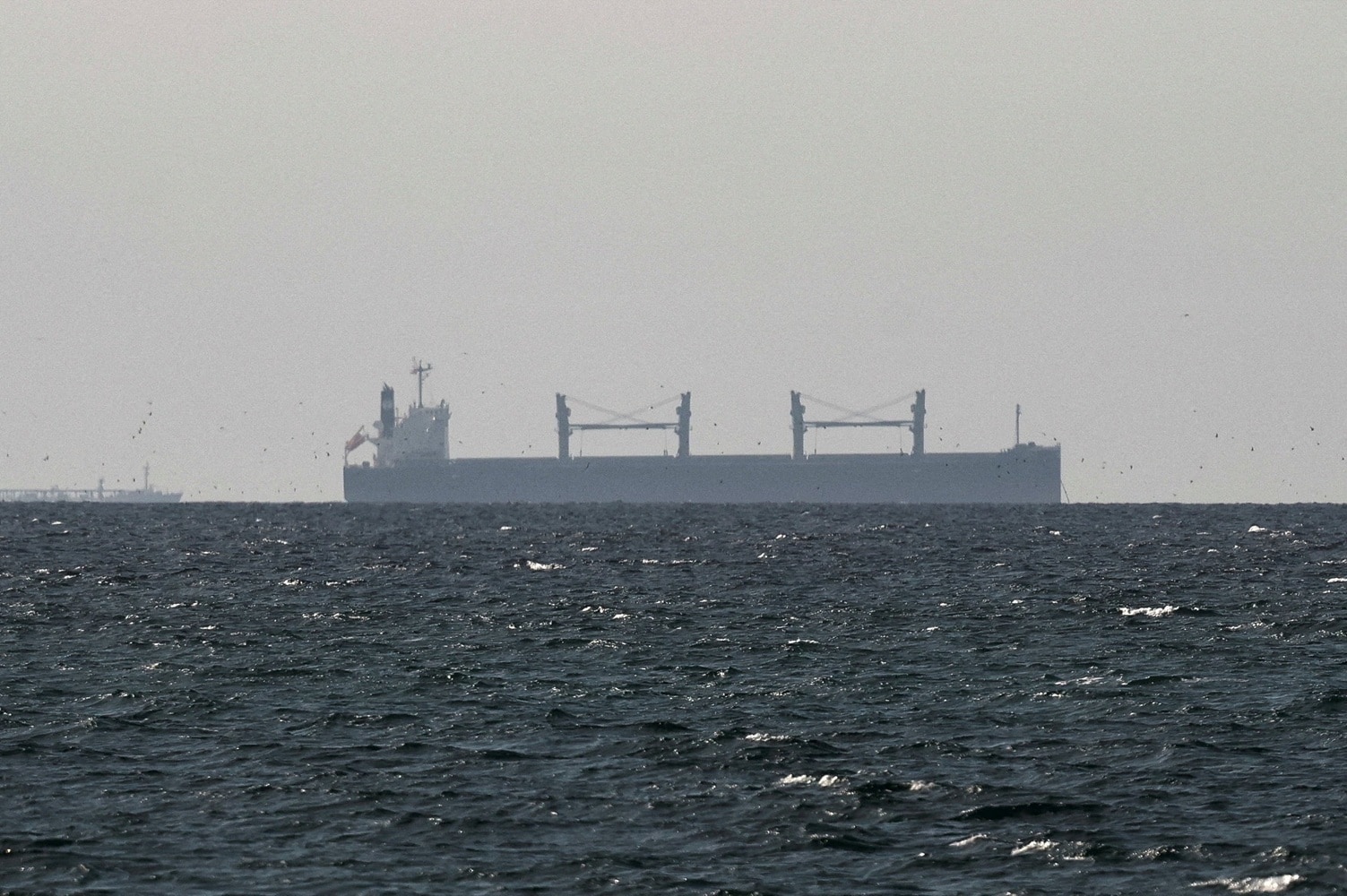
A 300,000-ton Very Large Crude Carrier (VLCC) loaded with Iraqi Basrah Medium clears the Strait of Hormuz. On the exact same day, mid-level diplomats from Washington and Tehran exchange boilerplate pleasantries in Vienna or Geneva.
The mainstream financial press immediately prints the predictable narrative: Tanker movements signal cautious optimism amid delicate geopolitical breakthroughs.
It is a comforting story. It suggests a world where global energy markets track the nuanced chess games of suit-clad bureaucrats.
It is also completely wrong.
The belief that marginal shifts in US-Iran diplomatic relations dictate the daily operational calculus of Persian Gulf crude logistics is a foundational myth. It survives because it serves two groups: journalists who need a dramatic hook, and political analysts who want to pretend their spreadsheets predict global commerce.
The reality is far more cold-blooded. Physical oil trading and maritime logistics operate on structural realities—freight derivatives, insurance premiums, storage economics, and refinery configurations—that treat diplomatic theater as mere background noise. The supertanker did not exit the Gulf because a meeting went well. It exited because its laycan window was closing, its letter of credit was validated, and a complex refinery in Asia had a specific yield requirement that could not wait for a press release.
Dismantling the Pundit Consensus
To understand how the energy market actually functions, we have to look past the superficial headlines. Mainstream coverage consistently relies on three flawed assumptions.
Myth 1: Tanker Routing Reflects Political Goodwill
The narrative implies that when tension rises, oil stopped moving, and when tension eases, the taps open. This ignores the absolute inflexibility of modern energy infrastructure.
A VLCC is not an Uber. You do not cancel a fixture because a speech went poorly. The fixture of a supertanker happens weeks in advance through a complex web of shipbrokers, charterers, and owners. The vessel is committed to a specific loading window (the laycan). Missing that window triggers massive financial penalties, demurrage fees that can easily exceed $50,000 a day, and potential breach-of-contract lawsuits.
When a vessel moves, it moves because the structural costs of stopping it outweigh almost any short-term geopolitical risk.
Myth 2: Iraqi Crude is a Proxy for Iranian Geopolitics
Commentators love to lump all Middle Eastern production into a single geopolitical bucket. They argue that because Iraq shares a border and political ties with Iran, Iraqi barrels are a barometer for US-Iran friction.
This completely misinterprets the commercial rivalry inside OPEC. Iraq and Iran compete fiercely for the same buyers, particularly state-owned and independent refineries (teapots) in China and complex systems in India. Iraq’s State Organization for Marketing of Oil (SOMO) operates on a commercial mandate to maximize market share and hit production targets.
Iraq's export volumes are driven by its internal infrastructure constraints—such as the operational capacity of the Basra Oil Terminal and the single-point moorings (SPMs) in the Gulf—not by the temperature of talks between Washington and Tehran.
Myth 3: War Risk Insurance Dictates Total Shippers' Decisions
The common argument states that when diplomatic talks stall, insurance premiums skyrocket, paralyzing the shipping lanes.
I have watched compliance and risk departments navigate these waters during genuine crises. While the Joint War Committee (JWC) of the Lloyd's Market Association may amend the Listed Areas, the market does not freeze. Instead, it prices the risk.
Shipowners utilize "War Risk Additional Premiums" (WRAP). This cost is simply passed down the line to the charterer or factored into the spot freight rate via the Worldscale system. It is a line item, not a stop sign. The trade routes remain open because the crack spreads—the margin between the cost of crude and the price of the refined products—frequently justify the premium.
The Hard Math of Maritime Trade
Let us look at the actual mechanics that move a ship, far away from the diplomatic tables.
| Operational Factor | Mainstream Narrative | Commercial Reality |
|---|---|---|
| Vessel Scheduling | Diplomatic breakthrough allows ship to depart safely. | The vessel loaded within its strict laycan window to avoid crushing demurrage penalties. |
| Insurance | High tension makes the Strait of Hormuz unpassable for commercial fleets. | War Risk Additional Premiums (WRAP) increase, shifting costs to the cargo owner without stopping transit. |
| Destination Pull | Western sanctions or easing dictates where the crude can flow. | Complex refineries in Asia require specific API gravity and sulfur content blends to optimize utilization. |
Consider the actual constraints of the global fleet. There are only around 800 to 900 active VLCCs globally at any given time. Their distribution is a massive mathematical puzzle managed by algorithmic routing and chartering desks looking at clean versus dirty freight rates, bunker fuel costs (Very Low Sulfur Fuel Oil vs. High Sulfur Fuel Oil), and arbitrage windows.
Imagine a scenario where a refinery in Shandong province has configured its atmospheric distillation units specifically for a heavy, sour blend like Basrah Heavy or Medium. If that refinery does not get its scheduled feedstock, its operational efficiency plummets, ruining its quarterly margins. The buyer does not care if the US State Department is having a difficult week. They demand delivery. They will pay the inflated freight rate, cover the WRAP, and find a shipowner willing to transit the Strait.
The physical reality of refining capacity creates an inelastic pull that statecraft rarely disrupts for long.
People Also Ask: Dismantling the Naive Queries
The questions dominating search engines reveal exactly how deeply the public has been misled by superficial financial reporting.
Does a US-Iran deal mean lower gas prices at the pump?
No. The link between a diplomatic framework and the retail price of unleaded gasoline in Ohio is incredibly detached. Retail gasoline prices are determined by local refining capacity, regional inventory levels (like those tracked by the EIA in the United States), environmental blending mandates (summer vs. winter grades), and domestic tax policy.
Even if a deal theoretically allowed more Iranian crude back into the formal market, much of that oil is already moving via the "shadow fleet" or "ghost fleet"—utilizing ship-to-ship (STS) transfers, flag-hopping, and disabled AIS transponders to reach buyers in Asia. The barrels are already in the global supply ecosystem. A formal deal merely changes the paperwork and the price discount on those specific barrels; it does not suddenly double global oil production overnight.
Are oil tankers targets when diplomacy fails?
The historic data shows that true interdiction is remarkably rare. Even during the "Tanker War" of the 1980s, or the more recent vessel seizures and drone strikes, the percentage of total transiting tonnage permanently disrupted was mathematically minor.
Modern commercial vessels are massive pieces of industrial infrastructure. A kinetic strike on a double-hulled VLCC rarely sinks it; these ships are built to survive extreme maritime conditions. The real threat is not destruction, but the temporary inflation of the freight market as owners demand a premium for the route. The trade never stops; it just gets more expensive for the end consumer.
The Downside of the Hardnosed View
To be fair, ignoring politics entirely carries its own risks. The contrarian view can breed a dangerous complacency.
The primary risk to this thesis is a systemic tail risk—a complete, hard closure of the Strait of Hormuz via extensive mining or sustained military conflict. If the strait is genuinely blocked, the structural mechanics breakdown because physical passage becomes impossible regardless of price. In that extreme scenario, the approximately 20 million barrels per day moving through the strait are trapped, and no amount of insurance hedging can fix the immediate supply shock.
But pricing your daily market outlook based on a 1% black swan event while ignoring the 99% operational reality is an easy way to lose money.
Stop Reading Press Releases. Watch the Spreads.
If you want to know where the global economy is heading, stop reading statements from ministries of foreign affairs. They are designed to obscure reality, not illuminate it.
Instead, look at the cold, unfeeling data of the energy desks:
- The Time Spreads: Is the market in steep backwardation or contango? If Brent or WTI is in backwardation (where prompt prices are higher than future prices), inventories are tight. Ships will move regardless of political risk because the immediate payout is too high to ignore.
- The Freight Netback: Calculate the cost of moving a barrel from the US Gulf Coast or West Africa to Asia versus moving it from the Persian Gulf. When the arbitrage opens up, the ships will re-route instantly, rewriting the geopolitical map in an afternoon.
- Suezmax vs. VLCC Economics: Watch the premium of larger vessels over smaller ones. When VLCC rates spike, it tells you about global structural demand and asset scarcity, not diplomatic sentiment.
The supertanker exiting the Persian Gulf did not care about the speeches in Washington or the rhetoric in Tehran. It cared about its draft clearance, its bunker efficiency, and the immutable laws of supply and demand. The rest is just noise for the spectators.