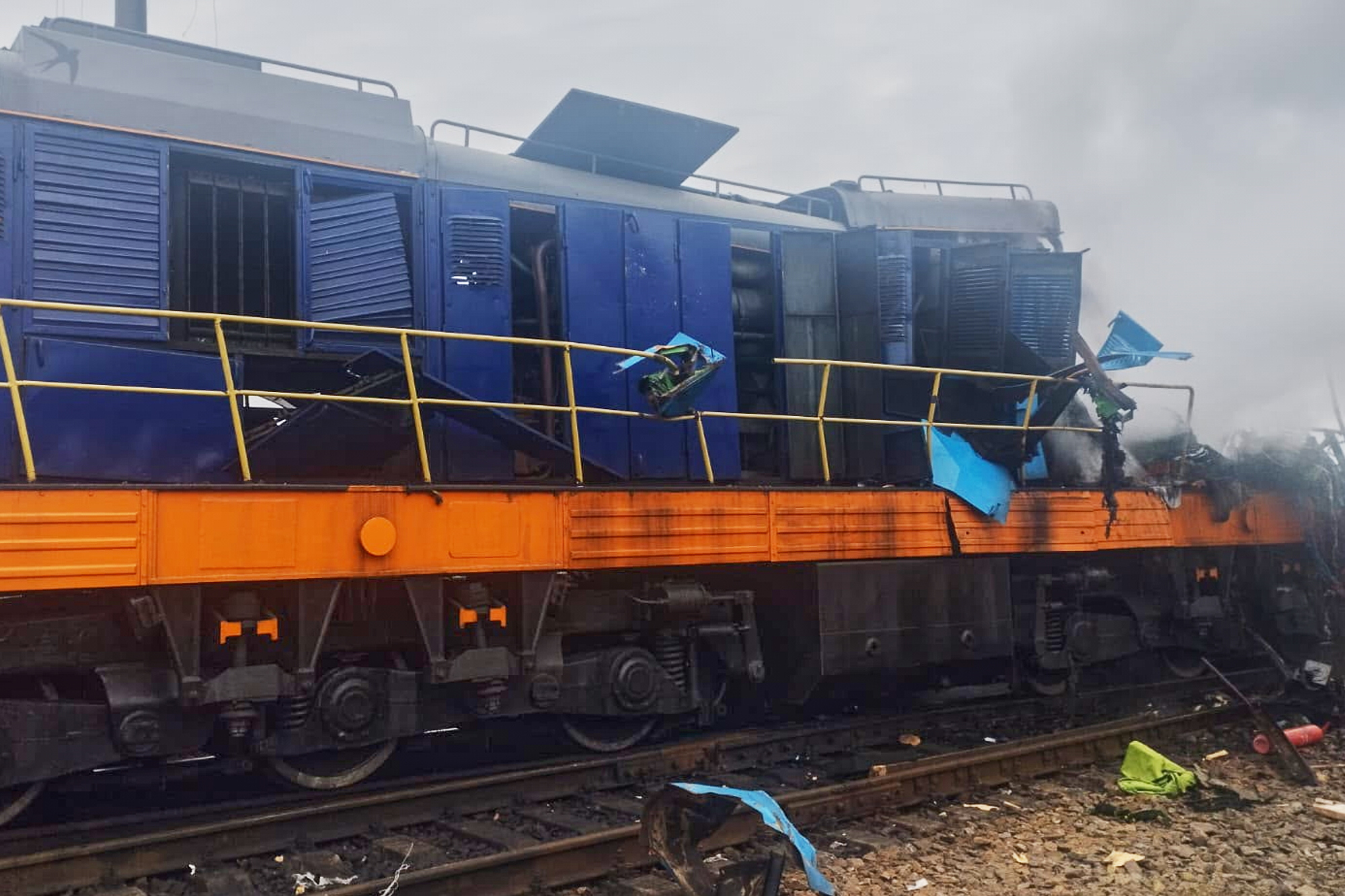
The kinetic impact of a Russian jet-powered drone striking railway infrastructure mere meters from the Polish border hours after a high-level diplomatic delegation departed exposes a structural vulnerability in western deterrence doctrine. This event marks a transition from localized attrition to systemic boundary testing. When ordnance lands within striking distance of a North Atlantic Treaty Organization member state's sovereign frontier immediately following the transit of former heads of state and intelligence chiefs, the incident ceases to be a random targeting anomaly. It operates as a calculated stress test of response thresholds.
The Infrastructure Chokepoint Dilemma
Western military assistance and civilian evacuation corridors rely on concentrated rail networks in western Ukraine. The convergence of logistical arteries near Yahodyn and Dorohusk creates a high-density target set for long-range loitering munitions and cruise missiles.
[Western Aid Hubs] ---> [Volyn Rail Arteries] ---> [Polish Border / EU Perimeter]
                              |
                     (Targeted by UAVs)
Military cargo and passenger transit share identical physical tracks. This dual-use reality complicates air defense prioritization. Air defense commanders face a resource allocation paradox: allocate scarce surface-to-air missile batteries to protect civilian rail corridors, or retain them around vital command nodes and energy grids. Russia exploits this calculus by launching saturated drone barrages designed to degrade interception rates, forcing a margin of error where munitions inevitably drift toward allied frontiers.
Quantifying Proximity Risk
The statistical probability of boundary violations increases non-linearly with strike density near frontier zones. Operating within a five-kilometer radius of a nuclear-armed alliance's border introduces severe escalation risks. Yet, operational necessity dictates that railheads remain active close to the border to minimize transit times for returning diplomats and freight.
- Spatial Compression: Striking targets one to five kilometers from a border leaves radar warning systems with reaction windows under ninety seconds.
- Guidance Drift: Commercial-grade GNSS spoofing and inertial navigation errors in long-range jet-powered drones introduce circular error probable (CEP) margins that risk spilling kinetic energy across international borders.
- Political Signaling: The timing relative to visiting dignitaries suggests telemetry tracking rather than blind attrition. Intelligence units monitor VIP movements through intercepted communications, open-source rail schedules, and diplomatic motorcade signatures.
The Deterrence Cost Function
Deterrence relies on the credible threat of unacceptable retaliation. When cross-border incidents are met with diplomatic condemnation rather than kinetic or economic countermeasures that alter Moscow's cost calculus, the deterrent threshold erodes.
$$\text{Deterrence Efficacy} = \frac{\text{Credible Retaliatory Cost}}{\text{Strategic Value of Strike}}$$
Moscow evaluates the utility of striking near NATO borders by measuring the variance between Western rhetoric and enforcement mechanisms. Past precedents—such as stray missile debris or low-flying reconnaissance drones crossing into allied airspace—have established a tolerance band. Russia operates inside this tolerance band, utilizing incremental escalation to normalize kinetic activity at the doorstep of the European Union.
Intelligence Deficits and Targeting Mechanics
Determining whether the targeting of the Kyiv-Warsaw train was intentional or collateral requires analyzing the telemetry of Russian Geran-series jet-powered UAVs. Unlike precision-guided ballistic missiles, loitering munitions depend on pre-programmed coordinates or real-time operator feeds.
If the train carrying former British Prime Minister Boris Johnson and international security advisors was tracked in real time, the strike parameters indicate an intentional messaging campaign directed at western political leadership. If the strike was pre-planned against the railway station infrastructure independent of the VIP schedule, it reveals a systemic failure in predictive intelligence synchronization between protecting security details and rail operators. Both scenarios highlight an unacceptable margin of exposure. Securing high-value political transit across active combat zones demands strict temporal masking, decoy routing, and active electronic warfare jamming of localized drone control links.
Operational Redundancy and Hardening
Mitigating future boundary incidents requires shifting from reactive air defense to structural hardening of logistics nodes. Underground bypasses, mobile anti-drone kinetic interceptors positioned along transit corridors, and decentralized transfer yards reduce the concentration risk inherent in legacy Soviet-era railway architecture. Intelligence-sharing protocols between Ukraine and allied border guards must integrate real-time acoustic and radar tracking feeds to enact immediate halt orders for passenger and diplomatic traffic whenever air alerts sound within a fifty-kilometer corridor of the frontier.