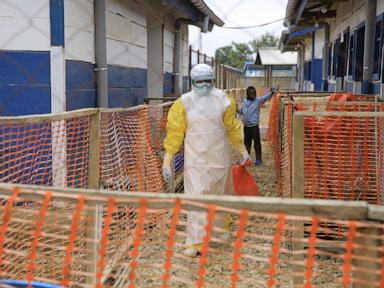
Eight provinces. Sound terrifying? It is designed to.
Every time a viral hemorrhagic fever crosses a provincial boundary in the Democratic Republic of the Congo, headlines treat the map like a ticking fuse. More provinces equals wider spread. Wider spread equals panic. Clicks spike. Funding pitches get louder. Learn more on a connected issue: this related article.
Here is the lazy consensus hiding behind those alarming maps. Counting administrative provinces tells you almost nothing about how fast a filovirus is actually moving, whether chains of transmission are multiplying or dying out, or where the real clinical and operational danger sits. A province in the DRC is not a neat little containment box. Some are larger than entire European countries. Many share porous borders, river traffic, and informal transit corridors that ignore lines drawn on a wall.
A single imported case detected through improved surveillance in an eighth province can look on a map like a runaway wildfire. Meanwhile, a quiet, under-monitored cluster inside an already affected province can be burning through households without making a fresh provincial headline. More reporting by Everyday Health delves into similar perspectives on the subject.
I have watched global health responses waste precious hours chasing geographic milestones instead of transmission mechanics. I have seen teams pour energy into dramatic press briefings about "eight provinces affected" while basic logistics—cold-chain integrity for vaccines, safe burial coordination, clean water at triage tents, and rapid sample transport—were choking on bottlenecks fifty miles from the nearest TV camera.
Maps sell urgency. Epidemiology demands precision.
What "Fast-Moving" Actually Means in Filovirus Outbreaks
Before we argue over maps, we have to get the terminology straight. People throw around "fast-moving" as if Ebola virus disease spreads like measles or seasonal influenza. It does not.
Ebola virus—most infamously Orthoebolavirus zairense (Zaire ebolavirus)—transmits through direct contact with blood, secretions, organs, or other bodily fluids of symptomatic or deceased infected people, or via contaminated surfaces and materials. Unlike airborne pathogens, it does not drift across a crowded room because someone sneezed.
So why does an outbreak sometimes feel fast-moving? Three distinct drivers create that impression, and lumping them together ruins outbreak strategy:
- Detection lag catching up to reality: Surveillance systems often spot cases late. When mobile lab capacity expands or community reporting improves, a cluster of cases that developed over weeks can appear on a dashboard within days. That looks like sudden acceleration, even when the underlying transmission rate has not spiked.
- Mobility along transport arteries: Long-distance travel along roads, rivers, and regional hubs carries infected individuals far before symptoms become unmistakable or isolation occurs. Jumping to an eighth province often reflects human mobility along corridors rather than an unstoppable wave sweeping across every village in between.
- Nosocomial and funeral amplification: Transmission frequently surges inside under-resourced clinics lacking infection prevention and control (IPC) basics, or during traditional burial practices involving close physical contact with infectious bodies. A handful of high-contact events can compress timelines sharply.
Confusing surveillance catch-up or single-corridor jumpiness with uniform, explosive spread leads responders to deploy the wrong tools in the wrong places.
The Wrong Questions Everyone Keeps Asking
When news breaks that an outbreak has reached an eighth province, public curiosity follows a predictable script. Most of those questions are traps.
"Does reaching an eighth province mean the outbreak is spinning out of control?"
Not automatically. Geographic reach and transmission intensity are two different variables. An outbreak confined to two dense districts with weak isolation and high hospital exposure can be far more dangerous in the short term than cases scattered across multiple provinces where contact tracing is active and ring vaccination is underway.
Measuring control by province count is like judging a house fire solely by how many rooms have smoke alarms going off while ignoring which room has the open flame.
"Are standard border screenings going to stop it?"
Thermal checks and basic symptom questionnaires at checkpoints catch a fraction of travelers. Incubation periods for Ebola typically range from 2 to 21 days, and people are not contagious before symptoms appear. Early symptoms—fever, fatigue, muscle aches, headache—look identical to malaria, typhoid, and dozens of common tropical illnesses.
Anyone expecting checkpoint thermometers to seal off a multi-province outbreak is leaning on theater. Real containment happens through rapid case investigation, ring vaccination, safe and dignified burials, trustworthy community engagement, and rock-solid IPC inside health facilities.
"Is the outbreak more lethal just because it covers more ground?"
Case fatality rates depend heavily on the specific ebolavirus species, how early patients reach supportive care, and strain on local health systems—not on how many provincial borders the virus has crossed. Aggressive fluid replacement, electrolyte management, and targeted therapeutics (such as monoclonal antibody treatments like ansuvimab or atoltivab/maftivab/odesivab for Orthoebolavirus zairense) substantially improve survival compared to historical baselines when patients get care early. Geography does not alter viral biology; delayed care and overwhelmed clinics do.
Why Province Counts Distort Outbreak Strategy
Veteran outbreak responders—from field epidemiologists at the World Health Organization and Africa Centres for Disease Control and Prevention to frontline teams with Médecins Sans Frontières and the DRC's own public health authorities—know how dangerous dashboard optics can be.
When a narrative locks onto "eighth province," political and donor attention naturally gravitates toward new pins on the map. That creates two predictable distortions:
- Attention fragmentation: Spreading already stretched teams thin across distant new sites can starve high-transmission hotspots of experienced clinicians, logisticians, and epidemiologists.
- Community fatigue and distrust: Parachute responses that arrive noisily after a headline, set up rigid structures without local buy-in, and vanish when media coverage shifts erode trust. In Ebola responses, community trust is not a "soft" add-on; when families hide sick relatives out of fear of stigmatization or opaque isolation wards, transmission goes underground.
Consider a thought experiment. Imagine a scenario where an outbreak is recorded in eight provinces, yet seven of those provinces have only one or two isolated, rapidly traced cases linked to a single traveler, while one province has an active, uncontained chain inside a rural health zone. If media and donors treat all eight provinces as equal emergencies, resources get diluted right where concentration matters most.
Conversely, imagine a scenario where cases are creeping along a major river route with weak reporting. Waiting for a dramatic provincial jump before reinforcing surveillance and clinic triage means showing up late to every stop along the water.
Where My Contrarian View Can Go Wrong
Pushing back against alarmist province counts has a real downside if taken too far. Downplaying geographic spread can breed complacency.
In a country with vast distances, fragile infrastructure in remote zones, concurrent health crises, and histories of insecurity in eastern and central regions, a single spark in a new province can ignite a major chain of transmission if local health workers are unprepared. Under-reacting to an early signal in a previously unaffected area is just as costly as over-interpreting a map.
The right posture is neither panic nor dismissal. It is disciplined triage: treat every new geographic detection as a serious operational signal to verify chains of transmission quickly, while refusing to let headline geography dictate resource allocation over hard epidemiological metrics like effective reproduction numbers, time-to-isolation, and undetected community deaths.
What Actually Works When an Outbreak Expands
If you want to know whether an Ebola response is succeeding or failing, stop counting provinces and look at operational friction points.
- Track time from symptom onset to isolation: Every day a symptomatic patient remains unisolated in a household or general clinic increases secondary exposures. Shrinking that window beats almost any grand strategic plan.
- Protect healthcare workers first: When clinics lack gloves, gowns, disinfectants, and clean triage flows, outbreaks accelerate and local health capacity collapses. Keeping staff safe preserves the workforce needed to fight the virus.
- Fix sample turnaround times: A suspected case waiting days for reverse transcription-polymerase chain reaction (RT-PCR) confirmation ties up isolation space and delays contact tracing. Decentralized, rapid diagnostics change the math on the ground.
- Fund local problem-solvers, not just external fly-ins: Local health zones, community health workers, and regional logisticians know the terrain, languages, and social dynamics long after international teams rotate out.
Stop staring at the map like a horror movie poster. Look at the transmission chains, the supply lines, and the clinics.