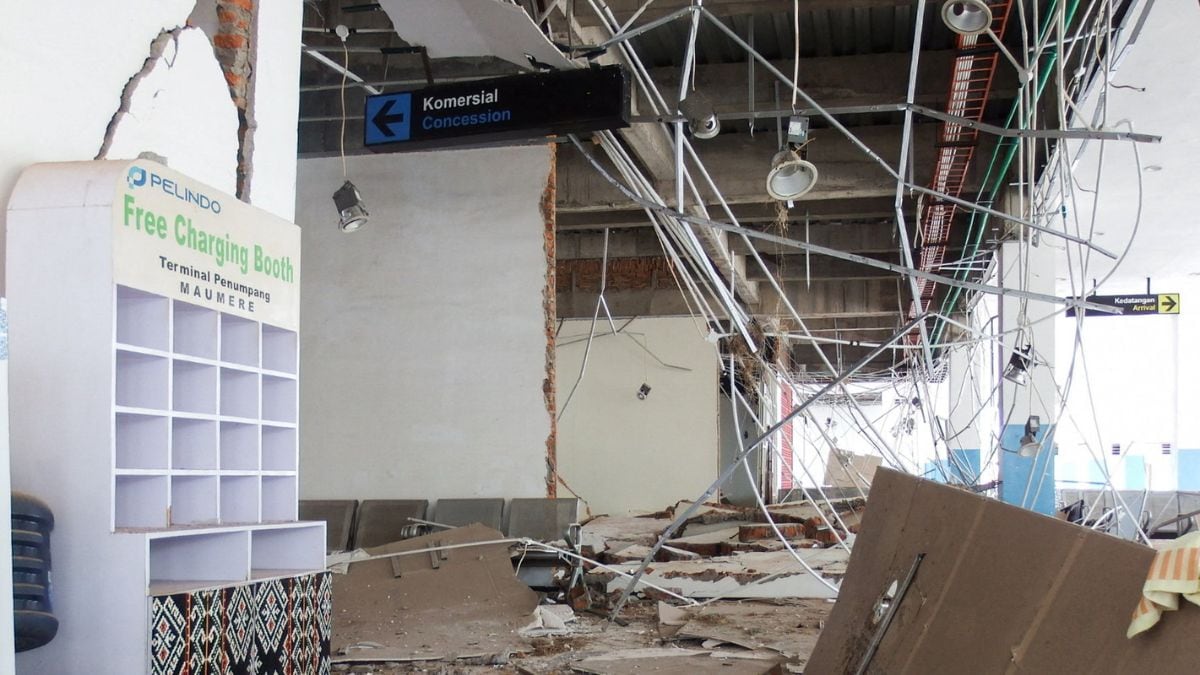
Every single time the earth breaks open in the Ring of Fire, the media machine spins up its favorite brand of panic theater. The script writes itself. A magnitude hits, the body count trickles upward, and then the headline ticker fixates on a meaningless integer: 235 aftershocks recorded.
Then come the armchair meteorologists and panicked pundits shaking their heads at nature's relentless cruelty.
Stop. It is all noise.
Counting aftershocks is an exercise in treating symptoms while ignoring the structural rot that allowed the building to collapse in the first place. You do not manage seismic risk by tallying every micro-tremor that rattles a coconut tree three days after the main event. That is a distraction designed for television ratings, not disaster mitigation.
I have spent years analyzing municipal infrastructure failures in high-hazard zones across the Pacific. I have seen governments blow millions on shock-and-awe disaster reporting while ignoring the concrete mixes pouring into school foundations. We are obsessed with the sheer volume of nature's aftermath because it is easy to quantify, while the real killer—lazy engineering combined with systemic corruption—is too complex for a graphic overlay on the evening news.
The Flawed Physics of the Panic Industry
Let us look at the mechanics of what an aftershock actually is. Seismologically speaking, an aftershock is not a new event. It is the crust adjusting to a sudden redistribution of stress. It is math. It is physics. It is inevitable.
When a fault line slips, the surrounding rock is left in a state of aggravated instability. The earth is simply redistributing load. If you drop a stack of heavy crates, the top ones don't all land at once; they slide, shift, and settle. Counting every individual shift in that stack tells you nothing about whether the warehouse roof is going to cave in.
Yet, media coverage treats every single magnitude 3.0 jolt as a fresh tragedy waiting to happen. This creates a psychological feedback loop of terror. People living in seismic zones are terrorized by statistics that measure the earth's natural, mechanical healing process.
Worse, this obsession blinds populations to the variable that actually matters: vulnerability.
An earthquake does not kill people. Unreinforced masonry kills people. Poorly anchored roofs kill people. Building codes that are treated as optional suggestions by local developers kill people.
When Indonesia or any other seismically volatile region suffers a catastrophe, the post-mortem invariably focuses on the raw power of the tectonic plate movement. That is a cop-out. Japan routinely handles earthquakes that would flatten entire cities in developing nations, and they do it without turning the broadcast booths into weeping chambers. Why? Because they spend their energy on structural integrity, not on counting the tremors after the bell has rung.
Dismantling the Myths of Seismic Forecasting
People love to ask: Can we predict when the major aftershock will hit?
The honest answer is no. And the obsession with trying to find patterns in aftershock frequencies is a fool's errand. Omori's Law—the empirical formula that describes the decay of aftershock frequency over time—has been known to seismologists for over a century. We already know the curve. Aftershocks happen. They taper off. They cluster.
Expecting a precise timeline of every post-seismic shudder is like trying to predict the exact path of every single drop of water in a flash flood. You cannot do it, and building an emergency response strategy around the illusion of that control is lethal.
Imagine a scenario where a city council spends its entire disaster prevention budget on state-of-the-art seismic monitoring equipment that alerts citizens to every tiny rattle, while refusing to enforce steel-reinforcement mandates for public markets. That is not preparedness. That is a public relations campaign.
When the ground shakes, the market rewards the people who can scare you the most. More aftershocks mean more updates, more breaking news banners, and more eyes glued to screens. But every hour spent tracking the 235th aftershock is an hour stolen from inspecting the bridges that your children have to cross tomorrow morning.
The Uncomfortable Truth About Disaster Recovery
Let us talk about the trade-offs of this panic-driven paradigm. When the focus remains entirely on the terrifying aftermath, resources get misallocated toward immediate, reactive charity rather than long-term structural resilience.
Donations pour in for tents and bottled water—which are undeniably necessary in the immediate aftermath—while structural reform is kicked down the road until the next tragedy forces another round of performative grief.
I've watched municipal leaders stand in front of rubble piles, vowing to "learn from this disaster," only to approve sub-standard zoning permits six months later once the news cycle has moved on to a different catastrophe. The system is rigged for amnesia.
If we want to stop burying people after every major slip along the Sunda Megathrust, we have to stop treating earthquakes like acts of angry gods and start treating them like engineering problems.
The next time a headline screams about a record-breaking number of tremors rattling a disaster zone, ignore the number. Ask a harder question: Who signed off on the permits for the buildings that turned to dust while the minor shakes were still happening?
Stop counting the tremors. Fix the walls.