The Mechanics of the Transaction
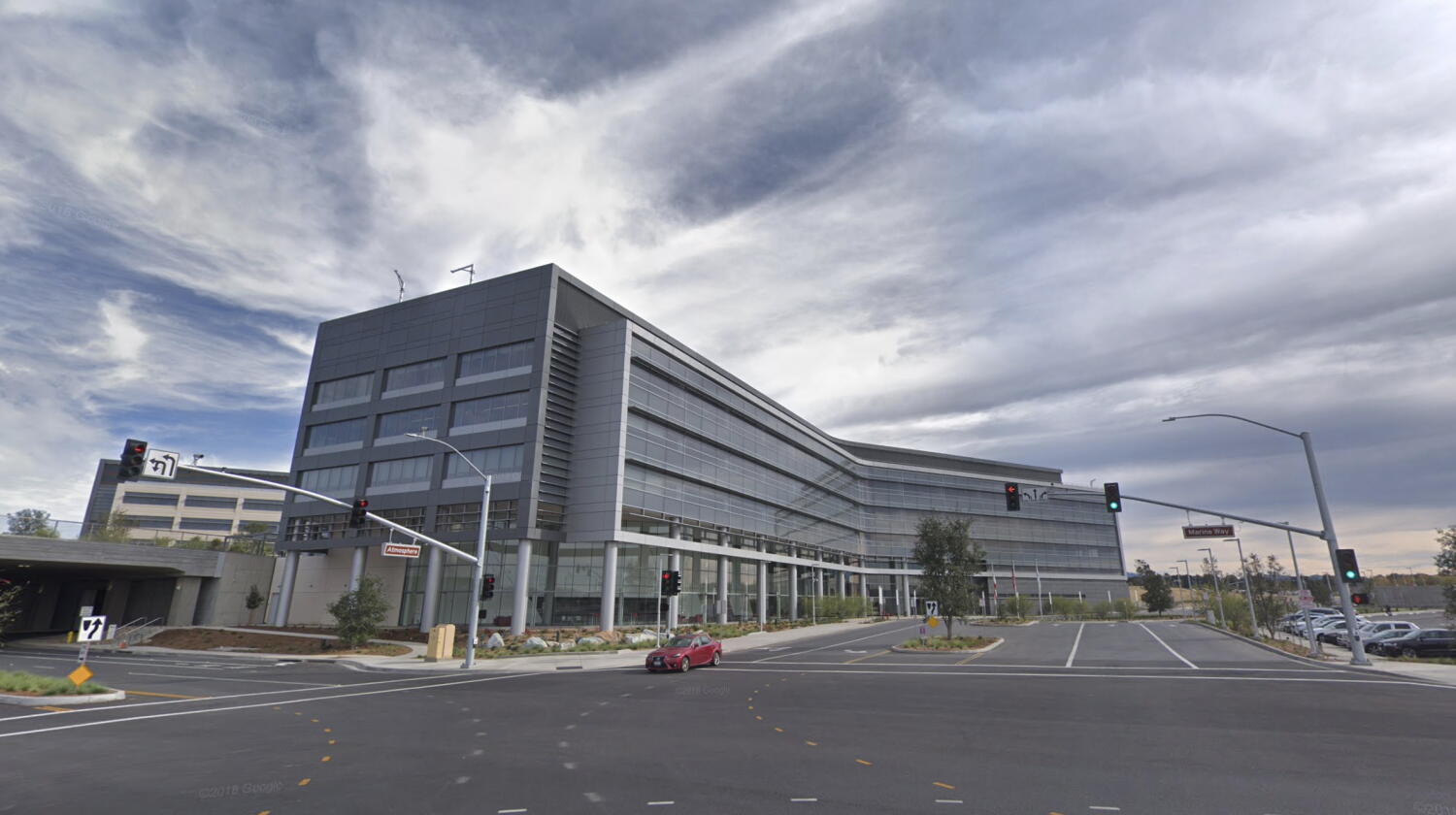
Broadcom completed the acquisition of its Southern California corporate headquarters and research campus in Irvine, California, paying three hundred twenty-five million dollars to Washington, D.C.-based PRP Real Assets. The transaction encompasses a massive two-building office and research-and-development complex situated at 15101 and 15191 Alton Parkway within the Irvine Spectrum district, spanning six hundred sixty thousand, eight hundred ninety-three square feet. Translating the aggregate purchase price to a unit metric yields approximately four hundred ninety-two dollars per square foot.
This purchase marks a significant reversal of the asset's ownership lifecycle. Broadcom originally developed the campus as a custom corporate hub before executing a sale-leaseback transaction in 2017 for approximately four hundred forty-three million dollars, simultaneously entering into a long-term triple-net lease structured to run through 2037. In 2020, PRP Real Assets acquired the two headquarters buildings separately for three hundred fifty-five million dollars as part of an institutional net-lease portfolio strategy. If you liked this article, you should look at: this related article.
By reacquiring the property at three hundred twenty-five million dollars, Broadcom secured the real estate below its original disposition price and below the subsequent 2020 transaction value. This price compression reflects broader repricing across suburban corporate office assets, driven by higher debt costs and structural shifts in institutional portfolio management. Rather than allowing a third-party landlord to control an essential physical facility through the next decade, executive leadership stepped into the market to capture the discount and internalize the asset base.
Financial Engineering and Lease Liabilities
Sale-leaseback agreements are fundamentally corporate finance instruments designed to unlock trapped capital on a balance sheet and convert fixed assets into operational liquidity. When Broadcom divested the campus in 2017, the enterprise prioritized cash generation and capital flexibility. However, triple-net leases introduce an escalating cost structure that alters corporate operating margins over multi-year horizons. For another look on this story, refer to the recent update from Financial Times.
Under the terms of the original long-term agreement, annual rent escalators typically compound at pre-determined rates—historical reports on the property noted escalation rates around two and a half percent annually, resulting in an initial annual rent burden approaching eighteen point six million dollars. Over a twenty-year duration, cumulative cash outflows dedicated purely to occupancy expenses would have vastly exceeded the capital expenditure required for outright reacquisition.
Furthermore, interest rate environments altered the net present value calculations of holding versus owning. As capital costs rose across credit markets, the discount rate applied to future lease liabilities shifted. Purchasing the campus for three hundred twenty-five million dollars eliminates ongoing rental inflation, removes exposure to future cap rate volatility upon lease renewal, and converts an recurring operational expense into a permanent balance sheet asset. The transaction demonstrates how cash-rich technology enterprises can arbitrage depressed commercial real estate valuations to structurally lower long-term operating costs.
The Macroeconomic Shift in Suburban Office Valuation
The commercial real estate sector across the United States faces severe structural headwinds, particularly within suburban office submarkets. Institutional investors and real estate investment trusts have systematically retreated from single-tenant office properties due to tightening lending standards, higher refinancing hurdles, and structural shifts in remote and hybrid work models. This retreat created a severe liquidity vacuum, forcing asset owners to divest properties at steep discounts to replacement costs.
In Orange County, this dislocation manifested clearly in transaction volume patterns. Occupier-led purchases accounted for thirty-four percent of total office sales volume over the preceding twelve-month period, marking a sharp acceleration from the five-year historical average of twenty-four percent. Corporate users are systematically stepping into the vacuum left by institutional capital, utilizing strong balance sheets to acquire specialized facilities.
Institutional Capital Retreat
       │
       ▼
Liquidity Vacuum in Suburban Office Markets
       │
       ▼
Pricing Compression & Cap Rate Expansion
       │
       ▼
Corporate Occupiers Deploy Balance Sheet Cash (34% of OC Volume)
       │
       ▼
Permanent Asset Internalization & Cost Stabilization
This trend highlights a divergence in real estate utility. While commodity generic office space suffers from chronic oversupply and depressed utilization rates, mission-critical research-and-development campuses housing specialized engineering infrastructure retain high intrinsic utility for their occupants. Broadcom did not acquire a standard office building; the facility houses specialized laboratories, semiconductor testing infrastructure, and high-density computing architecture that cannot be easily relocated without risking operational continuity.
Operational Control and Intellectual Property Security
In high-performance semiconductor design and infrastructure software development, physical proximity among engineering teams directly influences product development velocity. R&D operations require specialized physical environments featuring heavy power distribution, thermal management systems, and secure cleanrooms. Renting such facilities introduces operational friction, including landlord approval processes for capital improvements, restrictions on physical security modifications, and complex lease compliance audits.
Internalizing the real estate eliminates counterparty risk. When a landlord owns a mission-critical R&D facility, the tenant faces potential disputes regarding property maintenance obligations, structural capital expenditures, and long-term zoning adaptations. By securing fee-simple ownership of the six-hundred-thousand-square-foot campus, Broadcom removes external dependencies.
Security protocols governing proprietary semiconductor architectures demand absolute control over physical perimeters. Corporate espionage and intellectual property theft risks increase when third-party property management personnel, maintenance contractors, and leasing agents share access to facilities where next-generation chip designs are engineered. Absolute ownership grants the enterprise unconstrained authority to implement rigorous, proprietary physical security measures across every square foot of the campus without negotiating permissions through landlord-tenant channels.
Capital Allocation Efficiency and Corporate Strategy
Broadcom operates under an intensely disciplined capital allocation framework characterized by stringent return-on-invested-capital thresholds and aggressive cash flow generation. Deploying three hundred twenty-five million dollars of corporate capital into real estate acquisition must be evaluated against alternative uses, such as research and development expansion, equity buybacks, dividend distributions, or strategic mergers and acquisitions.
Given the enterprise's immense scale and robust free cash flow generation, a three-hundred-twenty-five-million-dollar outlay represents a minor allocation of total liquidity. The financial return is derived from cost avoidance: eliminating decades of escalating lease payments, capturing an asset at a twenty-six percent discount to the prior 2020 transaction price, and insulating operations from long-term real estate inflation.
Capital Deployment Options
       ├── Research & Development
       ├── M&A / Strategic Acquisitions
       ├── Share Repurchases & Dividends
       └── Corporate Real Estate Acquisition (Chosen: 325M for 660K sq ft)
               ├── Eliminates Rent Escalation
               ├── Captures Asset at 2020 Discount
               └── Secures Mission-Critical R&D Infrastructure
This acquisition pattern mirrors historical moves by other technology giants seeking permanent operational havens. Companies with massive cash reserves recognize that depressed commercial property valuations present a rare window to acquire custom-built campuses at a fraction of modern replacement cost. Construction costs for comparable high-tech R&D facilities—factoring in current material pricing, labor shortages, and complex municipal entitlement processes—would far exceed four hundred ninety-two dollars per square foot. Building an equivalent campus from scratch would involve multi-year zoning battles, supply chain bottlenecks, and execution risks that far outweigh the purchase price of an existing, fully operational facility.
Strategic Real Estate Internalization Playbook
Enterprises occupying specialized, large-scale R&D or corporate headquarters facilities under long-term leases should audit their occupancy cost structures against prevailing commercial real estate capitalization rates. When institutional landlords face debt maturity walls and refinancing constraints, tenant-occupiers possess unique bargaining power. Initiating buyout discussions or executing direct acquisitions during periods of market dislocation transforms real estate from an ongoing operational liability into a strategic corporate asset, insulating profit margins from long-term rental inflation and securing total operational autonomy.