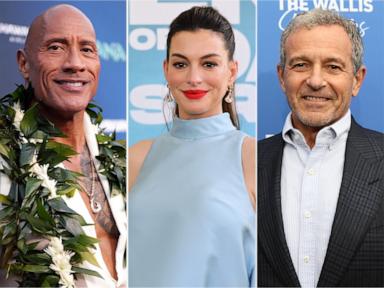
Anne Hathaway and Bob Iger will receive the Disney Legends Award at the 2026 D23 event, cementing their status within the corporate pantheon of the world's most powerful entertainment conglomerate. This accolade, established in 1987 to honor individuals who have made significant contributions to the Walt Disney Company, has evolved far beyond a simple employee appreciation ceremony. It functions as a calculated public relations instrument, balancing nostalgia with strategic corporate repositioning during times of financial and cultural scrutiny.
When the dust settles on the convention floor, the underlying mechanics of these honors deserve closer inspection. Honoring a sitting chief executive alongside a blockbuster film star is not accidental. It is a masterclass in narrative control.
The Evolution of Corporate Mythmaking
Walt Disney himself understood the power of myth. The early iterations of the company relied heavily on the folksy persona of its founder to build trust with American families. Decades later, the Disney Legends Awards program institutionalized that strategy, turning corporate loyalty into secular canonization.
Think back to the original honorees. Fred MacMurray, a reliable star of studio comedies, and Ub Iwerks, the technical genius behind Mickey Mouse, represented tangible contributions to animation and live-action cinema. They were pioneers whose work built the physical foundation of the studio.
Over the years, the criteria expanded. The list began to include animators, imagineers, musicians, and actors who graced various subsidiaries, from Pixar to Marvel and Star Wars. Yet, conferring this status on active leadership figures introduces a distinct conflict of interest. When the board decides to honor the person currently steering the ship, the line between historical recognition and corporate self-laudation blurs significantly.
Bob Iger and the Architecture of Legacy
Bob Iger’s inclusion in the 2026 class highlights a recurring theme in modern media leadership: the conflation of executive tenure with artistic triumph. Iger’s career at the helm of the company spans two distinct eras, defined by aggressive multi-billion-dollar acquisitions, streaming wars, and navigating profound cultural shifts.
He bought Pixar. He acquired Marvel. He absorbed Lucasfilm. He launched Disney Plus, steering the company directly into the direct-to-consumer streaming battle that upended traditional box office economics.
These moves reshaped the media landscape globally. They also saddled the balance sheet with substantial debt and created immense pressure to maintain infinite quarterly growth. By accepting the Disney Legends Award, Iger solidifies his narrative frame before he permanently exits the corner office. History is written by the victors, and in corporate circles, the victors hand out their own medals.
Critics might point out that honoring a sitting CEO is a defensive maneuver. Media conglomerates face unprecedented headwinds, from cord-cutting erosion to theme park pricing backlash and shifting consumer loyalties. When shareholders grow restless over box office misfires and streaming profitability timelines, framing the leader as a mythical figure helps stabilize investor confidence. It says that the architect of past triumphs is infallible, or at least beyond reproach.
Anne Hathaway and the Modern Franchise Dance
Anne Hathaway’s presence on the honoree list tells a different story about the transactional nature of contemporary Hollywood stardom. Her primary connection to the studio rests on her memorable work in films like The Princess Diaries, a modest romantic comedy that became a sleeper hit and launched a franchise.
That film premiered in 2001. More than two decades later, Hathaway remains an enduring cinematic force, yet her career trajectory encompasses Oscar-winning dramatic performances, gritty independent cinema, and blockbuster spectacles. Why bring her back into the fold now?
IP resurrection is big business. Whispers and active development surrounding a potential third installment of The Princess Diaries have circulated through trade publications for years. Honoring Hathaway at D23 serves as the ultimate marketing runway. It reminds millions of nostalgic millennials of their childhood affection while setting the stage for a commercial relaunch of a dormant intellectual property.
This is how modern Hollywood operates. Nostalgia is not just an emotion; it is a balance sheet asset. Studios mine their past catalogs to de-risk future investments, relying on familiar faces to cut through the noise of a saturated content market. Hathaway’s award bridges the gap between the era of traditional movie stars and the current epoch of unyielding franchise dominance.
The Politics of the D23 Stage
The D23 Expo is not a fan convention in the traditional comic-con sense. It is a proprietary marketing summit designed to generate consumer enthusiasm and feed the corporate beast. Every announcement, every costume display, and every tearful acceptance speech is calibrated for maximum digital amplification.
When recipients take the stage to accept their bronze statuettes, the symbolism is potent. They become physical manifestations of the brand's benevolence. The ceremony creates an emotional halo effect, shielding corporate strategy behind the warm glow of personal achievement.
Consider the contrast between the creative talent and the executive suite sharing the same stage. Animators who spent forty years in dark rooms drawing cells by hand stand shoulder-to-shoulder with executives who managed portfolios and orchestrated layoffs. Both are labeled legends. Both receive the same applause.
This flattening of hierarchy is deliberate. It suggests that corporate management and artistic creation are equal partners in the magic of storytelling. Yet, anyone who has worked inside a Hollywood studio knows the inherent tension between creative risk and fiduciary duty.
The Balance Sheet Behind the Magic
The timing of these honors rarely happens in a vacuum. Entertainment companies operate under intense public scrutiny regarding labor practices, executive compensation, and creative burnout.
When a studio celebrates its history, it often does so to distract from present friction. The current economic climate for media workers is volatile. Guild strikes, artificial intelligence integration concerns, and massive workforce reductions have left deep scars across the industry. Celebrating legendary status projects stability and continuity. It tells the creative community that greatness is still achievable within the system, even as that system becomes increasingly corporate and risk-averse.
Bob Iger’s return to steady the ship after the brief, turbulent tenure of his handpicked successor, Bob Chapek, was hailed as a return of the king. Yet, the challenges facing the company remain stubborn. Linear television is bleeding revenue at an accelerating rate. Theme park attendance faces pushback over soaring ticket prices and crowd management issues. Finding reliable box office hits requires navigating an audience that has grown skeptical of franchise fatigue.
Handing out legends awards cannot solve structural market shifts. It can, however, buy goodwill. It reminds the cultural conversation of a time when going to the movies felt simpler, and when the corporate logo promised wholesome escapism rather than algorithm-driven content delivery.
The Reality of Manufactured Myth
As the applause echoes through the arena in 2026, the audience should look past the spectacle. The Disney Legends Awards are a fascinating study in corporate self-preservation and narrative architecture. They take genuine artistic contributions and corporate strategy, blend them together, and serve them back to the public as pure magic.
Anne Hathaway deserves praise for her remarkable cinematic range and her enduring cultural footprint. Bob Iger deserves analysis for his monumental impact on global media consolidation. But placing them both in the same mythological bucket reveals the true nature of the modern entertainment complex. In the end, the legend is whatever serves the brand best.