In 1989, a young man named Marek stood in a queue in Warsaw that stretched three city blocks. He wasn't waiting for a new phone or a concert ticket. He was waiting for toilet paper. The air smelled of low-grade coal smoke and dampened hope. To look at Poland then was to look at a fracture. The shops were hollowed out, the currency was a joke told in whispers, and the "engine" of the state was a rusted relic of central planning that had finally seized up.
Economists called it a "post-communist wreck." Marek just called it Tuesday. For a different look, check out: this related article.
If you had told Marek then that his infant daughter would grow up in one of the twenty largest economies on Earth, he would have laughed. If you told him Poland’s GDP would increase nearly tenfold over the next three decades—outpacing almost every Western neighbor—he might have asked if you were drunk on cheap vodka. Yet, the story of the Polish transformation isn't found in a spreadsheet. It is found in the grit of people who decided that "good enough" was a death sentence.
The Shock of the New
The transition didn't start with a velvet touch. It started with a sledgehammer called the Balcerowicz Plan. Imagine waking up one morning to find that the price of bread has quadrupled because the government stopped pretending it could control reality. Similar insight on this trend has been provided by Reuters Business.
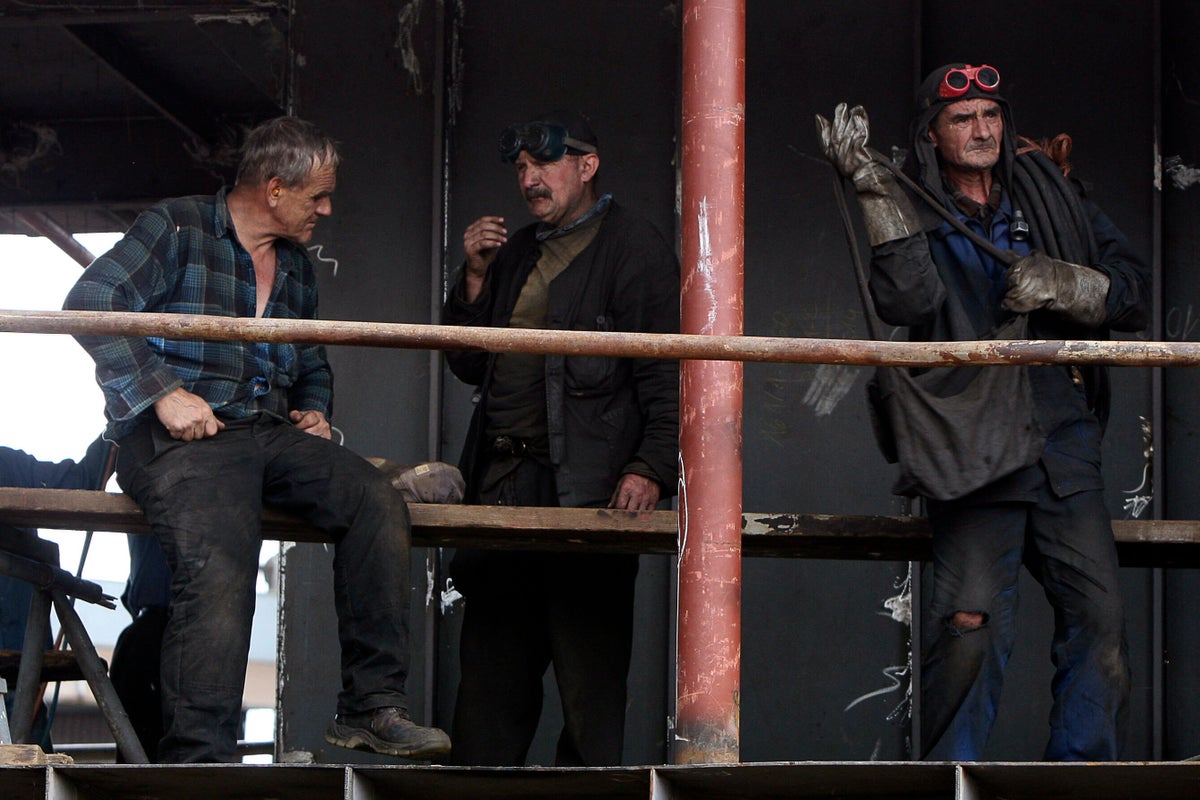
This was "shock therapy." It was brutal. Thousands of state-owned factories, those hulking cathedrals of inefficient labor, went dark. Unemployment, once a foreign concept in a socialist state where everyone "had" a job even if they produced nothing, became a predatory beast.
Marek lost his job at the tractor plant. He had two choices: succumb to the gray dust of the old world or embrace the chaos of the new. He chose the chaos. He bought a battered Ford Transit van and started driving to Berlin, buying crates of electronics and bananas—actual, yellow bananas—to sell from an improvised stall in the middle of a Warsaw sidewalk.
He was a "micro-entrepreneur," though he didn't know the word. He was simply a man who refused to starve. This was the first secret of the Polish miracle. It wasn't led by billionaires or venture capitalists; it was led by two million "Mareks" who opened kiosks, repair shops, and small trucking firms. By 1992, the private sector was already the heartbeat of the country.
The Engine Under the Hood
While the world was distracted by the flashy tech booms of Silicon Valley, Poland was quietly becoming the workshop of Europe. It didn't happen because of a single breakthrough. It happened because of a relentless, compounding accumulation of competence.
Consider the geography. Poland sits as a massive bridge between the wealthy consumer markets of Western Europe and the developing markets of the East. When the country joined the European Union in 2004, the gates didn't just open for people to leave; they opened for capital to flood in.
But capital is cowardly. It only goes where it feels safe. Poland offered a unique proposition: a highly educated workforce that was hungry for success but still cost a fraction of the labor in Munich or Paris.
The math was simple but devastatingly effective. If you were a German car manufacturer, why would you build a gearbox in Stuttgart for 50 euros an hour when you could build it in Wrocław for 12? This wasn't just "outsourcing." It was an integration. Polish engineers weren't just following blueprints; they were improving them.
The country became a hub for domestic appliances, automotive parts, and furniture. If you buy a sofa in London or a dishwasher in Madrid today, there is a statistical certainty that it was birthed in a Polish factory.
The Resilience of the Many
Growth is rarely a straight line. The 2008 global financial crisis was a scythe that cut through the world’s economies. One by one, the "tigers" of Europe fell into recession. Latvia, Estonia, Hungary—they all saw their GDPs contract.
Poland stood alone. It was the "Green Island" in a sea of red.
How? The answer lies in the domestic market. Unlike smaller neighbors who relied entirely on exports, Poland has nearly 40 million people. When the world stopped buying, Poles kept buying from each other. They had a floating currency, the złoty, which acted as a pressure valve. When the Euro grew too heavy, the złoty dipped, making Polish goods even cheaper and more attractive to the few people still spending money abroad.
But there is a human cost to being the "workhorse." For years, the story of Poland was the story of the "Polish Plumber"—the emigrant who left his family to work in the UK or Ireland because the wages at home couldn't support a life.
This was the great bleeding. Millions of the youngest, brightest minds boarded budget flights and vanished. For a decade, Polish villages felt like museums of the elderly. Marek’s own son moved to London in 2006. The "economic miracle" felt hollow to a father who only saw his grandchildren on a grainy Skype call once a week.
The Return of the Prodigals
Something shifted around 2017. The gap began to close.
It wasn't that London got worse—though it certainly didn't get easier—it was that Warsaw, Kraków, and Poznań got better. Suddenly, a software developer in Warsaw could earn a Western-style salary while enjoying a cost of living that allowed them to actually buy a home.
The "brain drain" began to reverse.
The children of the 90s started coming back, bringing with them the expertise they’d gathered in the skyscrapers of the City of London or the labs of Berlin. They didn't return to work in factories; they returned to start video game studios like CD Projekt Red, the creators of The Witcher. They started FinTech companies and green energy startups.
Poland is no longer just the place that makes your brake pads. It is the place that writes your code and designs your digital worlds.
Today, the statistics are staggering. Poland is the sixth-largest economy in the EU. Its poverty rate has plummeted. Its infrastructure, once a nightmare of potholed roads and crumbling rails, is now a gleaming web of highways and high-speed trains.
But if you ask Marek, now retired and watching his grandchildren play in a park that used to be a gray industrial lot, he won't talk about GDP. He will talk about the oranges. He remembers when an orange was a Christmas miracle. Now, his biggest problem is choosing which organic, cold-pressed juice to buy at the supermarket that stays open 24 hours a day.
The "post-communist wreck" is gone. In its place is a nation that has spent thirty-five years running a marathon at a sprinter’s pace.
The most terrifying thing for Poland’s competitors is that they haven't stopped running yet. The momentum of a forty-million-strong population that remembers what it was like to have nothing is a force that doesn't just grow an economy—it reshapes a continent.
The gray queues are a ghost story now. The reality is a vibrant, noisy, ambitious powerhouse that refuses to be ignored. Marek’s daughter doesn't wait for toilet paper; she manages a logistics firm that ships goods to four continents. She doesn't know the smell of coal smoke. She only knows the scent of a country that finally caught up to its own dreams.
The miracle isn't that they survived. The miracle is that they won.