The air inside the Kumla prison doesn’t move. It is heavy, scrubbed clean by industrial filters, and carries the faint, metallic tang of floor wax and electrified fences. This is "The Bunker." For decades, it has been the final destination for Sweden’s most broken men—those who have traded their lives for a cell in the country’s most secure fortress.
But the footsteps echoing down the corridor this morning are different. They aren't the heavy, dragging steps of a man who has spent twenty years behind bars. They are lighter. Faster. They belong to a boy who, in any other context, would be worried about a math test or a first date.
Sweden is crossing a threshold it never thought it would reach. By the end of this year, the high-security walls of Kumla will begin to house children as young as fifteen.
This isn't a policy shift born of malice. It is a desperate response to a nation in the grip of a fever. For years, Swedish society relied on the Sis-hem, a network of youth homes designed for rehabilitation, not incarceration. They were open, soft-edged places where the focus was on social work and psychological healing. But the streets changed faster than the institutions. Teenagers began carrying Glock 17s. Thirteen-year-olds became the preferred foot soldiers for drug cartels because, under the old laws, they were untouchable.
The "Sis-homes" began to fail. They were never built to hold young men who view a prison sentence as a badge of honor or a temporary career break. Escapes became routine. Staff were overwhelmed. Violence spiked.
Now, the government has reached for the only tool left in the box: the heavy iron of the adult penal system.
The Architecture of the End
Consider a boy we will call Elias. He is sixteen. In a hypothetical scenario that has become a daily reality in Stockholm’s suburbs, Elias was recruited at a neighborhood grill. It started with a free pair of sneakers. Then a "favor" to hold a bag. Then a burner phone. Last month, he was told to ride a moped into a rival's territory and pull a trigger. He did.
Under the new directives, Elias won't be sent to a leafy campus with a social worker. He will be processed through the gates of Kumla.
The physical reality of this transition is jarring. To prepare for these "special guests," Kumla has had to create a world within a world. This is not about simply throwing a teenager into a block with serial killers. The law forbids that. Instead, the prison is carving out a high-security youth wing. It is a sterile, hardened environment where every movement is monitored by sensors and every door is a barrier of reinforced steel.
The stakes are invisible but massive. If you treat a child like a monster, you often succeed in creating one. But if you treat a professional assassin like a child, people die. Sweden is currently vibrating between these two fears.
The Illusion of Control
The transition to Kumla is a confession of failure. It is an admission that the social contract, which once felt unbreakable in Scandinavia, has frayed at the edges.
The authorities argue that this move is about protection—not just for the public, but for the boys themselves. In the older youth homes, rival gangs could easily reach inside. They could pressure kids to commit more crimes or execute hits on fellow residents. Within the fortress of Kumla, that reach is severed. The walls are three meters thick. The isolation is absolute.
But what does that isolation do to a brain that hasn't finished developing its prefrontal cortex?
Neurologists tell us that the teenage brain is a construction site. The parts responsible for impulse control and long-term consequences are still being wired. When you take that construction site and move it into a sensory-deprivation tank of gray concrete and scheduled silence, the wiring goes haywire.
The staff at Kumla are being retrained. They are learning about adolescent psychology while simultaneously wearing tactical gear. It is a bizarre, heartbreaking paradox. A guard might find himself explaining the rules of the yard to a boy who still has baby fat on his cheeks, knowing that if that boy steps out of line, the response must be as swift and clinical as it would be for a veteran of the Balkan wars.
The Shadow of the Bunk
Walking through the new youth sector feels like walking through a hospital that is also a tomb. The colors are chosen to be "calming"—soft blues and muted greens—but they cannot mask the fact that this is a place designed to disappear people.
The logic of the state is simple: these children have committed adult crimes, so they must face adult consequences. It is a symmetrical argument. It feels fair on paper. But the human element is messy.
In the adult wings of Kumla, there is a certain rhythm. Men have accepted their fate. They work out, they read, they wait for the years to peel away. Children don't know how to wait. They have no concept of a five-year sentence. To a seventeen-year-old, five years is a lifetime. It is the distance between being a child and being a man. When you spend those years in a high-security box, you don't just age. You calcify.
The danger is that we are building a more efficient assembly line for the very gangs we are trying to dismantle. By moving these kids into the highest tier of the prison system, we are giving them an elite education in criminality. They will leave Kumla not with a high school diploma, but with a resume that commands respect in the underworld. They survived "The Bunker." What could the police possibly do to scare them after that?
The Cost of the Key
Sweden’s decision is being watched by the rest of Europe with a mixture of horror and fascination. For decades, the Nordic model was the North Star for progressive justice. It was proof that you could treat people with dignity and see lower crime rates.
That star is flickering.
The cost of housing a single inmate in a place like Kumla is astronomical. It’s not just the food and the electricity; it’s the specialized psychiatric care, the 24-hour surveillance, and the legal frameworks required to keep a minor in a cage meant for a man. We are spending millions to ensure that these boys are kept away from us. It is a defensive investment.
But as the first group of minors prepares to enter the gate, the real question isn't about security. It’s about the exit.
Eventually, the doors will open. Elias, or whatever his real name is, will walk out of the sterile, wax-scented air of Kumla and back into the sunlight. He will be twenty-one. He will have spent his formative years surrounded by the strongest locks in the country. He will be physically stronger, mentally harder, and spiritually hollowed out.
He will stand on the sidewalk outside the prison, blinking at a world that has moved on without him. He will have no job history, no soft memories of his youth, and no reason to believe that society wants anything to do with him.
The moped will be waiting. The burner phone will ring. And we will wonder why the walls weren't high enough.
The iron gates of Kumla are sliding shut on a new generation, and the sound they make is a heavy, final thud that echoes far beyond the prison walls. It is the sound of a country deciding that some children are simply too broken to save, and that the only thing left to do is build a better cage.
In the corner of a high-security cell, there is a desk bolted to the floor. On that desk sits a textbook. Beside it, a pair of handcuffs. That is the new Swedish reality. The lesson starts at 8:00 AM. The lockdown starts shortly after.
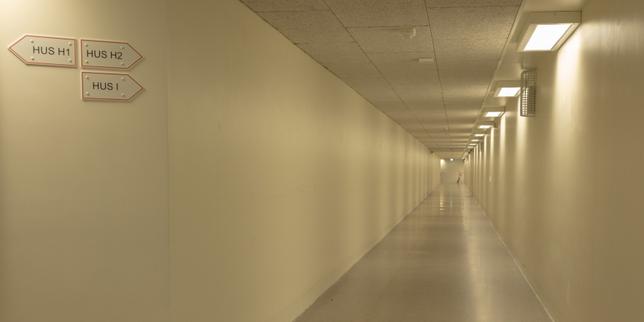
The light in the hallway never really goes out. It just dims to a ghostly hum, illuminating the empty corridor where the future of a nation is being locked away, one boy at a time.