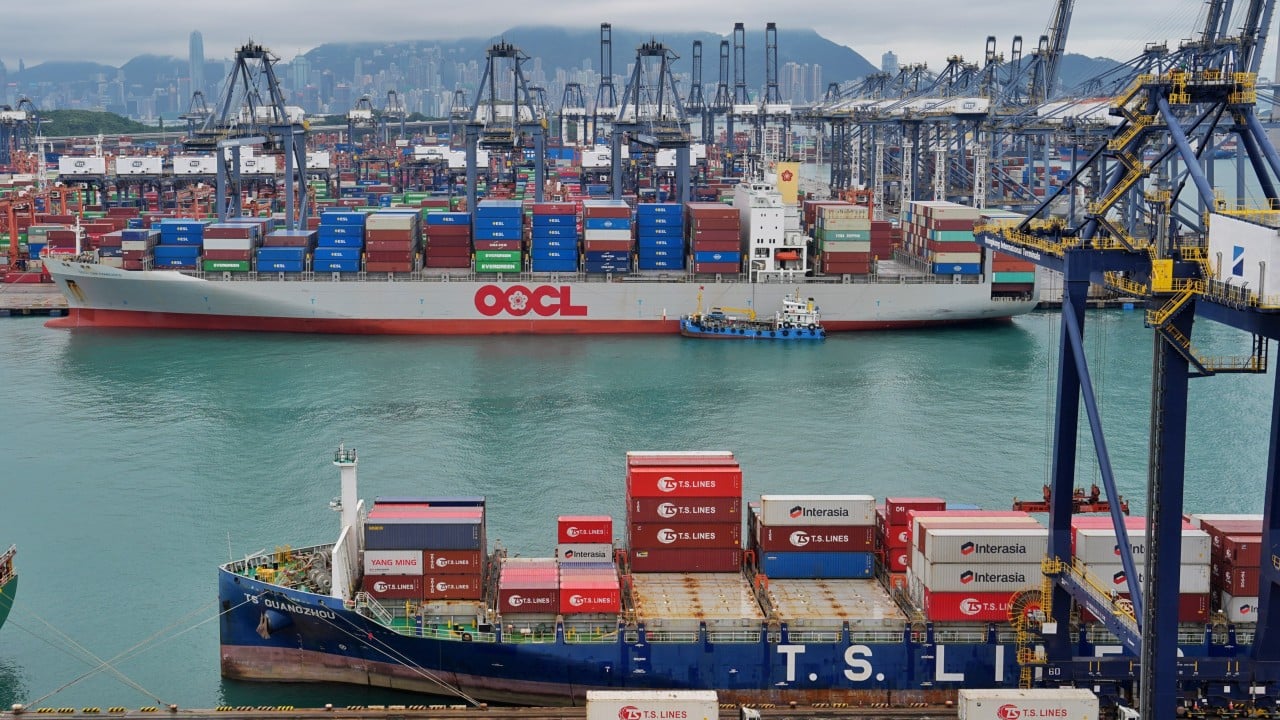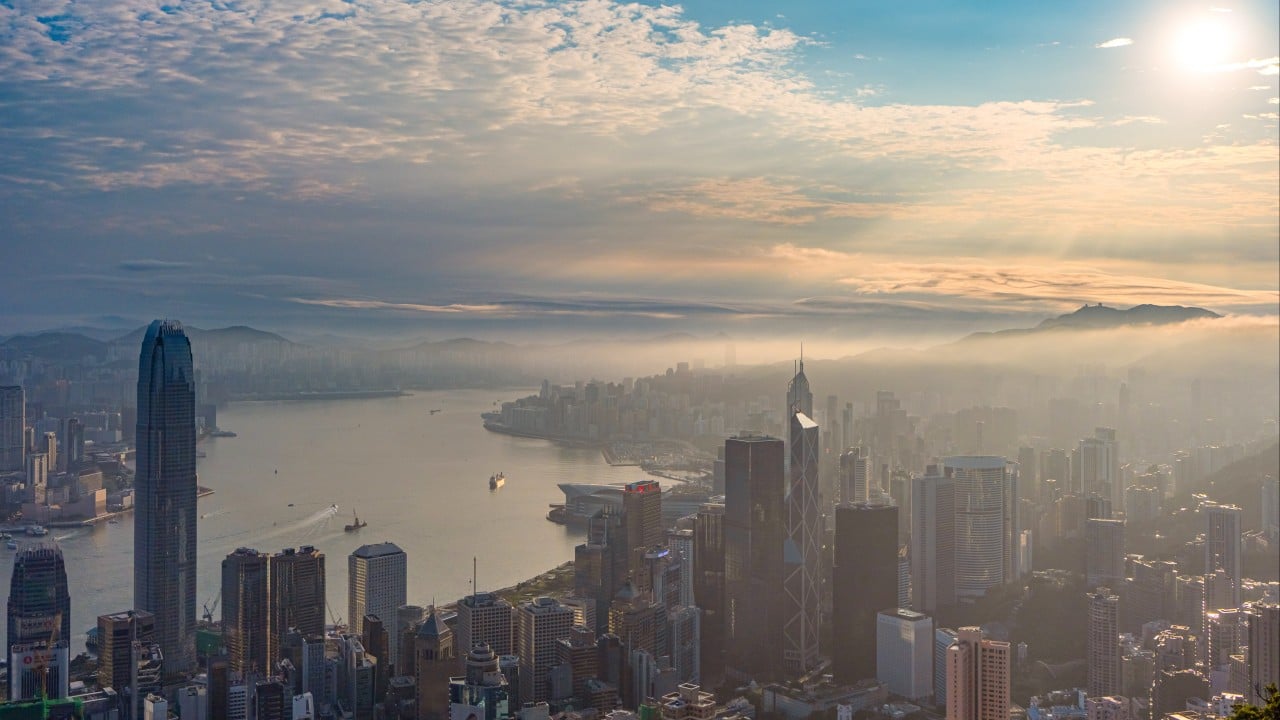
The humidity in Central Hong Kong has a way of turning a crisp white dress shirt into a damp rag by ten in the morning. For decades, that heat was just the price of doing business. It was the smell of money, the friction of millions of people trading stocks, shipping containers, and dreams in a vertical city carved out of granite and tropical forest. But lately, the heat feels different. It feels like a liability.
Li-Wei stands by the floor-to-ceiling glass of a skyscraper on Queen’s Road. Below him, the city is a pulsing vein of neon and steel. He is a fund manager, the kind of person who used to only care about basis points and quarterly yields. Now, his screen is filled with something else: carbon transition risks, green bond yields, and the terrifyingly fast evolution of the Greater Bay Area’s environmental policy.
The "old" Hong Kong was built on being the world's most efficient middleman for cold, hard cash. The "new" Hong Kong is betting its entire future on being the world's most efficient engine for the green transition. It is a pivot born of necessity, but fueled by an ambition that is uniquely Cantonese—aggressive, pragmatic, and scaled for a global stage.
The Invisible Ledger
Money is moving. Not in a trickle, but in a tectonic shift that most people walking through the Landmark atrium don’t see. When the Hong Kong government speaks about "boosting its role in green finance," it sounds like bureaucratic white noise. In reality, it is a survival manual.
The city isn’t just inviting "eco-friendly" companies to set up shop. It is re-engineering the very plumbing of global capital. Think of the world’s transition to net-zero as a massive construction project. You need architects (scientists), builders (tech startups), and, most importantly, the bank. Hong Kong is positioning itself as that bank.
Take the Green and Sustainable Finance Grant Scheme. On paper, it is a policy. In practice, it is the bridge that allows a small solar-tech firm in Shenzhen to access the massive pools of capital sitting in London or New York pension funds. By subsidizing the costs of green bond issuance and external reviews, the city is removing the "green premium"—the hidden tax that often makes being sustainable more expensive than being destructive.
Li-Wei looks at a term sheet for a new "Blue Bond." This isn't just debt. It is a promise to protect the oceans that surround his city. The stakes aren't abstract when you realize that if the sea level rises by even a fraction of a meter, the very ground his office stands on becomes a swamp. The financial becomes personal.
Innovation in the Pressure Cooker
Innovation doesn't happen in a vacuum. It happens when smart people are squeezed. Hong Kong is the ultimate pressure cooker. With limited land and a massive carbon footprint from cooling its glass towers, the city has become a living laboratory for "PropTech" and "FinTech" that actually works.
Consider a hypothetical startup called AuraGrid. (This is a metaphor for the hundreds of firms currently nesting in the Science Park and Cyberport). AuraGrid doesn't make solar panels. They make the AI that tells a sixty-story building exactly when to dim its lights and throttle its air conditioning based on the body heat of the people inside.
In a city of 7,000 high-rises, a 10% gain in efficiency isn't just a nice statistic. It is the equivalent of taking thousands of cars off the road forever. The government’s vow to support "green innovation" means that these firms are no longer fringe players. They are the new blue chips.
The logic is simple: if you can solve the climate crisis in the most densely populated, vertically challenged city on Earth, you can sell that solution to every other city in the world. Hong Kong isn't just trading carbon credits; it is exporting the blueprint for 21st-century survival.
The Greater Bay Area Bridge
There is a common misconception that Hong Kong is an island in more than just the literal sense. The reality is that its green future is tethered to the mainland. The Greater Bay Area (GBA) is the manufacturing heart of the planet. It is where the electric vehicles are built, where the lithium batteries are refined, and where the wind turbines are forged.
Hong Kong acts as the sophisticated nervous system for this industrial muscle.
When a hydrogen fuel cell factory in Foshan needs $500 million to scale up, it doesn't just need the cash. It needs the "green certification" that global investors trust. It needs the legal framework of a city that speaks the language of international law. This is the "super-connector" role reborn. It isn't about moving boxes anymore; it’s about moving the data and the trust required to verify that a "green" investment is actually green.
The skepticism is real. We have all heard of "greenwashing," where companies paint a thin veneer of emerald over their usual soot-covered operations. This is where the city’s regulatory teeth come into play. By aligning with international standards like the Common Ground Taxonomy, Hong Kong is trying to end the era of "trust me" and replace it with "prove it."
The Human Cost of Staying the Same
What happens if this fails?
It isn't just about missing a GDP target. It is about the "brain drain" of the next generation. The brightest minds graduating from HKU or PolyU don't want to work for companies that are relics of the coal age. They want to build the algorithms that price carbon risk. They want to design the vertical farms that will feed the city.
If Hong Kong doesn't become the green finance hub of Asia, it risks becoming a museum of 20th-century capitalism—shiny, but obsolete.
The "invisible stakes" are the livelihoods of the millions who rely on the city remaining a vital organ in the global economy. When the government talks about "sustainable growth," they are talking about making sure that thirty years from now, the white-collar workers in Central and the shopkeepers in Mong Kok still have a reason to be there.
Li-Wei closes his laptop. The sun is setting, casting a long, golden shadow over the harbor. He thinks about his daughter, who recently asked why the "pink dolphins" in the bay are so hard to find. He realizes that his job—moving numbers from one side of a ledger to another—is now inextricably linked to whether those dolphins have a home.
The city is betting that it can turn the tide. It is betting that the same ruthless efficiency that turned a barren rock into a global financial titan can now be used to save the world, or at least, save itself.
It is a tall order. But in a city that built its skyline on the side of a mountain, "impossible" has always been a relative term.
The real innovation isn't the technology or the bonds. It is the realization that in the new global economy, the most profitable thing you can do is ensure there is a world left to trade in.
The heat is still there. But for the first time in a long time, the city is building its own shade.