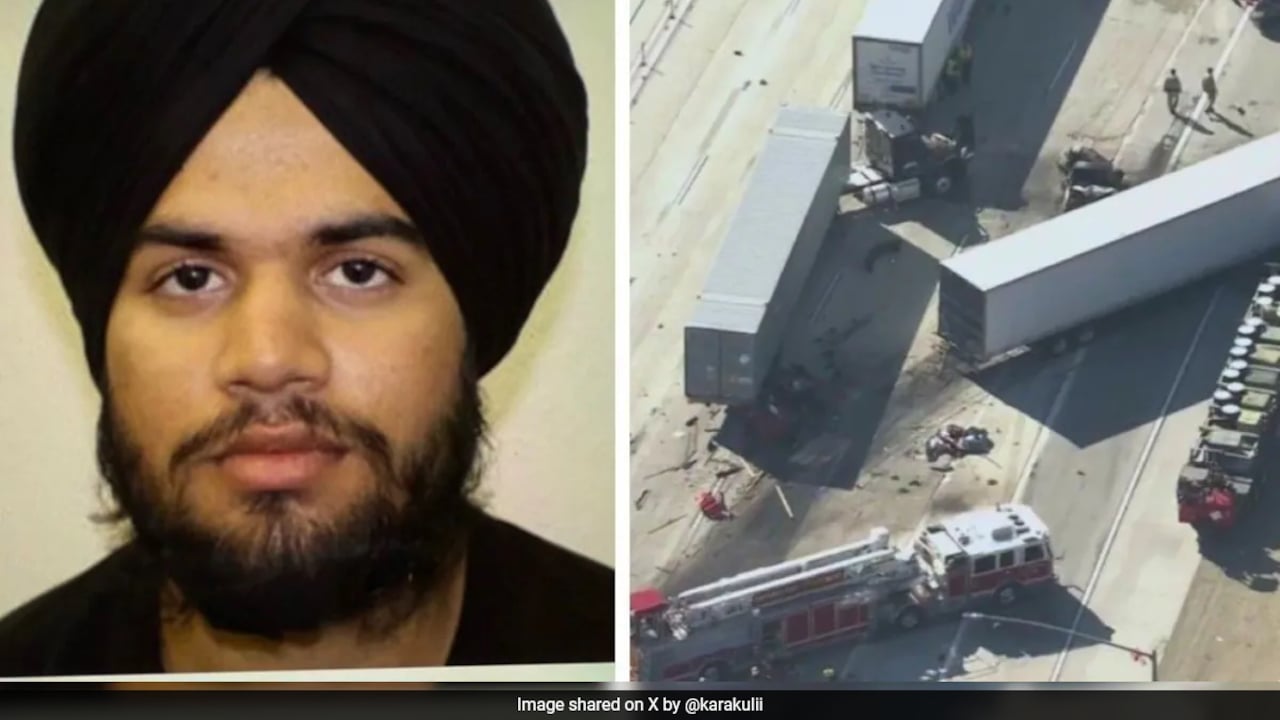
A federal judge sentenced an international commercial truck driver to five years in prison following a catastrophic multi-vehicle crash on a major United States highway. The incident, which left multiple people injured and caused massive infrastructure damage, highlights a systemic failure in the logistics industry rather than a isolated case of driver error. While prosecutors focused heavily on the driver's immediate negligence behind the wheel, industry data suggests that extreme scheduling pressures, inadequate training tracking, and language barriers in compliance documentation are creating a volatile environment on American interstate systems.
The tragedy unfolded when a semi-truck operated by an entry-level driver failed to slow down in a clearly marked construction zone, triggering a chain-reaction collision involving several passenger vehicles.
The Illusion of the Isolated Incident
State troopers and federal investigators routinely treat highway collisions as isolated events of operator non-compliance. It is the easiest path to a conviction. The driver made a mistake, the driver violated a traffic law, the driver goes to prison.
But looking at the logbooks tells a different story. The logistics sector relies heavily on a rotating pool of foreign nationals operating under specific visa programs or recent immigration statuses to fill a massive domestic driver shortage. These drivers are frequently pushed to the absolute legal limits of the Department of Transportation’s hours-of-service regulations.
When a driver is racing against an electronic logging device that threatens to shut down their earning potential the moment a clock runs out, safety margins evaporate. The pressure to maintain average speeds override basic defensive driving instincts.
Systemic Vulnerabilities in Commercial Licensing
The process of obtaining a Commercial Driver’s License (CDL) has undergone significant regulatory changes, yet gaps remain wide enough to drive a tractor-trailer through. Federal entry-level driver training mandates require specific classroom and behind-the-wheel hours. However, the quality of instruction varies wildly across independent training schools.
The Certification Factory Problem
Many third-party training facilities operate on a high-turnover model. They teach student drivers how to pass the specific state skills test rather than how to safely navigate a 80,000-pound vehicle through unpredictable weather or sudden metropolitan congestion.
Communication Breakdown in High-Stress Zones
Federal regulations require commercial drivers to read and speak English sufficiently to converse with the general public and understand highway traffic signs. In practice, the enforcement of this standard is superficial at best. During a sudden traffic bottleneck or a complex construction detour, the time required to interpret non-standardized road signage can mean the difference between a safe stop and a fatal impact.
The Economic Realities of Freight Margins
Independent owner-operators and small fleets operate on razor-thin financial margins. Supply chain disruptions and fluctuating fuel surcharges mean that a delayed delivery can turn a profitable route into a net loss.
Consider a hypothetical scenario where a carrier faces a strict delivery window for a major retail distribution center. If the driver encounters an unexpected two-hour delay due to weather, the carrier faces a financial penalty from the shipper. The driver, often paid strictly by the mile rather than by the hour, absorbs the economic hit. This framework incentivizes operators to push through fatigue, skimp on pre-trip mechanical inspections, and maintain highway speeds even when visibility or road conditions demand caution.
Typical Fleet Cost Breakdown
+----------------------------+----------+
| Expense Category           | % Cost   |
+----------------------------+----------+
| Fuel                       | 30%      |
| Driver Wages               | 28%      |
| Equipment Purchase/Lease   | 18%      |
| Insurance & Maintenance    | 14%      |
| Permits & Compliance       | 10%      |
+----------------------------+----------+
As insurance premiums for commercial fleets skyrocket, smaller companies cut corners on safety technology. Features like forward-collision warning systems, automatic emergency braking, and lane-departure warnings are often treated as optional luxuries rather than mandatory equipment.
Legal Precedents and the Shifting Blame
Sentencing a driver to five years sends a public message, but it does nothing to fix the broken mechanics of the supply chain. Criminalizing the final link in the chain shields the corporate entities that profit from unrealistic transit schedules.
Placing the entirety of the criminal liability on the individual behind the wheel ignores the dispatchers pushing for faster turnarounds, the brokers driving down freight rates, and the consumers demanding next-day delivery options. Until federal oversight aggressively targets the corporate culture of supply chain managers rather than just the exhausted operators executing their commands, the conditions that caused this multi-vehicle disaster will remain standard operating procedure on every major American corridor.