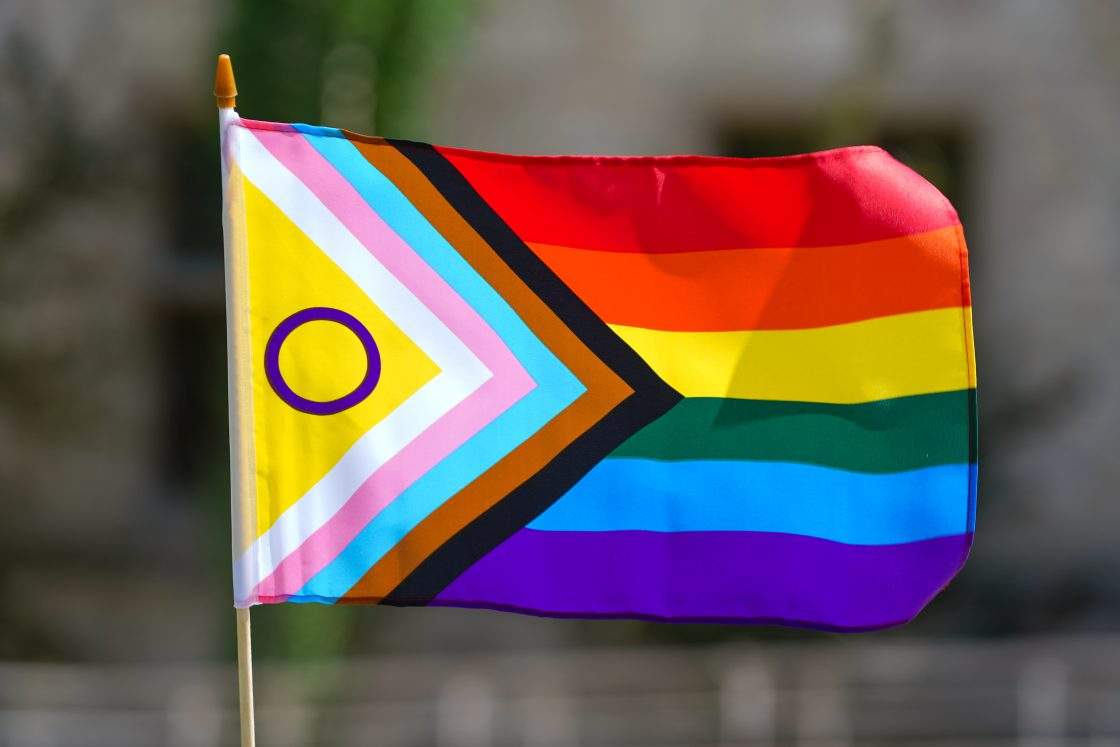
FIFA has officially ruled that fans will be permitted to display LGBTQ+ pride flags inside Seattle Stadium for the World Cup group stage match between Iran and Egypt on June 26, 2026. The governing body rejected formal, coordinated objections from both the Iranian and Egyptian football federations, which had lobbied intensely to scrub the fixture of any Pride-related visibility.
By classifying the rainbow flag as a general statement of human rights rather than a banned political symbol, Zurich attempted to draw a clean line through an administrative mess. It failed. The decision has converted a random sporting fixture into a high-stakes geopolitical proxy war, exposing the structural contradictions of a multi-billion-dollar apparatus that demands absolute cultural neutrality while anchoring its crown jewel in Western progressive metropolises.
A Collision by Design
The crisis began in December 2025 during the tournament draw. Long before the balls rolled out of the glass bowls, Seattle's local organizing committee, Seattle FWC26, had designated this specific weekend match as their local Pride Match Day. It was a marketing decision calibrated for a city celebrating its 50th annual Pride weekend.
Then came the mathematics of the draw. Group G paired Egypt and Iran, two nations where state apparatuses actively criminalize homosexuality and suppress queer advocacy.
The immediate result was an administrative panic. The Egyptian Football Association dispatched an absolute rejection to FIFA, warning that the inclusion of LGBTQ+ symbols would provoke intense cultural and religious sensitivities. Tehran followed with parallel complaints, calling the designation an irrational provocation. For six months, behind closed doors, executive committees debated whether a piece of dyed fabric violated the strict neutrality statutes of the FIFA Stadium Code of Conduct.
The Semantic Gymnastics of Zurich
To understand why FIFA broke its own unspoken rule of structural appeasement, one must look at how the organization defines politics. FIFA rules explicitly prohibit players, officials, and fans from displaying political, religious, or personal slogans.
In Qatar four years ago, this rule was deployed with brutal efficiency. Captains from European nations were threatened with immediate sporting sanctions, including yellow cards, if they wore the OneLove armband. The message then was simple: local laws and cultural norms take precedence over global social campaigns.
In the United States, the leverage has shifted. FIFA is facing a sophisticated Western market where corporate sponsors and municipal partners view diversity initiatives as baseline operational requirements, not optional gestures. Stripping Seattle of its planned activation would have triggered a severe domestic backlash, threatening commercial relationships in a market FIFA is desperate to monetize long after the final whistle.
The solution was a masterclass in semantic acrobatics. FIFA decreed that the rainbow flag is not political. Instead, Zurich reclassified it as an expression of universal human rights, allowing it to bypass the strict prohibitions governing stadium displays. It is a distinction that exists only in corporate legal briefs. To the federations in Cairo and Tehran, the flag is explicitly ideological, a symbols-driven campaign exported from the West that directly challenges their domestic legislation.
The Local Reality on the Ground
While executives in Switzerland draft statements about universal inclusion, the reality in the Pacific Northwest is entirely decoupled from corporate spin. Local organizers have made it clear that their cultural programming was never up for negotiation.
Human rights advocacy groups, including Outright International, have capitalized on the global spotlight. The organization has finalized plans to distribute thousands of rainbow flags directly outside the stadium gates, ensuring that the broadcast feed will feature the very imagery the competing federations attempted to ban.
This creates an unprecedented security environment. Match security personnel are now tasked with differentiating between a permissible general human rights flag and an impermissible political banner aimed directly at the Iranian or Egyptian regimes. The margins for error are thin, and the potential for stands-based altercations is high.
Infantino Invisible Wall
FIFA President Gianni Infantino has spent months attempting to build a rhetorical firewall between the governing body and the local host city. In interviews leading up to the tournament, Infantino insisted that the World Cup match and the city's municipal festivals are entirely separate entities. He stated plainly that external events organized by local committees have nothing to do with the sporting match itself.
This is a deliberate illusion. You cannot sell a tournament on the premise of global integration while pretending the host city's cultural identity stops at the turnstiles. The local organizing committees are the logistical backbone of the event. When FIFA accepted bids from progressive American hubs, it knowingly inherited the political and cultural expectations of those communities.
The friction in Seattle reveals the central flaw in the modern international sporting model. Governing bodies want the premium real estate and massive corporate capital of the West, but they also want the unquestioning compliance and massive state subsidies offered by autocracies. When the draw forces these two worlds into the same ninety-minute window, the myth of the apolitical game disintegrates completely.
The Structural Precedent
This ruling sets a complex precedent for the remainder of the 2026 tournament and future cycles. By legitimizing specific social symbols under the umbrella of human rights, FIFA has compromised its ability to enforce blanket bans on other forms of fan expression.
If a rainbow flag is a universal right, what is the status of anti-regime slogans brought by diaspora fans? During the 2022 tournament, Iranian fans carrying signs supporting women's rights were routinely harassed and stripped of their banners by stadium security acting under FIFA guidelines. By shifting the goalposts in Seattle to appease local commercial interests, the governing body has opened itself to accusations of selective enforcement.
The match on Friday will proceed, and the cameras will capture a stadium divided between national team colors and corporate-approved human rights symbols. Egypt and Iran will play for points on the pitch, while the stands serve as a reminder that soccer is never just a game. It is a highly contested territory where international diplomacy, corporate self-interest, and authentic human struggle collide without a referee.


