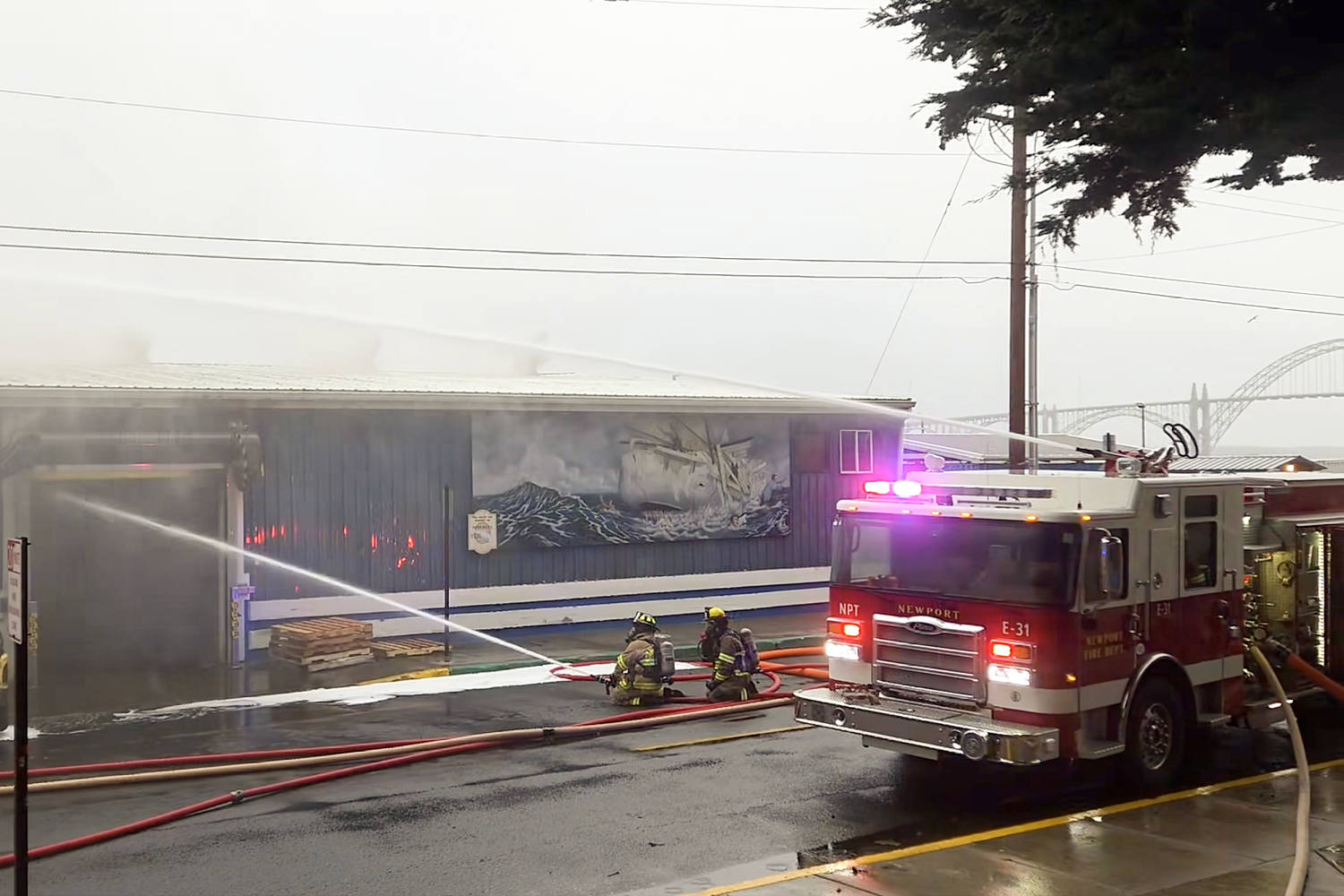
An emergency evacuation order in an Oregon coastal city following a fire at a seafood processing plant points directly to one specific industrial hazard. Anhydrous ammonia. Standard commercial fish plants rely on thousands of pounds of pressurized ammonia gas to flash-freeze catch and hold cold storage rooms below zero, and when structural fire breaches those pressurized steel lines, smoke inhalation is no longer the primary threat to surrounding neighborhoods. A toxic, caustic chemical plume becomes the immediate danger, forcing local emergency managers to clear residential blocks and Highway 101 corridors before shifting winds carry the gas inland.
Most breaking news reports treat a waterfront plant blaze like any other structure fire. They tally the engines on scene, note the perimeter tape, and wait for a press release from the local fire chief. That approach misses the industrial reality sitting on the docks of Astoria, Newport, Coos Bay, and Warrenton. Coastal seafood facilities are essentially massive chemical refrigeration batteries wrapped in aging wood, fiberglass, and foam insulation.
The Invisible Hazard Inside Coastal Processing Plants
Walk onto the floor of a Pacific Northwest shrimp or groundfish plant and the cold hits you first. Maintaining temperatures down to minus twenty degrees Fahrenheit across tens of thousands of square feet requires an industrial refrigeration loop, and the cheapest, most thermally efficient refrigerant on the market remains anhydrous ammonia, known in hazardous materials manuals as UN 1005.
It works brilliantly until something burns. Unlike household freon, anhydrous ammonia is both toxic and mildly flammable at high concentrations. It seeks moisture aggressively. When released into the humid marine air of the Oregon coast, the colorless gas binds instantly with water vapor to form a dense, ground-hugging white cloud of ammonium hydroxide that burns eyes, throats, and lungs on contact.
Firefighters arriving at a seafood plant cannot simply kick down the doors and soak the building. If flames impinge on an ammonia receiver tank, the internal pressure spikes rapidly. If a roof collapse severs a supply manifold, responders face an immediate life-safety crisis that standard bunker gear cannot stop.
Why Evacuation Zones Expand So Fast
Emergency managers along the Oregon coast use plume modeling software like CAMEO and ALOHA the moment a commercial fish plant reports smoke. They do not wait for confirmed leaks. They look at the facility's Tier II hazardous chemical inventory—documents required under federal law—and calculate worst-case release scenarios based on wind speed and marine layer inversion.
A typical mid-sized coastal processor holds anywhere from 5,000 to 25,000 pounds of ammonia on site. Under a coastal temperature inversion, where cool ocean air traps warmer air above it, a gas leak does not rise and dissipate into the upper atmosphere. It stays low. It rolls down streets, pools in low-lying river valleys, and drifts straight into adjacent working-class neighborhoods that grew up alongside the canneries a century ago.
Aging Waterfront Infrastructure Meets Modern Fire Loads
The physical layout of Oregon's working waterfronts compounds the risk every single time an alarm sounds. Many processing plants along the Columbia River estuary and central coast sit on timber pilings driven into mudflats decades ago. Creosote-soaked wood beneath a facility burns hot, fast, and entirely out of reach of standard municipal hose lines.
Above the pilings, decades of piecemeal renovations create hidden voids. A plant might start as a 1940s cannery, add a 1970s blast freezer insulated with expanded polystyrene foam, and bolt on modern stainless-steel sorting lines in the 2000s. Once fire gets inside those insulated wall cavities, it travels horizontally behind metal cladding where water cannot reach.
The Water Supply Bottleneck
Rural coastal fire districts face brutal math during a major industrial fire. A single aerial ladder truck flowing water onto a collapsing warehouse roof consumes roughly 1,000 to 1,500 gallons per minute. Add three engine companies protecting adjacent fuel docks or neighboring processors, and the municipal water main drops pressure within twenty minutes.
Coastal cities rarely maintain the high-pressure industrial water grids found in metropolitan port districts like Seattle or Portland. Fire crews frequently end up drafting saltwater directly from the bay using portable pumps, a process that eats up manpower, clogs strainers with kelp and silt, and destroys pump impellers over prolonged multi-day operations.
The Economic Shockwave Hits the Fleet Immediately
When a seafood plant burns and an evacuation order clears the waterfront, the damage extends far beyond charred steel and lost inventory. Commercial fishing operates on razor-thin biological and regulatory windows. A Dungeness crab opener, a pink shrimp season, or a mid-water whiting run does not pause while an insurance adjuster inspects a melted compressor room.
If a major buyer loses cold storage capacity overnight, vessels at sea lose their off-loading dock. Boats carrying forty thousand pounds of iced fish in their holds face an immediate countdown before the catch spoils. Captains have to burn expensive diesel running up or down the coast to rival ports—assuming neighboring plants even have the ice-making capacity and floor space to absorb the sudden overflow.
Cold Chain Bottlenecks on the Pacific Coast
The Pacific Northwest seafood industry has consolidated steadily over the past thirty years. Fewer independent docks operate today than in the 1990s, meaning each surviving processing plant handles a massive share of regional volume. Losing even one facility knocks out a critical node in the cold chain.
Processing plants do not just freeze fish. They manufacture the flake ice that keeps boats fishing. When power cuts to a plant during a fire evacuation, the ice machines stop. Within forty-eight hours, an entire local mosquito fleet can find itself tied to the dock, unable to preserve a catch even if another buyer is willing to haul it away by refrigerated truck.
Regulatory Oversight and the Reality of Coast Guard Inspections
Every facility storing more than 10,000 pounds of anhydrous ammonia falls under the OSHA Process Safety Management (PSM) standard and the EPA Risk Management Program (RMP). On paper, these rules demand rigorous mechanical integrity testing, regular relief-valve replacements, emergency shutdown drills, and coordination with local fire departments.
Reality on the working waterfront is messier. Salt air corrodes carbon steel piping from the outside in, pitting valves and weakening welds hidden beneath thick layers of frost and vapor-barrier insulation. Deferring maintenance on a refrigeration loop during a lucrative fishing season is a constant temptation when shutting down the system costs tens of thousands of dollars a day in lost production.
What Happens When Local Responders Arrive First
In small Oregon coastal towns, the first trucks on scene are often staffed by a hybrid crew of career officers and volunteer firefighters. They know the local docks well, yet few small coastal municipalities maintain a dedicated, full-time hazardous materials team on duty around the clock.
Regional hazmat teams often have to drive in from Eugene, Salem, or Portland over winding two-lane Coast Range highways—a transit time that routinely stretches past ninety minutes. During that initial hour and a half, local incident commanders have one viable play. They draw a wide circle on the map, sound the sirens, push residents out of the downwind zone, and let the building burn defensively until specialists arrive to assess the ammonia receivers.
Environmental Fallout in Sensitive Estuaries
Once the plume threat subsides and evacuation orders lift, coastal regulators face a secondary crisis in the water. Seafood plants sit directly over estuaries that serve as critical nursery habitats for juvenile salmon, Dungeness crab, and shellfish beds.
Millions of gallons of firefighting runoff wash through the burned facility, carrying a toxic slurry straight into the bay. That runoff contains melted plastics, hydraulic fluids from forklifts, diesel fuel from backup generators, dissolved ammonia, and decaying organic matter from tons of thawing seafood. Even the PFAS-free firefighting foams used on industrial fuel fires alter water chemistry and deplete dissolved oxygen levels in shallow tidal channels.
Oregon Department of Environmental Quality crews routinely deploy absorbent booms around burned docks, yet tidal swings of six to nine feet flush contaminants deep into surrounding mudflats twice a day. Shellfish growers operating miles down-estuary often face mandatory harvest closures simply because a single plant fire overwhelmed local containment.
How Coastal Communities Can Audit Their Own Risk
Residents living near working waterfronts rarely think about the chemical inventory sitting behind unmarked corrugated metal walls until police cruisers roll down their street with loudspeakers blaring. You do not need insider access to figure out what is stored down at the docks.
Under the federal Emergency Planning and Community Right-to-Know Act (EPCRA), local emergency planning committees maintain public records of hazardous materials stored above threshold quantities within every county. Any resident can request Tier II chemical inventory summaries through Oregon's State Fire Marshal community right-to-know portal to see exact quantities of anhydrous ammonia, chlorine, and bulk fuel stored within a mile of their home.
When an evacuation order drops for an industrial waterfront fire, the wind direction matters far more than straight-line distance from the flames. Moving crosswind—perpendicular to the smoke column rather than straight away from it—gets you out of a ground-hugging chemical plume fastest, and keeping car vents closed with interior air recirculation switched on prevents outside vapor from entering the cabin while you clear the zone.