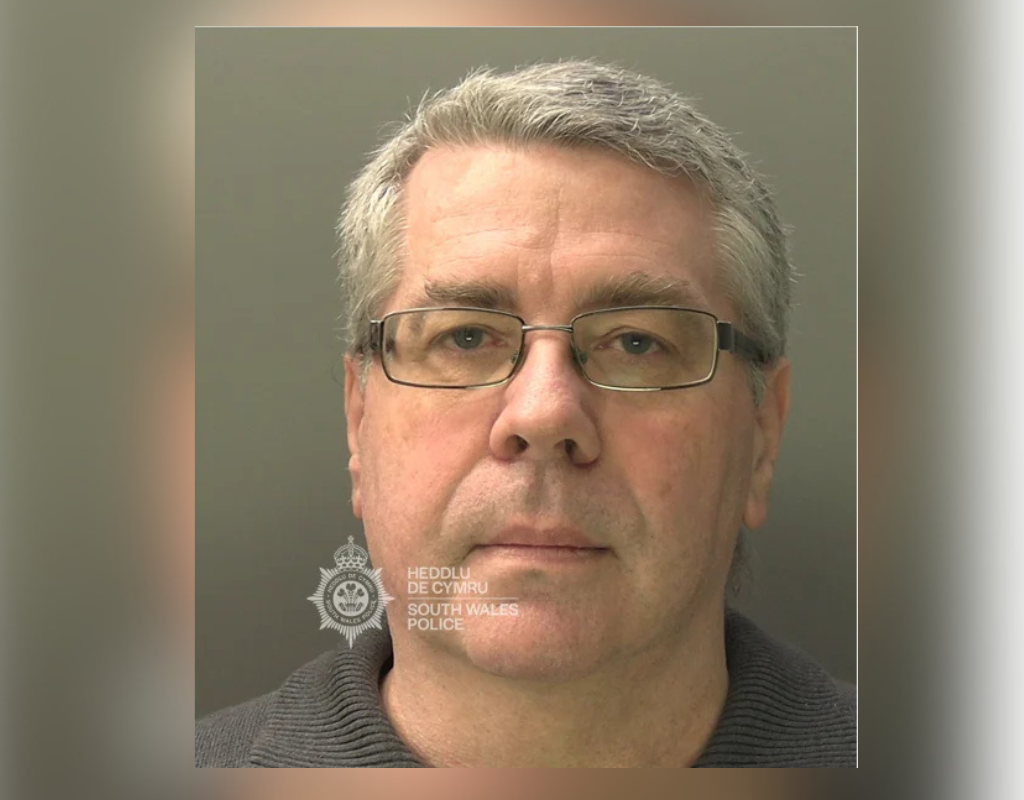
Grief does not always arrive with a dramatic crash. Sometimes, it creeps in quietly, settles into the floorboards, and refuses to leave. For Christopher Phillips, a sixty-year-old former company director living in the Welsh seaside town of Porthcawl, the end of an era happened inside a modest home on Poplar Crescent. His mother, Sylvia, was eighty-nine when her world stopped. But inside that house, time did not move forward. It froze.
For fifty years, mother and son shared an orbit. They lived together, weathered decades of changing tides, and settled into a routine so absolute that the boundaries between their individual identities began to blur. Phillips had stepped away from his career to become her full-time caregiver. When she died in March 2023, the silence that filled the rooms must have been deafening.
Most people face death by surrendering to the machinery of grief. They call authorities, plan viewings, select flowers, and bury their dead. They allow the harsh light of reality to break their hearts so that healing can eventually begin. Phillips chose a different path. Faced with the void of an impending separation, he chose denial wrapped in frost.
He placed his mother's body into a chest freezer.
To look at this act purely through the lens of a criminal docket is to miss the staggering psychological fracture underneath. Investigators later found fresh flowers resting atop the freezer. Right beside them sat a birthday card signed by Phillips and his dog, addressed simply to Mum. Day after day, month after month, for nearly three years, he maintained a haunting domestic illusion. He would talk to her about television shows they used to enjoy together, or chat about horse racing, treating the chest freezer not as a tomb, but as a continuation of their kitchen-table conversations.
Human beings are remarkably capable of rationalizing the impossible when the alternative threatens to unmake them.
Yet, human survival in modern society requires paperwork, signatures, and currency. Sylvia’s pension and benefit payments did not stop when her heart did. They kept flowing steadily into her bank accounts, totaling nearly £80,000 over the course of thirty-four months. Phillips accessed that money. To the outside world, he spun a web of deception to keep the machinery of inquiry at bay. When medical professionals or local authorities asked questions, he lied. He claimed his mother was away visiting family in London. He told doctors she simply refused to attend appointments or undergo routine medical tests.
Consider the weight of that deception. Every lie told to a doctor was a brick built around a prison of his own making. Every pension payment spent was a transaction that tied a deeply personal grief to a very public crime.
For three years, the secret held. Neighbors went about their lives. The seasons shifted along the Welsh coast. Inside Poplar Crescent, time stood rigidly still at sub-zero temperatures. But secrets of that magnitude possess a gravitational pull; they eventually collapse inward.
The fracture point arrived in February 2026. Welfare concerns were raised after medical professionals realized they had not seen an elderly woman with rolling prescriptions since 2022. South Wales Police officers knocked on the door at Poplar Crescent. When questioned, Phillips retreated into evasive maneuvers, refusing to share details about the relatives he claimed his mother was visiting in London.
Officers searched the home. They discovered the freezer, adorned with flowers and a pet's birthday card, tucked quietly into the living space.
When the truth finally spilled out into the open air, the legal system moved with predictable swiftness. Phillips pleaded guilty to preventing a lawful and decent burial and two counts of fraud. Psychiatrists who evaluated him noted that he simply could not let her go. Defense counsel pointed to his vulnerability, noting his history of isolation and the profound psychological toll of caring exclusively for an aging parent for half a century.
Judge Tracey Lloyd-Clarke, presiding over the case at the crown court, addressed the grim reality of the situation during sentencing. She noted the severe indignity Sylvia suffered, stored in a chest freezer while her son collected funds meant for her survival. The sentence was handed down: two years and four months behind bars.
A prison cell is a strange place for a man whose entire crime was rooted in an inability to accept separation.
We like to think of crime as a product of malice. We imagine greedy actors plotting in shadows, chasing wealth for its own sake. But cases like this remind us that human transgression is often far messier, born of psychological collapse, profound loneliness, and a desperate, warping fear of tomorrow.
The money is gone. The freezer has been emptied. Sylvia Phillips has finally been laid to rest, decades of shared routine reduced to a closed file in a Welsh courtroom. Left behind is the stark reminder of what happens when a mind breaks under the quiet weight of loss, choosing ice over letting go.