The air in the briefing room always smells faintly of stale coffee and industrial carpet, a sterile scent that masks the sheer weight of what gets decided within its walls. On a map projected against the wall, Iran sits like a massive, jagged puzzle piece bridging East and West. To a diplomat, it is a matrix of centrifuges and enriched uranium percentages. But to anyone who has ever watched the fallout of a broken treaty from the ground, that map represents millions of ordinary lives caught in the crosshairs of a high-stakes poker game.
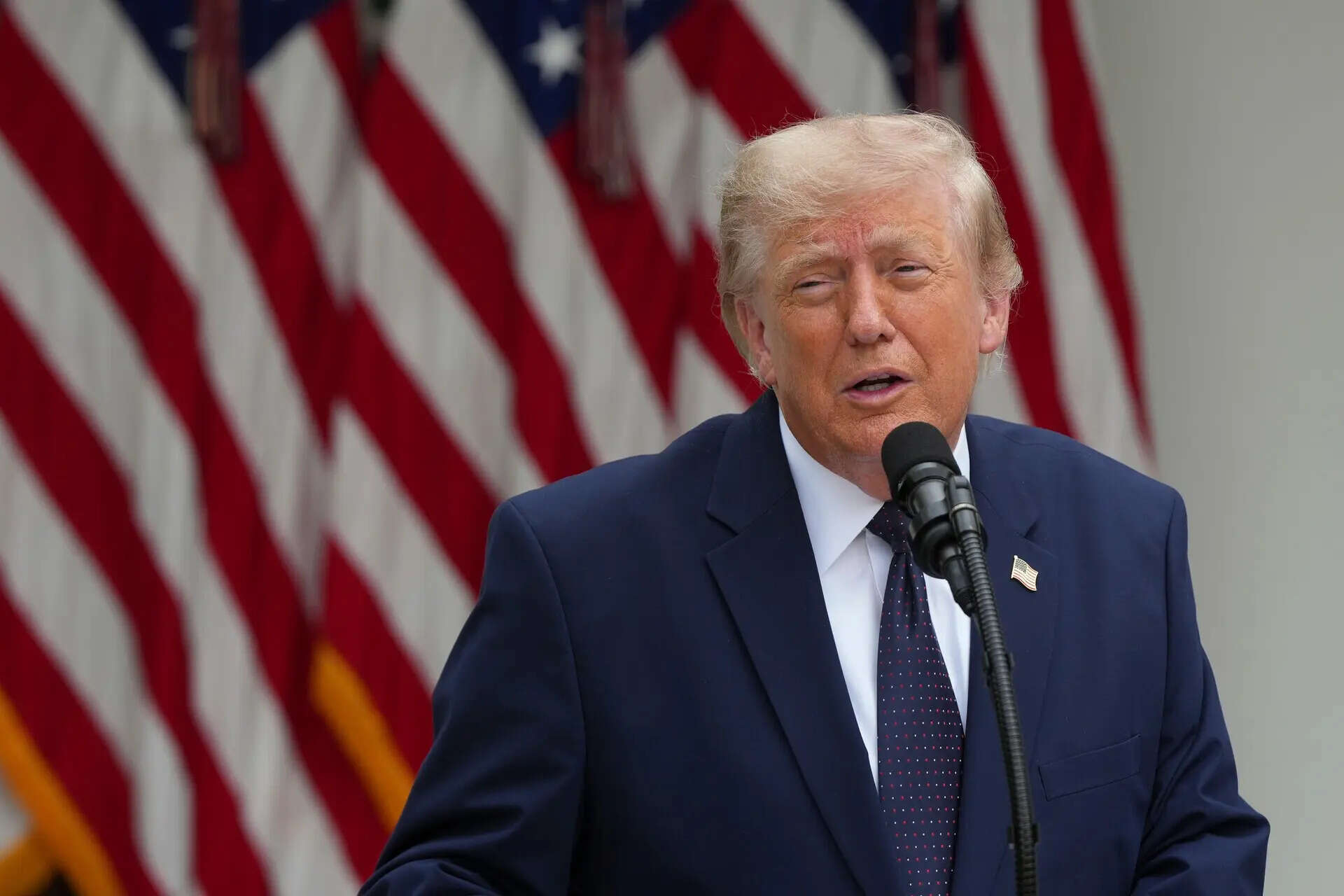
When Donald Trump stood before a microphone and declared that there would either be a deal with Tehran or the United States would "finish the job," the words echoed far beyond the immediate news cycle. They rattled the windows of cafes in Isfahan and shook the confidence of markets in London. It was classic theater, wrapped in the terrifying reality of modern geopolitics.
The standard news reports did what they always do. They transcribed the quote, tallied the historical sanctions, and interviewed a couple of think-tank analysts who used words like "strategic ambiguity." They treated a flashpoint capable of reshaping the global order as a mere scoreboard.
But geopolitics is never just a scoreboard. It is a human story.
The Weight of the Ultimate Ultimatum
To understand the gravity of a phrase like "finish the job," we have to step away from the podium and look at how these decisions filter down to reality. Imagine a small-scale entrepreneur in Tehran—let us call him Farhad. He does not own centrifuges. He owns a small shop that repairs medical equipment. For Farhad, a collapsed diplomatic avenue does not mean a shift in a policy paper. It means the specialized valves he needs to fix incubators in a local hospital will stop arriving. It means inflation will swallow his savings by Tuesday.
On the other side of the ocean, consider an American logistics officer stationed in the Persian Gulf. She spends her nights monitoring shipping lanes through night-vision goggles. When rhetoric escalates, her world shrinks. The tension in her shoulders tightens with every passing speedbood.
This is the invisible stakes of the rhetoric. Trump’s ultimatum reduces a decades-long labyrinth of cultural pride, economic warfare, and nuclear physics into a simple binary. A deal. Or a finish.
The strategy behind this language is not new, but it is brutally effective. By framing the future as a stark choice between total capitulation and total destruction, it strips away the messy, boring middle ground where actual diplomacy happens. It creates a ticking clock where there was once a chess board.
The Anatomy of the Deal
What does a "deal" even look like in this high-pressure atmosphere? The ghost in the room is always the 2015 Joint Comprehensive Plan of Action (JCPOA), a complex document that read more like a corporate merger than a peace treaty. It was a mechanical solution to an ideological problem. Iran agreed to cap its uranium enrichment at 3.67%, export its stockpile of low-enriched fuel, and open its facilities to the most intrusive international inspections ever devised. In exchange, the world promised to unlock the economic handcuffs that had paralyzed its economy.
It was fragile. It was imperfect.
Then, the United States walked away.
When the Trump administration exited the pact in 2018, the rationale was that the agreement was too lenient, failing to address Iran's ballistic missile program or its regional proxies. The "Maximum Pressure" campaign took its place. Sanctions rained down like a digital bombardment, severing Iran from the global banking system and driving its oil exports to historic lows.
The theory was simple: choke the economy, and the leadership will crawl back to the table ready to sign anything.
But nations rarely behave like corporations under pressure. Instead of bending, Tehran dug in. They restarted the centrifuges. They spun them faster. They pushed enrichment levels closer to the 90% threshold required for a weapon. The middle ground vanished, replaced by the very binary Trump articulated.
The Mirage of "Finishing the Job"
The alternative to a deal is where the narrative turns dark. "Finish the job" is a seductive phrase. It implies a clean ending. A task completed. A line crossed off a checklist.
The reality of a military conflict with Iran is anything but clean. Analysts who have spent their lives studying Persian Gulf dynamics know that a strike on nuclear facilities is not a single, decisive event. It is the first domino in a chaotic chain reaction.
Consider what happens next. A strike might shatter concrete and twist steel at the Natanz or Fordow enrichment plants. But you cannot bomb knowledge. The engineers, the blueprints, and the scientific know-how remain. Meanwhile, the retaliation begins. Asymmetrical warfare flares across the region. Shipping lanes in the Strait of Hormuz—the choke point through which a fifth of the world’s petroleum passes—become a gauntlet of sea mines and drone swarms. Global energy prices spike overnight, sending a shockwave through every gas station from Ohio to Osaka.
The illusion of a quick victory dissolves into the sand. It becomes a grinding, unpredictable quagmire that swallows trillions of dollars and countless lives.
The Language of the Negotiating Table
Negotiation is rarely about logic; it is about leverage and pride. For Iran, giving in completely to a public threat feels like political suicide for a regime built on the rhetoric of anti-imperial resistance. For Washington, appearing soft on a government that has defied it for forty years is a domestic political liability.
So, the two sides circle each other like prize fighters in the twelfth round, exhausted but unwilling to drop their guards.
The true danger of the current moment is the margin for error. When the rhetoric is dialed up to a maximum pitch, miscalculation becomes the greatest threat. A stray drone, a panicked naval commander, or a misinterpreted radar blip could trigger the very outcome both sides claim they want to avoid. The space for backing down gracefully narrows until it is the width of a razor blade.
We are left watching a high-stakes performance where the actors are playing to their respective home audiences, but the stage is rigged with real explosives. The ultimate question is whether the threat of the "final hour" will force a breakthrough, or if the momentum of the words will carry everyone over the edge.
The clock continues to tick in the desert, its rhythm indifferent to the promises made at the podiums.