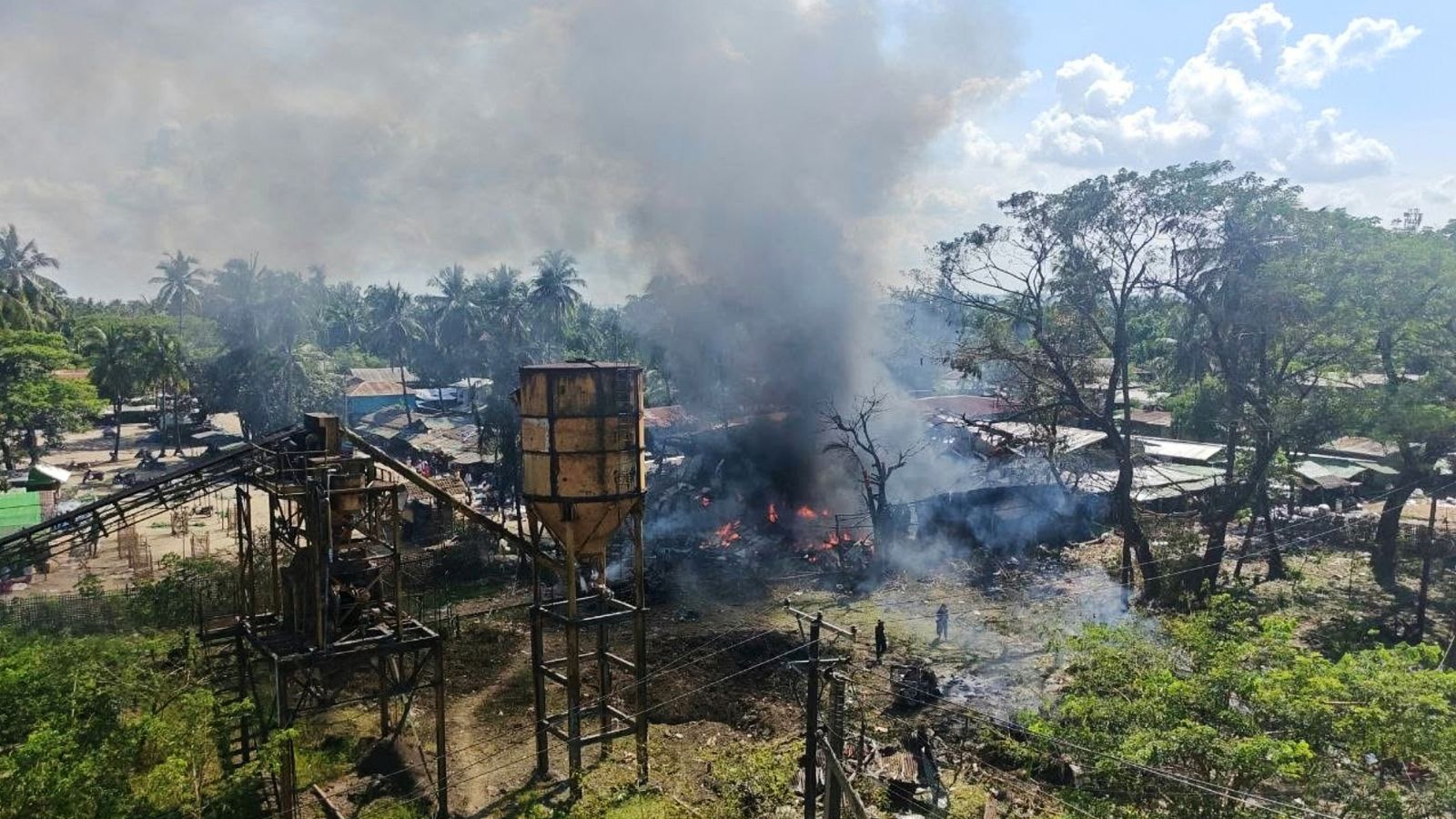
Diplomacy rarely operates in a vacuum, but the air inside United Nations headquarters during the eighty-first General Assembly session carries a distinct kind of friction. The agenda is heavy, crowded with competing geopolitical crises and economic fractures, yet the underlying current remains unmistakable. Delegates are staring down a terrifying statistical cliff. The overshoot of the Paris Agreement threshold—the temporary but destructive breach of the 1.5 degrees Celsius warming limit—is no longer a distant theoretical model debated in academic journals. It is happening right now, accelerated by a brewing super El Niño cycle that threatens to destabilize global weather patterns, agricultural yields, and financial markets simultaneously.
When diplomats gather in major international forums, the official communiqués usually rely on soothing language. They speak of reaffirmed commitments and collective resolve. Behind the closed doors of committee rooms and private bilateral meetings, however, the mood is much darker. Veterans of these negotiations know the reality. Pledges made on conference stages often evaporate the moment delegations return to capitals facing domestic energy crunches and fiscal pressure. The intersection of an aggressive climate overshoot and an intensifying El Niño event has stripped away the diplomatic veneer. Leaders are waking up to the uncomfortable truth that incremental policy tweaks will no longer suffice.
To understand why this moment feels fundamentally different from previous climate summits, one must look at the mechanics of the crisis. The Paris Agreement was built on the assumption that emissions reductions could be scaled gradually over decades, allowing economies to pivot without catastrophic shocks. That luxury of time has vanished. Global greenhouse gas concentrations continue to rise despite a decade of transition rhetoric. When combined with the natural oceanic warming cycle of El Niño, the planet experiences compounded thermal spikes. Fisheries collapse, coral reefs bleach at unprecedented rates, and breadbasket regions face severe drought cycles that ripple directly into commodity inflation.
Financial institutions and corporate boardrooms are finally starting to price in these systemic shocks, though many remain dangerously behind the curve. For years, climate risk was treated as a peripheral environmental concern, relegated to corporate social responsibility reports. Today, it operates as a primary driver of macroeconomic instability. Insurance giants are pulling out of high-risk coastal and wildfire-prone zones, leaving entire housing markets exposed. Supply chains face repeated disruptions from extreme weather events that shut down critical transit chokepoints, from the Panama Canal to major manufacturing hubs across Asia.
The political fallout at UNGA 81 reflects a deep fracture between developing nations and industrialized economies. Developing countries, which contributed the least to historical emissions yet suffer the most immediate consequences, are demanding concrete financial mechanisms to address loss and damage. They are no longer interested in vague promises of future aid or complex loan structures that increase national debt burdens. They want immediate capital transfers and technology access to build resilience against the coming weather extremes. Major economic powers, meanwhile, are preoccupied with domestic political volatility, inflation, and shifting geopolitical rivalries. This mismatch creates a dangerous paralysis just as the window for effective intervention narrows.
Addressing a systemic crisis of this magnitude requires moving past the comfortable illusions of voluntary carbon markets and distant net-zero targets. Real intervention demands direct market regulation, mandatory disclosure of climate financial risks, and massive public investments in grid modernization and resilient infrastructure. It means restructuring global trade rules to penalize carbon-heavy production while supporting nations attempting a rapid industrial transition.
The super El Niño currently developing across the Pacific will test the structural integrity of international cooperation. If governments respond to the impending food and water pressures by turning inward, hoarding resources, and abandoning multilateral frameworks, the consequences will extend far beyond environmental degradation. Geopolitical conflict over basic resources will escalate.
The eighty-first General Assembly session offers a stark choice. Leaders can continue the tired ritual of rhetorical diplomacy while the temperature records break month after month, or they can confront the economic and structural realities of a destabilized biosphere. The atmosphere does not negotiate, and the laws of thermodynamics care nothing for political convenience.
The clock on the current warming cycle is ticking down, and the margin for error has officially run out.