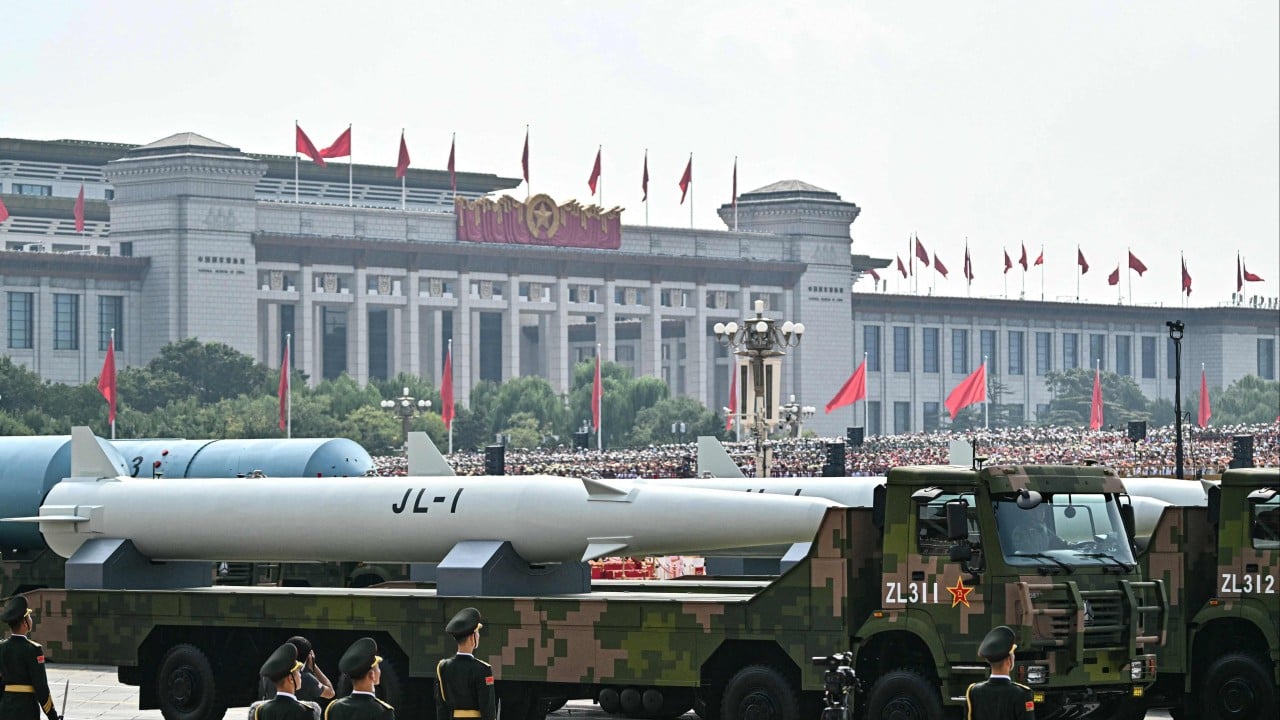
The Western defense establishment is currently hyperventilating over a report suggesting China’s nuclear warhead storage is a "highly concentrated risk." They look at satellite imagery of the Taibai Mountain region, see a handful of centralized depots, and conclude that Beijing is incompetent. They call it a "single point of failure." They suggest that a pre-emptive strike could decapitate the Red Dragon’s fire.
They are dead wrong.
What the Pentagon’s armchair analysts call a "vulnerability," a seasoned strategist recognizes as a sophisticated shell game. By viewing China’s nuclear posture through the lens of Cold War American doctrine—which favored sprawling, decentralized silos and "Launch on Warning" hair-triggers—we are missing the most important development in 21st-century geopolitics. China isn't storing its eggs in one basket because they forgot how to build baskets. They are doing it because they have redefined the nature of deterrence.
The Myth of the "Easy Target"
The fundamental flaw in the "concentrated risk" argument is the assumption that we know where the warheads actually are.
Modern intelligence relies heavily on Geospatial Intelligence (GEOINT). We see high-security perimeters. We see specialized transport vehicles. We see the geological signatures of deep underground facilities (UGFs). But in the world of hardened foliage and "Underground Great Walls," visibility is a choice made by the host, not a victory for the observer.
China has spent decades excavating thousands of miles of tunnels. If you can see a "concentrated" storage site from a Maxar satellite, it is because Beijing wants you to see it. These are "honey pots"—architectural decoys designed to soak up targeting data and draw fire away from the mobile launchers that actually matter. While US analysts count trucks at a depot in Shaanxi, the real teeth of the People’s Liberation Army Rocket Force (PLARF) are likely dispersed in civilian-grade logistics chains or deep-bore tunnels that no conventional bunker-buster can touch.
Efficiency Over Paranoia
Let’s talk about the boring reality of nuclear stewardship: maintenance.
Decentralization is a logistical nightmare. When the US disperses warheads across a dozen states, it multiplies the requirements for specialized security, climate-controlled transport, and elite personnel. It increases the "surface area" for accidents or insider threats.
China’s centralized storage at "Base 67" and similar hubs is a masterclass in operational efficiency. It allows for:
- Total Control: A shorter chain of command reduces the risk of a rogue commander or a technical glitch initiating a launch.
- Rapid Modernization: Swapping out older DF-5 warheads for newer MIRV (Multiple Independently Targetable Re-entry Vehicle) payloads is exponentially faster when the technicians and the hardware are in the same zip code.
- Strategic Ambiguity: By keeping warheads separate from launchers during peacetime, China maintains its "No First Use" (NFU) credibility. If they were to begin a massive dispersal, that would be the signal the world is ending. Centralization is a peace-time posture that keeps the West guessing about the breakout timeline.
Why the Pentagon Wants You Scared
Why is this report surfacing now? Follow the money.
The US defense industry is currently lobbying for the Sentinel ICBM program—a massive, multi-billion dollar overhaul of the aging Minuteman III. To justify that price tag, they need an enemy that looks both terrifyingly strong and strategically stupid. By painting China’s storage as a "concentrated risk," they create a two-fold narrative:
- We need better precision weapons to hit these "vulnerable" spots.
- We need more silos because the Chinese are catching up in raw numbers.
It is a classic "Have Your Cake and Eat It Too" strategy. But it ignores the reality of the DF-41. These are road-mobile, solid-fuel missiles. They don't need to sit in a silo waiting to be hit. They can be parked in a nondescript warehouse in a Tier-3 city, mated with a warhead in under an hour, and be in the air before a B-21 Raider even clears the Pacific.
The "No First Use" Paradox
The West struggles to understand China because it refuses to believe in the NFU policy.
American doctrine is built on "Counterforce"—the idea that we can win a nuclear war by hitting the enemy’s weapons before they launch. China’s strategy is "Counter-value." They don't need 5,000 warheads. They only need fifty to survive a first strike to ensure that Los Angeles, Chicago, and D.C. cease to exist.
If your goal is second-strike retaliation, centralization isn't a weakness; it's a fortress. You build one or two "impenetrable" mountain facilities rather than fifty "vulnerable" surface silos. You focus your defense—S-400 systems, point-defense lasers, and elite guard units—on a single point. It is the "Spartan" approach to nuclear physics.
The Data Gap: What We’re Actually Missing
Most reports on China’s nuclear expansion cite the "hundreds of new silos" in the Gansu desert. What they rarely mention is that many of these silos may be empty or contain decoys.
During the Cold War, the Soviets used "maskirovka" (deception) to bankrupt the US intelligence community. China has perfected this. By creating visible "concentrations," they force the US to dedicate a massive portion of its nuclear targeting list to potentially empty holes in the ground.
In a real conflict, the US would waste its first wave of "Prompt Global Strike" assets on these highly visible, highly "concentrated" targets, only to realize that the actual warheads moved out months ago under the cover of a regional weather event or a simulated civilian logistics surge.
Stop Looking at the Map and Start Looking at the Clock
The real risk isn't where the warheads are stored. It’s the "Alert Status."
Historically, China kept its warheads de-mated from its missiles. The "concentrated storage" was the warehouse, and the missiles were the delivery trucks parked elsewhere. The concern expressed in the recent US reports isn't actually about concentration; it's about integration.
We are seeing signs that China is moving toward a "Launch on Warning" posture. This means the warheads are moving from the deep storage depots to the launch brigades. The "concentration" is breaking up.
If you want to be worried, don't worry that the warheads are all in one place. Worry when they aren't.
The Industry Insider’s Take
I have seen this movie before. In the early 2000s, we were told about "Saddam’s mobile labs." In the 80s, it was the "Missile Gap." Every time the US military-industrial complex needs a budget bump, they find a "geographic anomaly" in an adversary's posture and label it a dire threat.
China’s nuclear concentration is a logical, cost-effective, and highly defensive posture. It minimizes the risk of accidental launch and maximizes the ability of the central government to keep its finger on the trigger. It only looks like a "risk" if you are planning to start a war.
If you are planning to deter one, it’s the most efficient system on the planet.
Stop falling for the "Concentrated Risk" headline. It is a distraction designed to keep you from asking why the US is spending trillions on stationary targets while the East is building a mobile, modular, and invisible deterrent.
The "single point of failure" isn't in Shaanxi. It’s in the outdated mental models of the analysts watching it.
Pack up the satellites. The warheads have already moved.