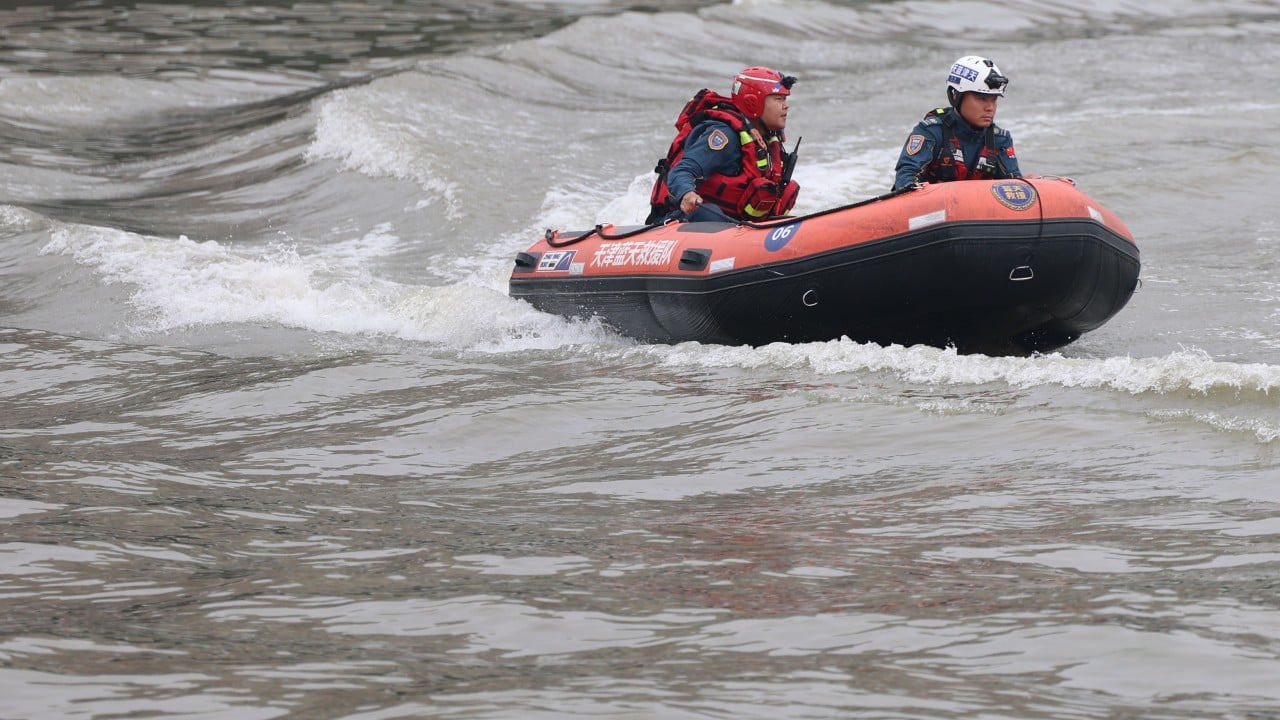
Beijing is rewriting its emergency playbook because the old one no longer works. When the Politburo issued an urgent directive demanding a total overhaul of the country’s rapid-response mechanisms for floods and extreme heat, it was not a routine bureaucratic update. It was an admission of vulnerability. For decades, the central leadership relied on predictable seasonal patterns to manage its vast agricultural and industrial heartlands. Now, erratic weather patterns are breaking records, overwhelming local infrastructure, and exposing deep structural cracks in how the world’s second-largest economy handles disasters.
The immediate trigger for this policy shift is a dangerous convergence of meteorological extremes. Southern provinces are drowning under historic rainfall while northern industrial hubs bake in prolonged heatwaves that threaten the power grid. This is not just a weather problem. It is a governance crisis. The top-down administrative system is finding that sheer political will cannot stop a river from bursting its banks or keep air conditioners running when the grid hits peak capacity.
The Break Down of Local Defenses
Disaster response in the country has historically depended on a rigid, hierarchical chain of command. When a crisis occurs, local officials look to provincial leaders, who in turn wait for directives from Beijing. This system works well for mobilising massive resources after the event, but it fails miserably when minutes matter.
During recent flash flooding events, the time required to pass data up the bureaucratic ladder and receive permission to evacuate or open floodgates proved fatal. Local cadres, terrified of making a wrong move that could damage their careers, frequently hesitate. They wait for official stamps of approval while water levels rise. The new mandate from the Politburo attempts to smash this hesitation by forcing a decentralisation of immediate decision-making power, demanding that local authorities act instantly without waiting for higher clearance.
Forcing autonomy onto a bureaucracy trained for absolute obedience is a massive challenge. For years, the central government judged local officials primarily on economic growth and social stability. Disaster management was an afterthought, a temporary nuisance handled by the military or local volunteer groups. Now, the criteria are shifting. Survival and adaptation are the new metrics of success, but the transition is messy. Local officials lack the training, the independent data networks, and the financial resources to execute these rapid-response mandates effectively.
The Fiscal Crisis of Climate Adaptation
Upgrading early-warning systems and reinforcing physical infrastructure requires capital. That is capital that local governments simply do not have right now. A prolonged real estate downturn has stripped municipalities of their primary revenue source which was land sales. At the same time, regional authorities are carrying mountains of hidden debt accumulated during previous infrastructure booms.
Beijing expects regional capitals to fund these rapid-response upgrades, but the coffers are bare. This financial reality creates a dangerous disparity between wealthy coastal enclaves and poorer inland provinces. Cities like Shanghai or Shenzhen can afford to invest in sophisticated urban drainage networks, underground cooling centers, and automated weather tracking. Meanwhile, rural provinces in the southwest find themselves reliant on outdated earthen dikes and manual communication methods.
When a major weather event strikes an impoverished region, the results are catastrophic. The central government is forced to step in with emergency bailouts, which drains the national treasury and disrupts broader economic planning. The Politburo's demand for a rapid-response overhaul ignores the underlying financial reality that you cannot build a modern, high-tech defense system with bankrupt local budgets.
The Grid Gridlock and Industrial Shutdowns
Extreme heat presents a completely different set of challenges than flooding, yet it is equally destructive to the economy. When temperatures soar past forty degrees Celsius across multiple provinces simultaneously, the strain on the national power grid becomes existential.
Air conditioning demands skyrocket. To keep the lights on in residential areas, authorities face a grim choice. They must ration electricity to heavy industry. In major manufacturing hubs, factories producing everything from automotive parts to solar panels are regularly ordered to curb production or shut down entirely for days at a time to prevent total grid collapse. These forced shutdowns ripple through global supply chains, delaying shipments and increasing costs for businesses worldwide.
The underlying issue is the composition of the energy network. While investment in renewable energy has broken global records, the country still relies heavily on coal for baseline power generation. Hydropower, which supplies a massive portion of the energy mix in provinces like Sichuan, fails precisely when it is needed most. Severe heatwaves bring prolonged droughts, drying up reservoirs and cutting hydropower output by more than half. The Politburo wants a rapid-response overhaul that can balance these energy loads dynamically, but shifting power across thousands of miles of transmission lines during a nationwide heatwave is an engineering nightmare that software updates alone cannot solve.
Rethinking Food Security and Supply Chains
Agriculture is the silent casualty of this climate instability. The northern plains, which produce the bulk of the nation’s wheat and corn, are experiencing unprecedented swings between severe drought and sudden, unseasonal deluges.
Food security is a foundational pillar of political stability for the leadership. Rice paddies in the south are highly sensitive to temperature fluctuations; even a few days of extreme heat during the flowering stage can ruin an entire harvest. When domestic crops fail, Beijing is forced to buy grain on international markets, driving up global food prices and exposing the country to external geopolitical pressures.
The new rapid-response strategy calls for the creation of regional agricultural reserves and the deployment of mobile drone fleets for emergency crop spraying and drying. However, these measures are sticking plasters on a deep wound. The long-term viability of traditional farming regions is under threat, and the state-directed agricultural model is struggling to adapt to a climate that changes faster than five-year plans can be drafted.
The Limits of Total Control
The current crisis highlights a fundamental tension within the governing philosophy of the state. The leadership believes that any problem can be solved through stricter discipline, better technology, and centralized control.
Nature does not care about administrative decrees. No amount of political ideology can prevent a mountain from sliding into a valley after a month of unprecedented rain. The focus on top-down pressure often backfires, leading to cooked data and falsified safety reports from local officials who are desperate to meet impossible safety targets.
To truly modernise its disaster response, the system needs transparency. It requires independent journalism to uncover structural flaws before they cause a disaster. It requires civil society groups that can coordinate grassroots relief efforts without waiting for state approval. It requires open data sharing so that scientists and engineers can critique government projects without fear of reprisal. These are the very elements that the current political structure has systematically dismantled over the last decade. By relying solely on state power and administrative coercion, the Politburo is trying to fight a multi-front environmental war with one hand tied behind its back.
The coming months will test this new directives to the absolute limit. As the summer storm season intensifies and temperature records fall across the continent, the world will see whether an authoritarian bureaucracy can successfully re-engineer its defenses on the fly, or whether the forces of an unpredictable climate will outrun the state's capacity to control them.


