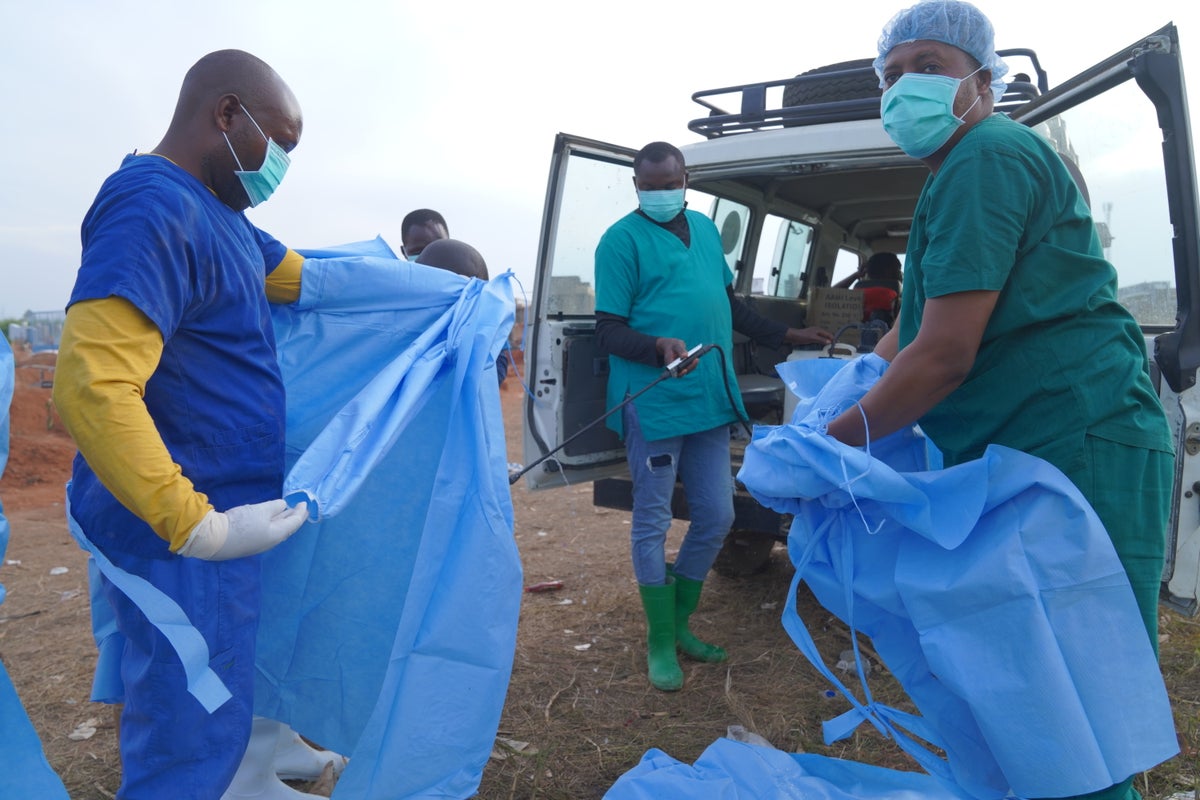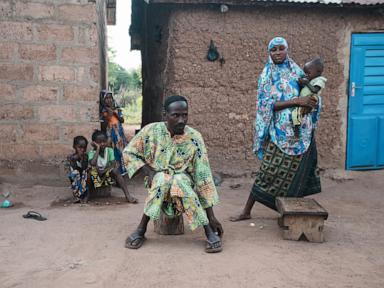
Childhood stunting represents a structural failure of human capital development, defined biologically by linear growth retardation and economically by permanent impairments to cognitive productivity and lifetime earnings. In the Republic of Benin, stunting rates hover persistently near chronic thresholds, acting as an invisible drag on macroeconomic growth. The standard public discourse attributes this crisis to generalized poverty or simple food scarcity. This diagnosis is fundamentally incomplete. Benin does not suffer from an absolute absence of macronutrients; rather, it suffers from severe market failures in nutritional information, distorted household decision-making matrices, and localized supply chain breakdowns that prevent micronutrients from reaching the biological target.
Understanding the persistence of stunting requires analyzing the mechanics of chronic malnutrition as a multi-variable optimization problem faced by resource-constrained households. When caregivers allocate limited capital and time, they operate under deep cognitive biases, traditional dietary taboos, and asymmetric information regarding the critical window of human development. Solving this crisis demands an operational blueprint that treats stunting not merely as a medical emergency, but as an allocation problem requiring systematic institutional intervention, supply chain re-engineering, and behavioral economic nudges.
The Tripartite Failure Architecture
The persistence of chronic linear growth failure in West African developmental contexts stems from three distinct, interacting bottlenecks.
The first bottleneck is informational friction. Households frequently possess incorrect mental models regarding infant and young child feeding practices. Traditional dietary regimes often rely heavily on bulky, nutrient-deficient staple carbohydrates—primarily maize or sorghum porridges—while withholding protein-dense foods or micronutrients from infants due to deeply ingrained cultural beliefs or misdiagnosis of childhood illness symptoms. When caregivers believe that certain foods cause parasitic infections or developmental delays in infants, an informational barrier forms that capital injection alone cannot dissolve.
The second bottleneck is the biological penalty of repeated pathogen exposure. Stunting is rarely caused by caloric deprivation alone; it is overwhelmingly driven by environmental enteric dysfunction and chronic subclinical gut inflammation. Contaminated water sources, inadequate sanitation infrastructure, and poor domestic hygiene create a continuous cycle of diarrheal episodes. These infections divert metabolic energy away from linear skeletal growth toward immune system activation, while simultaneously impairing nutrient absorption in the small intestine. A child consuming adequate calories who continuously fights waterborne pathogens will still experience growth stunting.
The third bottleneck is the structural cost function of dietary diversity. Even when caregivers understand nutritional requirements, the market price of animal-source foods, legumes, and fresh produce presents an insurmountable barrier relative to median household purchasing power. The cost per kilocalorie of micronutrient-dense inputs is systematically higher than that of refined carbohydrates. Without targeted subsidies or localized agricultural diversification, rational household budget management results in calorie-dense, nutrient-sparse diets.
Behavioral Biometrics and Decision Architecture
Households in resource-limited settings do not make nutritional decisions in a vacuum of perfect rationality. Behavioral economics demonstrates that scarcity imposes a cognitive tax, reducing mental bandwidth and forcing short-term survival heuristics over long-term human capital investments.
When a mother faces daily liquidity constraints, long-term health horizons for an infant compress into immediate concerns about caloric satiety. Porridge made from refined maize flour fills the child's stomach immediately, satisfying the primary heuristic of visible satiation. Nutrient-dense alternatives, such as eggs, small indigenous fish, or vitamin-rich legumes, are often perceived as supplementary or luxury items rather than biological imperatives during the first one thousand days of life—the critical developmental window spanning conception to a child's second birthday.
Compounding this decision matrix is the intrafamilial distribution of food. Patriarchal food governance structures frequently prioritize adult male caloric intake over the nutritional requirements of pregnant women and infants. This misallocation means that even when a household acquires protein or micronutrients, the biological targets who require them most for cellular replication and skeletal mineralization are deprioritized.
Public health campaigns that rely on passive educational pamphlets fail because they ignore these behavioral realities. Information must be embedded within social proof structures, utilizing trusted community health workers who can alter local norms surrounding infant feeding through active, recurring behavioral nudges rather than one-off seminars.
Supply Chain Realities and Pathogen Vector Management
Addressing the physiological manifestations of stunting requires tracing the biological pathway from environment to tissue. Linear growth velocity depends on systemic homeostasis. When an infant ingests water or food contaminated with fecal pathogens, the intestinal mucosal barrier breaks down.
In rural and peri-urban Beninese environments, infrastructure deficits in potable water and wastewater management guarantee continuous low-dose pathogen ingestion. This condition, known as environmental enteropathy, causes structural flattening of the intestinal villi. The absorptive surface area shrinks, meaning that even if a child consumes micronutrients, they pass through the digestive tract unabsorbed.
Consequently, nutritional interventions that ignore water, sanitation, and hygiene metrics are structurally doomed to fail. Distributing therapeutic food supplements to a child living in a high-pathogen environment is equivalent to pouring water into a leaking vessel. The operational strategy must integrate point-of-use water purification, safe disposal of infant feces, and handwashing promotion directly into the nutritional delivery protocol.
Furthermore, the agricultural supply chain in Benin exhibits high post-harvest loss rates for perishable micronutrient sources. Cold-chain logistics for dairy, meat, and fresh produce are largely absent outside major urban centers. This structural deficit concentrates high-value nutrients in urban markets while rural populations, where stunting rates peak, remain isolated from affordable access. Fixing this requires decentralized micro-processing and localized aquaculture or poultry farming initiatives that shorten the distance between production and consumption, lowering transaction costs and spoilage rates.
Evaluating Historical Interventions and Structural Limitations
Past attempts to mitigate stunting in the region have yielded mixed empirical results, primarily due to design limitations. Large-scale general food distribution programs often suffer from leakage, elite capture, and substitution effects, where households reduce their own food expenditures by the exact value of the aid received, resulting in zero net nutritional gain.
Targeted supplementation trials show high efficacy during active implementation phases but frequently experience high post-intervention attrition. Once external funding or programmatic presence withdraws, communities revert to baseline dietary patterns because the underlying economic and informational structures were never permanently altered.
Universal supplementation strategies are also fiscally inefficient. Given limited public health budgets, resources must be dynamically targeted based on predictive spatial mapping of stunting vulnerability rather than blanket distribution. This requires strengthening health information systems to track growth velocity anomalies in real-time at local clinics, transforming static annual surveys into dynamic operational dashboards.
Strategic Operational Protocol
To reverse chronic linear growth failure in regions like Benin, stakeholders must abandon fragmented, single-sector interventions. The crisis demands a synchronized operational framework built on three non-negotiable pillars.
First, public health expenditure must pivot from reactive treatment of acute malnutrition to preventive nutritional security during the first one thousand days. This requires institutionalizing mandatory growth monitoring at community-level health posts paired with immediate conditional cash transfers explicitly earmarked for nutrient-dense local food procurement.
Second, behavioral change communication must be redesigned using insights from behavioral science. Messaging should target male household decision-makers and community elders, reframing infant nutrition as an economic investment in family longevity rather than a domestic chore. Peer-to-peer behavioral modeling by local champions overcomes cultural inertia far more effectively than top-down bureaucratic directives.
Third, infrastructure investments must treat water safety as a core nutritional intervention. Until the pathway of chronic enteric infection is severed, biological investments in food security will continue to yield sub-optimal returns. Capital allocation must prioritize decentralized solar-powered water filtration and community sanitation networks in high-burden rural districts.
The path forward requires treating stunting not as a tragic inevitability of poverty, but as an engineering and informational inefficiency that yields to precise, coordinated structural intervention.