The Myth of the Last Minute Spoiler
Mainstream media loves a tidy narrative. The script for the last 48 hours is predictable: "Hezbollah launches rockets to derail peace." It’s a lazy interpretation that treats geopolitics like a schoolyard scrap where the kid who gets the last punch is the one trying to keep the fight going. This "spoiler" theory is fundamentally flawed. It ignores the cold, hard logic of asymmetric warfare and the brutal reality of leverage at the negotiating table.
If you think these strikes are an attempt to stop a ceasefire, you aren't paying attention to how power actually moves in the Levant. These aren't the desperate flailings of a dying movement. They are the calculated, rhythmic pulses of a group ensuring that the "peace" looks exactly how they want it to.
Ceasefires Are Not Peace They Are Rebranding
The fundamental misunderstanding in most analysis is the definition of a ceasefire. It is not an end to hostilities. It is the transition of kinetic energy into political positioning. When Hezbollah strikes northern Israel hours before an announcement, they aren't trying to blow up the deal. They are setting the price of the next one.
I’ve watched analysts for decades treat these final salvos as "provocations." They aren't. They are receipts. In the world of non-state actors, if you don't fire the last shot, you didn't "agree" to stop—you were forced to stop. There is a massive psychological and strategic difference between a retreat and a pause. By maintaining a high tempo of fire until the literal second the clock hits zero, Hezbollah signals to its base and its enemies that the ceasefire is a choice, not a surrender.
The Leverage Delusion
Critics argue that Hezbollah risks everything by poking the bear when a deal is on the table. This assumes the "bear" (Israel) wants the war to continue more than Hezbollah does. It’s a faulty premise. Both sides are currently trapped in a cycle of diminishing returns.
Israel’s objective—the safe return of residents to the north—cannot be achieved through air strikes alone. Hezbollah’s objective—survival and regional relevance—is threatened by total conventional escalation. The strikes aren't a gamble; they are a stress test. They prove that despite months of targeted strikes against their leadership, the "nerve center" still functions.
The Reality Check: A group that can launch a coordinated rocket barrage while its top brass is being decimated isn't "on the ropes." It’s proving its redundancy.
Dismantling the "People Also Ask" Nonsense
People often ask: "Why would Hezbollah risk the ceasefire now?"
The question itself is wrong. It assumes the ceasefire is a gift being given to Hezbollah. In reality, the ceasefire is a strategic necessity for every player involved, including the international mediators. Hezbollah knows that a few dozen rockets on a Tuesday morning won't break a deal that has months of back-channel diplomacy behind it. They aren't risking the deal; they are decorating it.
Another common query: "Is Israel's iron dome failing?"
No. But that’s the wrong metric. Success for Hezbollah isn't about how many buildings they level. It’s about how many sirens they trigger. If the sirens are blaring in Haifa, the Israeli government is under pressure. That pressure is the currency Hezbollah uses to ensure the ceasefire terms don't include their total disarmament or a retreat beyond the Litani River that they can't spin as a win.
The Cost of the "Quiet"
There is a dark side to this contrarian view that I have to acknowledge. The cost of this "signaling" is human. When we talk about "leverage" and "strategic pulses," we are talking about shrapnel and displacement. But if we want to understand the why, we have to strip away the moralizing and look at the mechanics.
The international community views a ceasefire as a vacuum—a period of nothingness. For Hezbollah and the IDF, a ceasefire is a period of "active waiting." It is for re-arming, re-positioning, and intelligence gathering. The final strikes serve as a baseline. They say: "This is our reach today. Imagine our reach after six months of 'quiet'."
Why the "Diplomatic Success" Narrative is a Lie
When the announcement finally drops, expect the usual suspects in Washington and Paris to take a victory lap. They will call it a triumph of diplomacy over chaos. Don't believe them.
This isn't a triumph; it’s a stalemate. The diplomacy didn't "win." The logistics of exhaustion won. Both sides have reached the limit of what they can achieve without a full-scale ground invasion that neither can afford—politically, economically, or militarily.
The "peace" being touted is a thin veneer over a structural conflict that hasn't been addressed. By focusing on the "last-minute strikes" as a hurdle, the media ignores the fact that the hurdle is the entire track. We are celebrating the end of a round, not the end of the fight.
The Tactical Theater
Imagine a scenario where Hezbollah stayed silent for the 48 hours leading up to the announcement. What would the headline be? "Hezbollah Cowed Into Silence." "Israel’s Might Forces Submission."
For a group built on the "Resistance" brand, submission is death. They would rather trade a few more days of Israeli bombardment for the ability to say they fought until the ink was dry. It’s theater, but in the Middle East, theater is a hard currency. It buys recruitment, it buys Iranian support, and it buys "street cred" that lasts longer than any signed document in a hotel ballroom.
Stop Looking at the Map, Look at the Clock
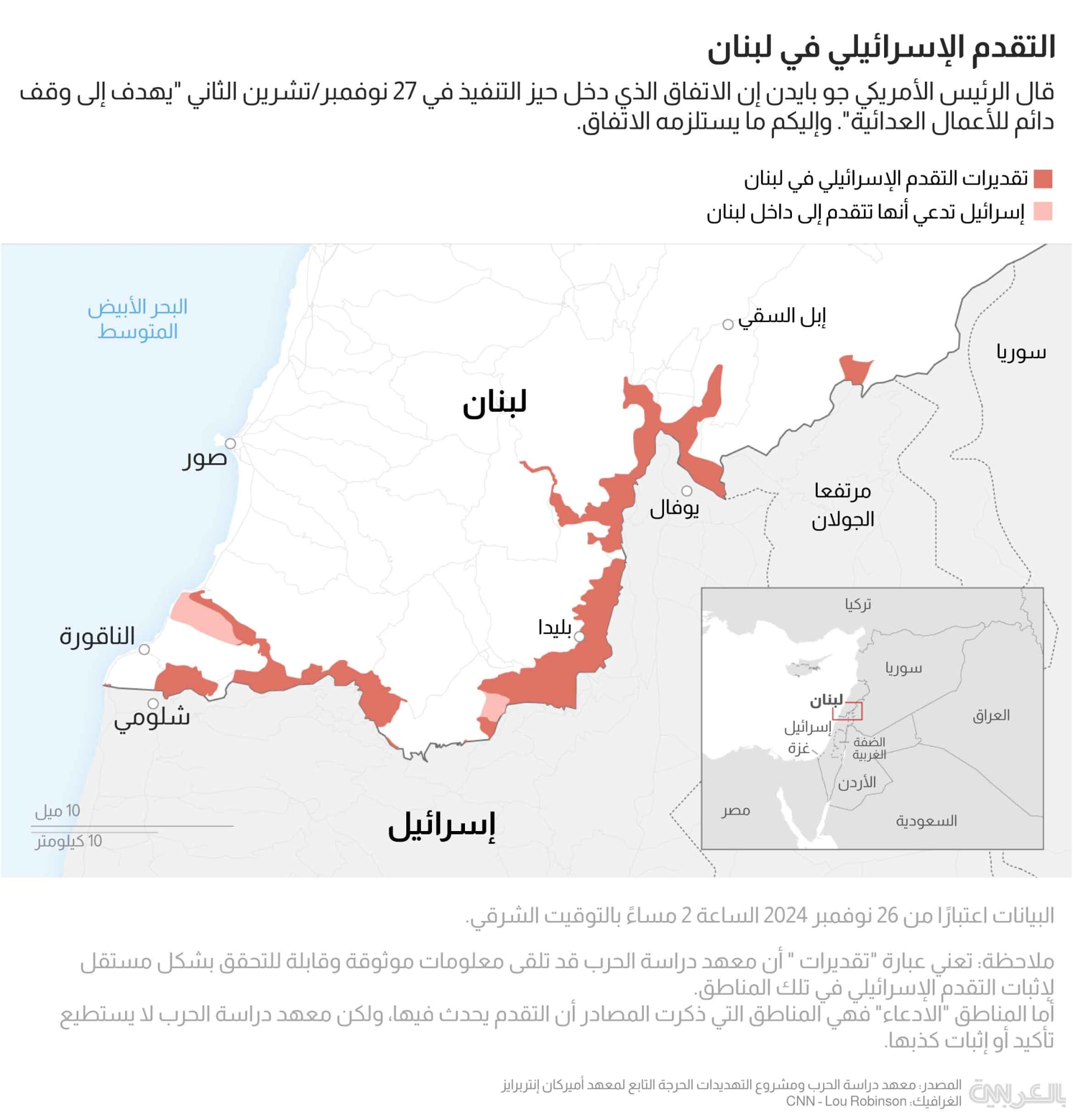
The obsession with "buffer zones" and "border points" misses the temporal element of this conflict. Hezbollah operates on a timeline of decades. Israel operates on a timeline of election cycles.
These final strikes are a reminder of that discrepancy. Hezbollah is showing that they can wait. They can endure the "maximum pressure" and still have enough hardware left to make the Galilee uninhabitable at a moment's notice. The ceasefire doesn't change that reality; it just puts it on a timer.
The Failure of Conventional Analysis
Standard reporting treats these events as a series of "setbacks" and "breakthroughs." This is a linear way of looking at a circular problem. Every "breakthrough" contains the seeds of the next "setback."
The industry insiders who tell you this is a "delicate moment" are partially right, but for the wrong reasons. It’s not delicate because the deal might fail. It’s delicate because the deal is built on the mutual understanding that both sides are still capable of mutual destruction. The rockets in the north are just the signature on the bottom of the contract.
Hezbollah isn't trying to stop the announcement. They are making sure they aren't edited out of the credits.
Quit waiting for the "final" peace. In this region, the pause is the most you get. If you want to understand the next war, look closely at how this one "ends." The rockets falling on the north right now aren't an obstacle to the ceasefire. They are the opening notes of the next movement.
The deal is signed in fire, and anyone who tells you otherwise is selling you a fantasy.