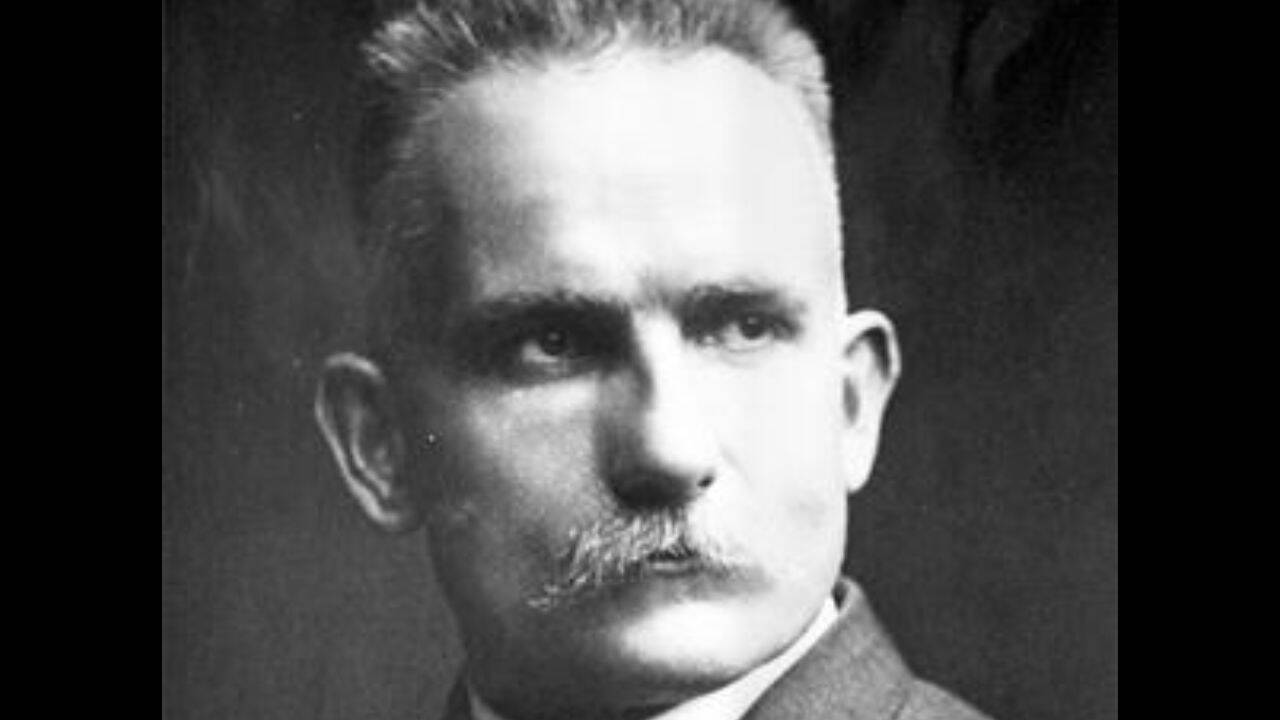
Carl Linnaeus spent his life putting things in boxes. He looked at plants, animals, minerals, and humans, grabbed his taxonomic labeling gun, and decided that Homo sapiens meant "man the wise."
He was flattering himself.
Every single self-help guru, corporate psychologist, and modern commentator has inherited this romantic delusion. The lazy consensus is that human beings are fundamentally rational creatures plagued by occasional emotional errors. Fix the logic, clear the bias, and human nature aligns with progress.
That premise is completely backwards.
We are not rational actors. We are chaotic engines of rationalization. We do not use our big brains to find truth; we use them to defend our tribal alliances while pretending we are doing math. When you build systems, organizations, or personal habits on the idea that humans want objectivity, you are designing a bridge out of wet cardboard.
I have watched companies burn millions of dollars trying to incentivize rational behavior from teams that were primed purely for status games. I have seen founders rewrite entire compensation structures based on employee surveys, only to watch morale implode because they treated emotional insecurities as spreadsheet problems.
Let us dismantle the taxonomic lie.
The Myth of Objective Self-Interest
Economics and modern management love to preach that people follow incentives. Economists call it utility maximization. It sounds scientific because it has math attached to it.
The reality on the ground is much uglier. People routinely sabotage their own self-interest to punish perceived enemies or protect their social standing.
Imagine a scenario where a mid-level manager is offered a workflow tool that will cut their administrative workload in half. On paper, every rational neuron fires a yes. In practice, that manager will stall, find phantom security flaws, and invent administrative roadblocks. Why? Because half their value to the department was tied up in being the gatekeeper of that exact busywork. Strip away the grind, and you strip away their perceived indispensability.
You cannot solve this with a memo. You cannot solve this with a team-building retreat.
When you look at human behavior through the lens of Linnaeus, you expect wisdom. When you look at it through the lens of evolutionary psychology, you expect frantic political maneuvering disguised as philosophy.
Anthropologist Robin Dunbar showed us that our brains capacity maxes out our meaningful social circles at around 150 people. Yet, we now pump billions of digital inputs from thousands of strangers directly into our prefrontal cortices every morning.
We were built for the savanna. We are trying to run enterprise-grade software on hardware designed for throwing rocks at gazelles.
The Dangerous Fallacy of More Information
The most common institutional reflex when facing a bad decision is gathering more data.
Boards demand dashboards. Executives commission whitepapers. Voters ask for fact-checks.
This assumes ignorance is our primary bottleneck. It never is.
Ignorance is a solvable technical glitch. Willful blindness is a feature of human design. We do not suffer from a lack of information; we suffer from an absolute surplus of cognitive armor. Give a biased person a mountain of contradictory data, and they will not update their worldview. They will weaponize that data to build a sturdier bunker.
Look at public health debates, market bubbles, or office politics. The smartest people in the room are almost always the most effective at inventing sophisticated rationalizations for stupid decisions. Intelligence does not inoculate you against tribalism. Intelligence just gives you a better vocabulary to defend your tribalism.
If your strategy relies on people waking up, looking at the facts, and calmly changing their minds because the spreadsheet told them to, you deserve to fail.
Designing for the Primate, Not the Philosopher
Stop trying to fix human nature. It is not broken. It is doing exactly what millions of years of natural selection programmed it to do: keep us alive, keep us in the tribe, and keep us from getting eaten by leopards.
If you want to build durable systems, whether in business, technology, or your own daily routine, you have to invert the traditional approach.
- Align with status, not just cash: Money matters, but status matters more. If a new process makes an employee richer but makes them look foolish or powerless in front of their peers, they will kill the process. Design workflows that enhance status while delivering results.
- Remove choice architecture: Do not ask people to make rational trade-offs when they are tired, stressed, or defensive. Default them into the correct path. Choice is a cognitive tax that human beings will avoid paying whenever possible.
- Accept the tribal reality: Cross-functional friction is rarely about technical disagreements. It is turf warfare. Address the boundary disputes before you debate the architecture.
Linnaeus wanted us to be wise. We are something much more interesting, and much more dangerous. We are clever apes with nuclear codes and marketing budgets, pretending we discovered calculus for fun.
Stop designing for the human you wish existed. Deal with the primate standing right in front of you.