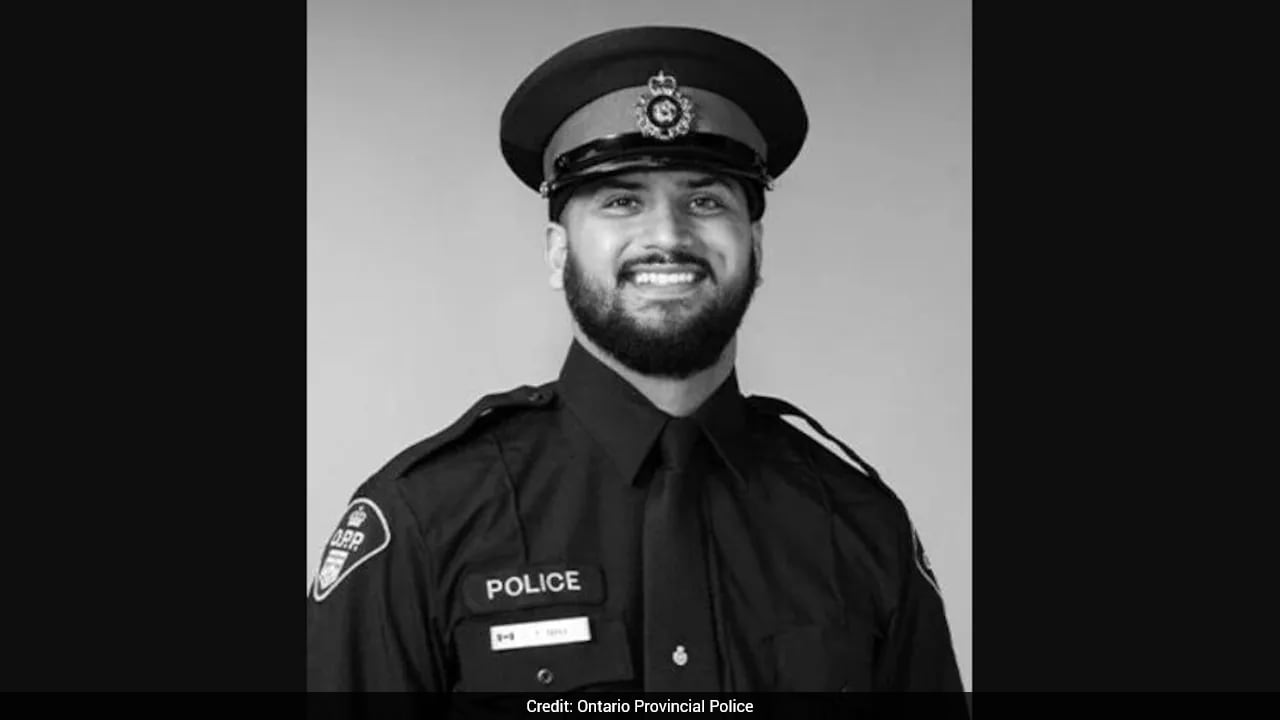
A young driver hits an officer. The headlines instantly fall into a predictable, lazy rhythm. They focus on the officer’s ethnicity, the driver’s youth, and the tragedy of a career cut short. The media serves up a cocktail of public outrage and demands for harsher sentences, framed as a freak accident or a symptom of "broken youth."
They are looking at the wrong map.
The tragic death of a veteran constable isn’t a failure of criminal sentencing or a random act of malice. It is the predictable consequence of an obsolete policing model. For decades, North American police departments have used human bodies as high-visibility shields on active roadways, relying on the flawed premise that a neon vest and a flashing light can override the laws of physics and human error.
We don't need longer prison sentences for nineteen-year-olds. We need to completely remove police officers from routine traffic stops and roadside enforcement.
The High Visibility Myth
Every rookie is taught that visibility equals safety. Put on the high-vis jacket, turn on the cruiser’s overheads, and the traffic will magically part.
This is lethal design masquerading as protocol.
In traffic safety psychology, there is a well-documented phenomenon known as moth-to-flame effect or target fixation. When a driver—especially an inexperienced, impaired, or fatigued one—looks at a bright, flashing light source in the distance, their hands subconsciously guide the steering wheel toward that exact light.
By turning police officers into glowing beacons on the side of sixty-mile-per-hour thoroughfares, standard operating procedures actively draw distracted drivers toward them.
The Mechanics of Target Fixation:
- Cognitive overload from chaotic, flashing LED bars.
- Gaze anchoring on the brightest object in the field of view.
- Subconscious motor response steering the vehicle toward the point of fixation.
I have spent years analyzing fleet logistics and operational risks. If a private manufacturing corporation ordered its employees to stand three feet away from heavy, unguided machinery moving at highway speeds with nothing but a polyester vest for protection, occupational health and safety regulators would shut the operation down within an hour. Yet, we accept this as a daily necessity for law enforcement because of tradition.
The Futility of Move Over Laws
Whenever a roadside tragedy occurs, politicians beat their chests and demand stricter "Move Over" legislation. They increase fines. They add demerit points. They run public awareness campaigns.
It is theater. It does nothing.
Drivers do not hit police officers because they weighed the cost of a traffic ticket and decided to hit them anyway. They hit them because of cognitive tunneling, smartphone distraction, or sudden medical episodes. A driver traveling at 100 kilometers per hour covers roughly 28 meters every single second. By the time their brain processes that the flashing light is a human being, the physics of momentum have already decided the outcome.
Aggressive criminal enforcement after the fact does not rewrite the laws of motion. Expecting an 18-year-old or a distracted commuter to consistently display elite situational awareness on a dark highway is a design flaw, not a moral failure. If your safety system requires 100% compliance from every stressed, tired teenager behind the wheel, your system is broken.
Automated Enforcement is the Only Ethical Path
The solution is staring us in the face, but police unions and local politicians despise it because it lacks the optics of "boots on the ground."
We must fully automate routine traffic enforcement and remove the human element entirely.
Current Model:
Human Officer -> High-Speed Roadside Stop -> High Risk of Fatality + Distraction

Automated Model:
Point-to-Point Cameras -> Digital Citation -> Zero Roadside Exposure
Radars, point-to-point speed cameras, and automated license plate recognition (ALPR) systems don't get run over. They don't experience target fixation. They don't have families. More importantly, they are vastly more efficient at changing driver behavior than a single cruiser parked on a median.
The common pushback is predictable: “Cameras don't catch impaired drivers or criminals.”
True. But neither does a dead officer.
If an individual is driving erratically, the response shouldn't be a lone officer stepping out of a vehicle onto a shoulder to wave them down. The response should be tactical containment or remote tracking. Using a human being as a physical roadblock to flag down speeding cars is an archaic 19th-century tactic deployed in a 21st-century environment.
Confronting the Realities of the Job
The hard truth nobody within police leadership wants to admit is that routine traffic stops are cash-cow operations that double as justification for bloated department budgets. They are wrapped in the language of "public safety," but they are fundamentally revenue collection mechanisms that put officers at extreme risk for negligible societal gain.
Let’s look at the brutal trade-offs of the current system compared to an automated, decentralized approach:
| Metric | Human Roadside Enforcement | Fully Automated System |
|---|---|---|
| Officer Fatality Risk | Critically High | Zero |
| Enforcement Consistency | Sporadic / Subjective | 24/7 / Objective |
| Operational Cost | High (Salary, Benefits, Fleet) | Low (Software, Maintenance) |
| Public Friction | High (Confrontational) | Low (Administrative) |
Imagine a scenario where we shifted 90% of traffic monitoring to static, hardened infrastructure. Officers would be freed up to handle violent crime, domestic responses, and community engagement—tasks that actually require human empathy, tactical negotiation, and complex decision-making. Instead, we lose experienced, highly trained professionals because they were handed a radar gun and told to stand in the gutter of a highway.
Dismantling the "Experienced Driver" Fallacy
People ask: “Should we just raise the driving age to keep young men off the road?”
This completely misses the mark. It assumes that older drivers possess a magical immunity to distraction. They don’t. A 45-year-old checking a work email on his phone is just as lethal as an 18-year-old misjudging a lane change. The variable isn't the demographic of the driver; the variable is the exposure time of the officer.
The data from transit authorities across Europe shows that the only variable that reliably correlates with a drop in roadside worker fatalities is zero exposure. When you build roads that don't require humans to stand next to them, people stop dying on them.
We can keep printing memorial programs, holding state funerals, and blaming the reckless youth of the day. Or we can grow up, acknowledge that cars are heavy projectiles, and stop making human beings stand in their way.
Stop sending cops to do a camera's job.