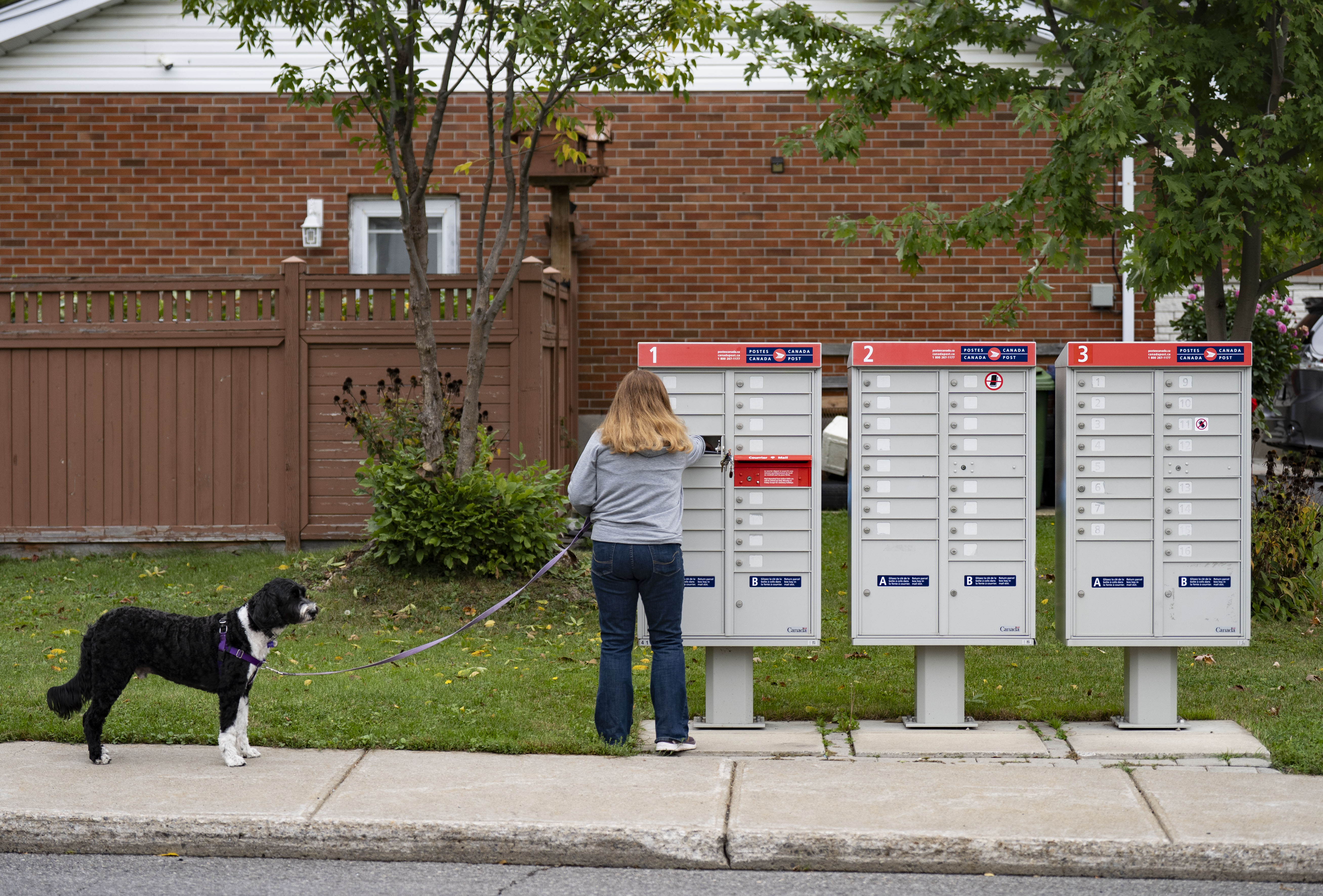
The outrage over Canada Post ending door-to-door delivery isn't about mail. It’s about a warped sense of civic nostalgia that ignores the basic physics of modern logistics. We are clinging to a 19th-century service model while living in a 21st-century digital economy, and we’re expecting the taxpayer to bridge the gap between our memories and our reality.
The loudest voices in the room claim that community mailboxes represent a "service cut." They’re wrong. Door-to-door delivery isn’t a service; it’s an expensive, inefficient relic of a time when the postal worker was the primary conduit for information. Today, that conduit is a fiber-optic cable. The mailbag is full of flyers, utility bills you already paid online, and the occasional census form. Continuing to pay someone to walk up every individual driveway in a suburban sprawl is not a public good. It is a logistical absurdity.
The Math of the Last Mile
In logistics, the "last mile" is the most expensive, resource-heavy segment of the entire supply chain. When Canada Post moves a letter from Vancouver to Halifax, the cost per kilometer is negligible. The moment that letter leaves the local sorting facility and heads for your front porch, the costs explode.
Let’s look at the density problem. In a high-density urban core, door-to-door delivery can occasionally make sense. In the sprawling suburbs of the GTA or the expansive stretches of the Prairies, it is a financial black hole.
Imagine a scenario where a private logistics firm—let’s call it "LogisticsX"—is offered a contract. They can either drop 48 packages at a single, secure, centralized point (a community mailbox) or they can spend three hours navigating cul-de-sacs, dodging garden hoses, and dealing with territorial dogs to hit those same 48 doors. No rational business chooses the latter.
By insisting on door-to-door delivery, critics are demanding that Canada Post prioritize the convenience of a 30-foot walk over the solvency of the national postal service. The annual deficit for Canada Post isn't a rounding error; it's a systemic failure caused by an inability to shed legacy costs.
The Myth of the Vulnerable Senior
The primary weapon used by those fighting this change is the "vulnerable senior" narrative. It’s a powerful emotional hook, but it lacks depth. It assumes that every person over 65 is incapable of walking to the end of the block, and it ignores the fact that millions of Canadians—seniors included—have been using community mailboxes for decades without the collapse of their social fabric.
If the concern is truly about accessibility, we should be discussing targeted solutions for the mobility-impaired, not maintaining a blanket, inefficient system for everyone. We don't send a personal shopper to every senior's house to deliver groceries just because some people can't drive; we build specialized services for those who need them. Forcing the mail carrier to walk every driveway in the country to solve an accessibility issue for a fraction of the population is like using a sledgehammer to kill a fly. It’s expensive, messy, and misses the point.
Why Your Mail is Junk and Why That Matters
We need to be honest about what is actually inside those envelopes. Personal correspondence has moved to encrypted messaging and email. Business transactions have moved to portals and direct deposits. What remains is "Admail"—the junk mail that funds a significant portion of the postal operation.
When we fight to keep door-to-door delivery, we are essentially fighting for the right to have physical spam delivered directly to our slots. We are subsidizing the distribution of pizza coupons and real estate flyers.
From a purely environmental perspective, the carbon footprint of door-to-door delivery is indefensible. Every additional stop, every idling truck, and every redundant route adds up. Community mailboxes allow for consolidated routing, fewer stops, and a massive reduction in the fleet's environmental impact. If you claim to care about the climate but demand a man in a truck visits your house six days a week to drop off a flyer for a lawn care service, your priorities are misaligned.
The Amazon Problem
The rise of e-commerce has fundamentally changed the nature of what Canada Post handles. They are no longer a "mail" company; they are a parcel company with a legacy mail problem.
The traditional door-to-door model is terrible for parcels. Packages left on porches are targets for "porch pirates." Packages that require a signature but can't be delivered result in "we missed you" stickers, forcing the customer to drive to a post office anyway.
Community mailboxes with dedicated parcel lockers are a superior solution. They provide a secure, weather-proof location for deliveries. They allow the carrier to drop off multiple packages in one stop, increasing the "drop density" which is the only metric that matters in modern logistics.
The Real Cost of Stagnation
Every dollar spent maintaining an obsolete delivery model is a dollar not spent on upgrading sorting technology, electrifying the fleet, or improving the digital infrastructure that Canadians actually use.
I’ve seen organizations bleed out because they were too afraid of a PR backlash to cut a legacy service. They choose a slow, painful decline over a quick, strategic pivot. Canada Post is currently in that death spiral. By caving to political pressure and halting the transition to community mailboxes, the government isn't "saving" the post office; they are guaranteeing its eventual irrelevance.
If we want a national postal service that survives the next twenty years, we have to stop treating it like a museum of 1950s Americana.
Addressing the "Service" Fallacy
People often ask: "If I pay for a stamp, don't I deserve delivery to my door?"
The answer is no. You are paying for the transport of an item from point A to point B. The "to your door" part was a luxury afforded by a different economic era where labor was cheaper and mail volume was ten times higher. The social contract has changed because the technology has changed.
We don't expect the milkman to show up at 5:00 AM anymore. We don't expect the doctor to make house calls for a cold. We don't expect a telegram operator to hand-deliver a message to our bedside. Why do we treat the mailbox as a sacred, immovable right?
The Counter-Intuitive Path Forward
Instead of fighting the end of door-to-door delivery, we should be demanding that Canada Post goes further.
- Tiered Delivery: If you absolutely must have your mail delivered to your door, you should pay a premium for it. Make it an opt-in, subscription-based service.
- Hyper-Local Hubs: Transform community mailboxes into actual neighborhood hubs with high-speed Wi-Fi, EV charging, or secure refrigerated lockers for grocery deliveries.
- Digital Integration: Allow users to view scans of their incoming mail online and "shred" junk mail before it ever leaves the sorting facility.
The "lazy consensus" says that moving to community mailboxes is a sign of a country in decline. I argue the opposite. Clinging to the driveway delivery model is the true sign of a stagnant society—one that is so terrified of minor inconvenience that it is willing to bankrupt its national institutions to avoid it.
Stop looking at the end of the driveway and start looking at the health of the network. If the mail is truly important, you can walk 200 meters to get it. If it’s not worth the walk, it wasn't worth the cost of delivering it to your door in the first place.
Adapt or dissolve. Those are the only two options on the table.


