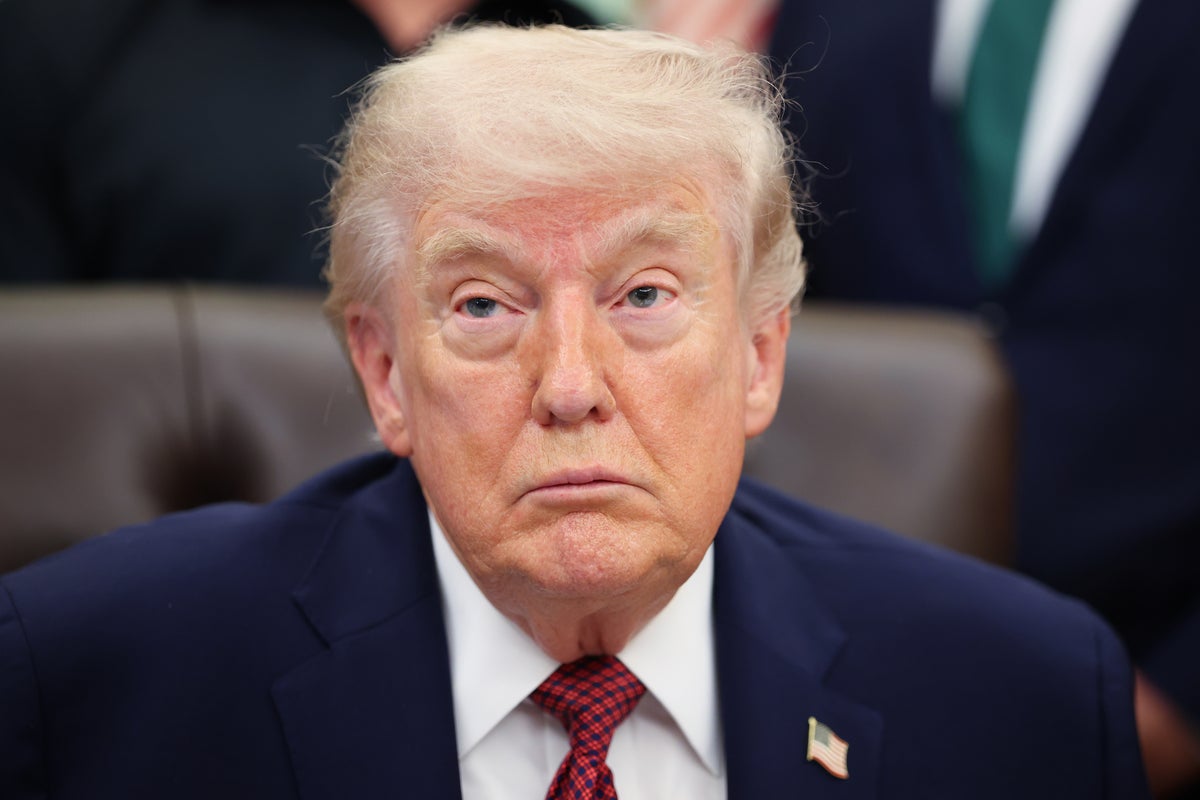
Attacking a person's intelligence because they have a learning disability isn't just a low blow; it’s a total failure to understand how the human brain actually works. When Donald Trump recently went after California Governor Gavin Newsom, mocking his dyslexia and claiming he shouldn't be president because of it, he wasn't just insulting a political rival. He was digging up a century-old myth that connects reading speed with brainpower.
"Everything about him is dumb," Trump told reporters in the Oval Office, specifically citing Newsom’s dyslexia. This kind of rhetoric does more than just hurt feelings. It reinforces a massive misunderstanding that affects roughly 20% of the population. If you think dyslexia means a lower IQ, you’re not just wrong—you’re ignoring decades of neurological research.
The intelligence myth that won't die
The biggest lie about dyslexia is that it's a "slow learner" problem. It's not. Dyslexia is a specific neurobiological difference. It affects the part of the brain that processes language, specifically phonological processing—the ability to break words down into their component sounds.
Scientists at the Yale Center for Dyslexia & Creativity have proven that dyslexia and intelligence are completely independent of each other. You can have a genius-level IQ and still struggle to read a menu. In fact, many people with dyslexia show incredible strengths in "big picture" thinking, pattern recognition, and problem-solving. They literally see the world differently because their brains are wired differently.
When a public figure uses a learning disability as a synonym for "dumb," they’re telling millions of kids that their hard work doesn't matter and their potential is capped by a diagnosis. It’s a dangerous message that flies in the face of what we know about the "Sea of Strengths" that often accompanies dyslexic thinking.
Newsom is far from the first
If we disqualified every leader with a learning disability, the history books would look a lot emptier. Gavin Newsom has been open about his struggles, even writing a children’s book, Ben and Emma’s Big Hit, to help kids navigate the same shame he felt. But he’s in good company.
- Woodrow Wilson: The 28th U.S. President didn't learn to read until he was ten years old. Most historians and neurologists today agree he was likely dyslexic. He went on to lead the country through World War I.
- Nelson Rockefeller: The former Vice President and Governor of New York struggled with reading his entire life. He once said that his "stumbling over words" forced him to master the art of listening and communicating.
- Robert Carroll: A New York State Assembly member who has used his platform to advocate for better screening in schools, proving that navigating a "disability" often builds the exact kind of resilience you want in a leader.
Using dyslexia as a disqualifier for office suggests that a president’s primary job is reading teleprompters perfectly. It’s not. Leadership is about judgment, strategy, and empathy—none of which are hindered by a phonological processing glitch.
The real world damage of political slurs
Politics is a contact sport, but dragging neurodivergence into the mud has a high collateral cost. When slurs like "dumb" or "cognitive deficiency" are tied to dyslexia, it legitimizes bullying in classrooms across the country.
According to a study by the Special Olympics and Kantar, nearly 70% of social media posts regarding people with intellectual or learning disabilities are negative. Using this kind of language from the highest office in the land gives a green light to that toxicity. It pushes a "medicalized" view of reading—the idea that if you don't read standard text at a certain speed, you're "broken" or a "labor liability."
Indiana State Senator Michael Bohacek, a Republican whose daughter has Down syndrome, recently pushed back against ableist rhetoric in his own party. He pointed out that "words have consequences." When we mock the way someone's brain functions, we aren't just attacking their politics; we're attacking their humanity and the humanity of everyone who shares that trait.
Why we need to stop overthinking the "disability" label
We need to stop seeing dyslexia as a deficit and start seeing it as a variation. The "disability" part of dyslexia mostly comes from the fact that our education system was built for one specific type of brain. If our society relied on 3D spatial reasoning instead of written text, "typical" readers might be the ones considered disabled.
The Yale Center’s research highlights that while the "decoding" part of the brain is less active in dyslexics, other areas—like those responsible for reasoning and concept formation—are often firing on all cylinders. This is why you see so many dyslexic entrepreneurs and artists. They aren't succeeding despite their dyslexia; they're often succeeding because of the unique way they process information.
How to actually support neurodivergent leaders
If you're tired of seeing these myths play out in the news, start by changing the conversation in your own circles.
- Call out the "Intelligence Gap" fallacy: Whenever someone implies that a learning disability equals low intelligence, remind them that IQ and reading ability are not the same thing.
- Support early screening: Dyslexia can be diagnosed as early as age five. The "wait to fail" model in schools is what causes the most trauma, not the dyslexia itself.
- Value results over performance: In a professional or political setting, care more about a person’s ideas and their ability to execute them than whether they mispronounce a word on a slide or need a little extra time to review a memo.
Don't let political theater distract you from the science. A leader with dyslexia isn't a liability; they’re someone who has spent their entire life learning how to solve problems that other people don't even see. That's not "dumb." That's a competitive advantage.