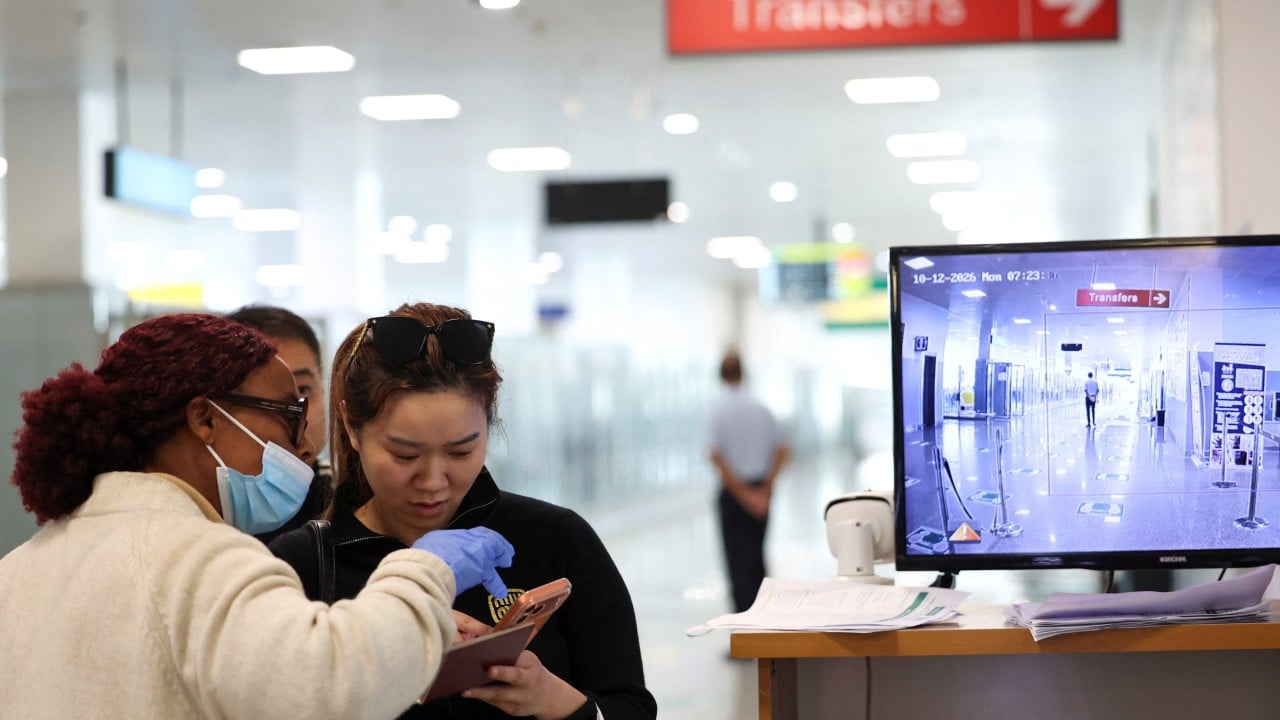
"Complex."
That single word does more lazy lifting in global health reporting than almost any other adjective in the dictionary. Whenever an outbreak crosses a border or hits a megacity like Lagos, the default reflex is to sound the alarm about "complexity." Suddenly, every challenge gets tossed into one giant bucket: weak clinics, dense transit, hesitant communities, supply bottlenecks, media panic.
It sounds serious. It sounds urgent. It also obscures what actually drives or stops a filovirus outbreak.
Ebola reaching Nigeria is not a mysterious multi-headed monster. It is an epidemiological test of execution, speed, and trust. Calling the situation "complex" treats preventable operational failures like forces of nature. Worse, it pushes governments and donors toward broad, scattershot spending instead of ruthless triage.
I have watched outbreak responses burn tens of millions of dollars on glossy command centers, over-engineered surveillance apps, and endless coordination meetings while basic field essentials—gloves, chlorine, fuel for contact tracers, and straight answers for families—ran short. When money goes into complexity theater, transmission wins.
The Lazy Consensus Around "Complex" Outbreaks
Conventional outbreak coverage follows a predictable script. First comes the headline warning. Next comes a list of risk multipliers: cross-border movement, crowded urban corridors, strained healthcare workers, and misinformation. Then comes the call for "urgent international support."
None of those factors are imaginary. Lagos has well over 15 million residents packed into sprawling neighborhoods, informal markets, and congested transit networks. One imported case moving through a busy transport hub creates hundreds of potential exposure links in days.
Here is the flaw in the consensus: a high number of potential links does not automatically equal runaway spread.
Ebola virus disease is transmitted through direct contact with blood, secretions, organs, or other bodily fluids of infected people—alive or dead—and with surfaces and materials contaminated with these fluids. Unlike measles or SARS-CoV-2, it does not drift through shared room air over long distances. A person is generally not contagious before symptoms appear, and infectiousness rises sharply as symptoms worsen—particularly with vomiting, diarrhea, and bleeding—and remains high after death during traditional handling or burial practices.
Epidemiologists measure spread using the basic reproduction number ($R_0$) and the effective reproduction number ($R_t$). Even when initial contact networks look intimidating on paper, rapid isolation, safe burial, and disciplined contact tracing push $R_t$ below 1. Once $R_t$ stays below 1, chains of transmission shrink and die out.
Calling an outbreak "complex" often functions as a pre-emptive excuse. If cases climb, officials can point to complexity. If budgets balloon, agencies can point to complexity. That framing lets institutions off the hook for slow decisions, turf wars, and rigid protocols designed for rural clinics rather than dense cities.
What Ebola Actually Is—and What It Is Not
Precision matters the moment a case is confirmed. Public panic thrives on muddy definitions.
Filovirus Biology Without the Myth
Ebola belongs to the Orthoebolavirus genus within the Filoviridae family (historically grouped under Ebolavirus species such as Zaire ebolavirus, Sudan ebolavirus, and Bundibugyo ebolavirus). Its incubation period typically ranges from 2 to 21 days, averaging around 8 to 10 days.
Early symptoms mimic malaria, typhoid, Lassa fever, or influenza: sudden fever, fatigue, muscle pain, headache, and sore throat. That overlap is the real clinical trap. In a country where febrile illness is routine, the first few days of Ebola often look like ten other common conditions.
Misunderstanding that window creates two opposite errors:
- Over-reaction: Treating every fever as Ebola paralyzes routine care, drives away patients with treatable infections, and exhausts isolation wards.
- Under-reaction: Missing the shift from vague fever to gastrointestinal symptoms and high viral shedding, allowing hospital or household exposure to occur before infection control tightens.
The Real Bottleneck Is Social, Not Just Viral
In my years advising on emergency logistics and health operations, I have seen brilliant clinical protocols fail because nobody asked how people actually move, mourn, and seek care.
A clinic can have textbook personal protective equipment (PPE) guidelines and still see staff infections if triage nurses are overwhelmed or if patients hide symptoms out of fear of being locked away in an unfamiliar facility. A surveillance team can have digital dashboards and still miss chains if tracers lack local credibility or transport stipends.
Imagine a scenario where a symptomatic traveler arrives at a busy private clinic in a dense urban district, receives antimalarials and an injection, and returns home through crowded minibus routes before lab confirmation comes back. The biological mechanism of the virus is straightforward—fluid exposure—but the social path is woven through everyday survival, affordability, and trust.
Heavy hitters in infectious disease and outbreak response—from veteran field epidemiologists at the World Health Organization and Africa Centres for Disease Control and Prevention to researchers at institutions like the London School of Hygiene & Tropical Medicine and Johns Hopkins—have stressed this point for years: technical tools only work when embedded in local social realities. Technology does not trace contacts; trained humans trusted by communities do.
Comparing the Two Playbooks
| Dimension | "Complex Crisis" Playbook | Ruthless Triage Playbook |
|---|---|---|
| Primary Framing | Overwhelming, multi-front emergency | Chain-breaking race against time |
| Resource Allocation | Broad across dozens of workstreams | Concentrated on isolation, tracing, safe burials, and frontline safety |
| Information Strategy | High-level warnings and technical jargon | Plain-spoken, honest updates tailored to local neighborhoods |
| Success Metric | Funds raised and meetings convened | Time from symptom onset to isolation; percentage of contacts monitored daily |
| Blind Spot | Bureaucratic drift and alert fatigue | Potential under-investment in longer-term health system recovery |
Why We Keep Asking the Wrong Questions
When Ebola surfaces in a place like Nigeria, search feeds and newsrooms fill up with predictable questions. Most of them point people toward the wrong levers.
"How bad could this get if it spirals out of control?"
That question feeds dread without guiding action. "Out of control" is not a fixed destiny; it is a measure of delayed response. What matters far more is how fast suspected cases are isolated and what share of known contacts are reached within 24 hours of a positive test.
If isolation is swift and contact follow-up is tight, even an urban introduction can be contained. If isolation lags and contacts vanish into informal housing without support, transmission persists.
"Why do outbreaks keep returning to West and Central Africa?"
Framing recurrence as an inherent flaw of a region ignores global ecology and economic reality. Filoviruses have animal reservoirs—fruit bats are strongly implicated in spillover events—and human encroachment, mobility, and fragile local health financing exist across many parts of the world.
A better question is: which specific links in surveillance, lab turnaround, and hospital triage failed first, and how do we fix those exact links permanently?
"Should people avoid crowded places or travel within the country?"
Sweeping bans often backfire. Blanket restrictions can push sick individuals underground to evade checkpoints or quarantine, which makes tracking harder rather than easier. Targeted risk communication—explaining exact symptoms, where to get evaluated safely, and how to care for a sick relative without exposing oneself—protects people far better than fear-driven decrees.
Actionable Moves That Actually Work
If you are running operations, managing a business footprint, advising policymakers, or simply trying to make sound decisions on the ground, skip the panic and focus on high-leverage actions:
- Audit triage and isolation speed first: Measure hours, not days, between a patient walking into a facility with compatible symptoms and getting safely isolated with proper PPE.
- Fund the unglamorous enablers of contact tracing: Tracers need reliable transit, clear daily targets, and supervisor follow-up. Food, water, and basic support for quarantined households reduce the temptation to break isolation.
- Lock down infection prevention in general clinics: Many early amplifications happen in routine wards and outpatient clinics before Ebola is even suspected. Hand hygiene, safe injection practices, waste management, and rapid screening of severe febrile cases pay off regardless of the final diagnosis.
- Replace spin with candid risk communication: Tell communities what is known, what is uncertain, how care works, and how dignified, safe burials protect grieving families. Rumors fill every vacuum left by silence.
- Separate acute containment from long-term health reform: Use emergency funds to stop chains of transmission now; fund primary care and lab networks through steady multi-year budgets rather than crisis spikes.
The Honest Trade-Offs of This Approach
Going all-in on ruthless triage and sharp operational focus is not a cure-all. It carries real trade-offs that serious practitioners have to own.
Focusing intensely on one high-consequence pathogen can pull attention and staff away from everyday killers—malaria, maternal complications, pneumonia, and chronic disease—that claim far more lives over time. Narrowing messaging to avoid panic can also make some leaders look under-reactive in media cycles that reward worst-case drama. And strict containment measures, even when necessary, strain livelihoods and civil patience if they drag on without clear endpoints.
Acknowledging those costs does not weaken the strategy. It keeps responders honest about the choices they are making every single day.
Stop hiding behind "complexity." Fix the bottlenecks, protect the frontline, tell the truth, and break the chain.


