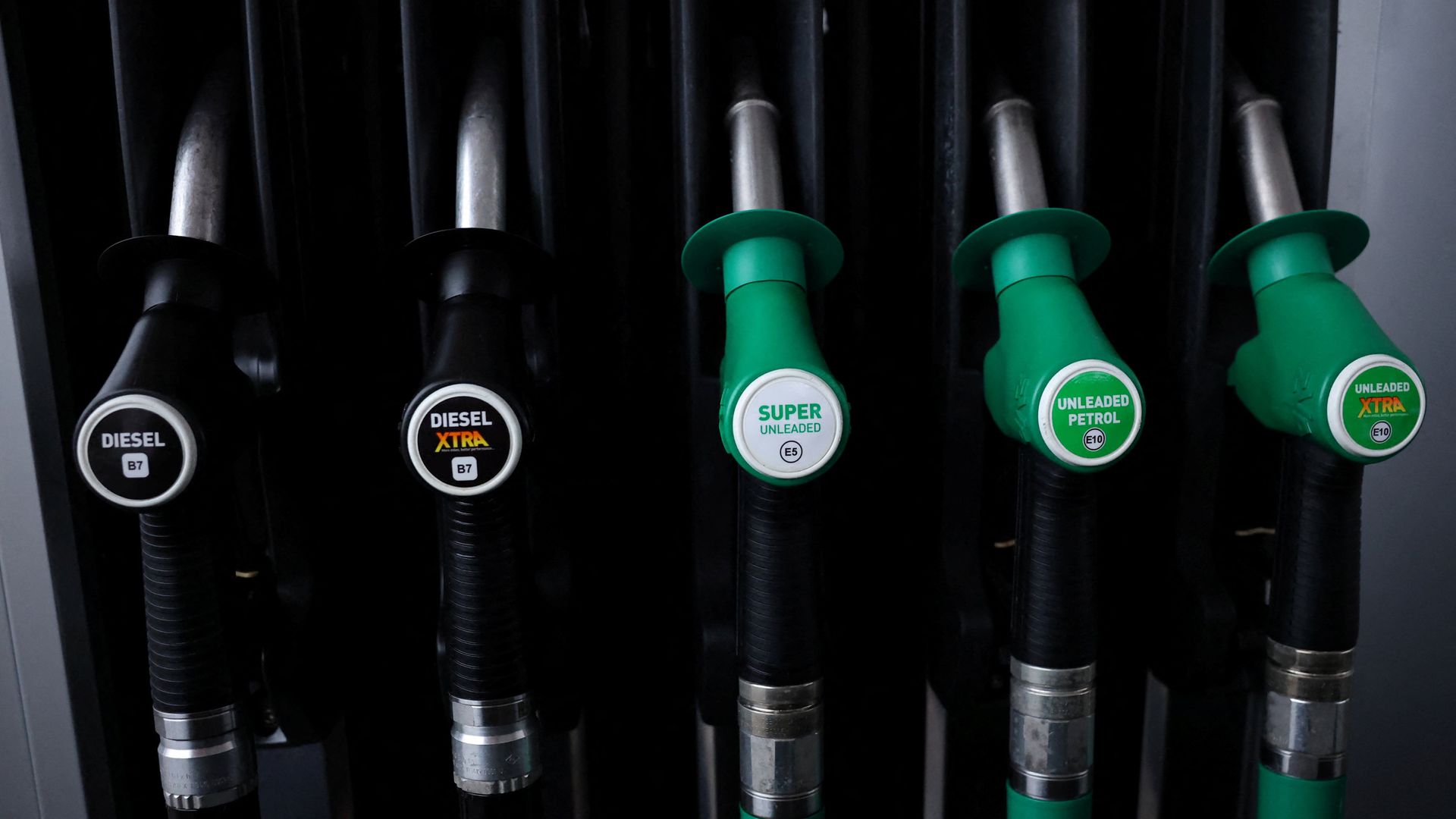
California’s economy is a $4.1 trillion titan, but it’s currently being held hostage by a liquid that costs more than a decent lunch. If you’ve pulled into a station in Los Angeles or the Bay Area recently and seen prices tick past $5.30—or in some nightmare scenarios, $8.00—you’re seeing more than just a bad day at the pump. You’re watching a structural breakdown.
The state’s massive logistics, agriculture, and manufacturing sectors are essentially built on a foundation of diesel and gasoline. When that foundation cracks, the whole house shakes. We aren’t just talking about a few extra bucks for a weekend road trip. We’re talking about a "war tax" on every almond harvested in the Central Valley and every shipping container leaving the Port of Long Beach. If you liked this piece, you might want to look at: this related article.
The Fuel Island Problem
Most people don't realize that California is functionally an island when it comes to energy. There are no pipelines bringing refined gasoline in from Texas or the Midwest. If a refinery in Richmond or El Segundo has a "hiccup" or shuts down for maintenance, we can’t just flip a switch and get more fuel from our neighbors.
We rely on a shrinking number of in-state refineries that are struggling to stay alive under some of the most aggressive environmental mandates in the world. As of early 2026, we’ve seen the closure of major facilities like the Phillips 66 and Valero refineries. This has left the state with a dangerous 5% shortfall in refining capacity. When supply is that tight, any global tremor—like the current conflict in the Middle East—doesn't just nudge prices up. It sends them into a vertical climb. For another look on this event, refer to the latest update from Reuters Business.
Why the Iran Conflict Hit California Harder
While the national average for gas has hovered around $3.50, California’s average has spiked over $5.20. Why the massive gap? It’s because we import over 60% of our crude oil from foreign sources, and much of that arrives via tankers that have to navigate increasingly volatile global shipping lanes.
The U.S. strikes on Iran and the resulting chaos in the Strait of Hormuz have sent tanker insurance and shipping costs through the roof. For California, which has no "Plan B" pipeline, those costs are passed directly to you at the pump within days.
- Logistics Shock: Truckers serving the ports are seeing diesel hit $6.21. That’s a massive jolt to a sector that supports 200,000 jobs.
- The Food Tax: Farmers in the Central Valley use diesel for everything from harvesters to irrigation pumps. When fuel spikes, your grocery bill follows.
- Shipping Delays: Bunker fuel for ships has doubled in price. A single round trip now costs an extra $2 million, which importers eventually claw back from consumers.
The Regulatory Squeeze Play
It’s easy to blame "Big Oil" or global wars, but California’s own policy decisions have created a very fragile ecosystem. The state's Cap-and-Invest program (formerly Cap-and-Trade) adds roughly $0.24 to every gallon. Proposed amendments could push that contribution to over $1.20 by 2030.
Governor Newsom has historically pointed at "price gouging," even signing a law to cap refinery profits. But here’s the reality: that law has never been used. Regulators recently voted to delay those rules for five years because they’re terrified that penalizing refineries will simply force the remaining ones to pack up and leave for Texas. We’re in a catch-22 where the state needs these refineries to keep prices stable, but the state’s own climate goals are making it nearly impossible for them to operate.
Small Businesses are the First to Break
If you own a food truck in San Joaquin County or a small restaurant in Pico Union, you aren't just "feeling the pinch." You're facing an existential threat. These businesses operate on razor-thin margins. When gas goes up, the cost of ingredients goes up because the delivery truck charged a surcharge. Then, customers stop coming because they’re spending their "eating out" money on their commute.
I’ve talked to business owners who are seeing their monthly fuel expenses jump by $3,000 or more. They can't just absorb that. They have two choices: raise prices and lose customers, or eat the cost and go out of business. Most are choosing the former, which is why your $12 burrito is suddenly $17.
What You Can Actually Do
This isn't a problem that clears up overnight, but waiting for the government to "fix" gas prices is a losing game. You have to play defense with your own budget.
- Audit Your Commute: If you’re still driving a gas-guzzler 40 miles a day, the math simply doesn't work in 2026. Transitioning to an EV or a hybrid isn't just an environmental choice anymore; it's a survival tactic.
- Negotiate Delivery Fees: If you're a business owner, start looking at "last-mile" delivery alternatives or local sourcing to bypass the massive fuel surcharges from long-haul carriers.
- Watch the Summer Blend: California mandates a "summer-blend" fuel starting in April. This blend is more expensive to produce. Expect another automatic price jump in the next few weeks regardless of what’s happening in the Middle East.
The Golden State’s economy is resilient, but it’s not invincible. We’re testing the limits of how much a population can pay for basic mobility before the gears start to grind to a halt. Stop expecting a return to $3.00 gas—it’s not coming back to California. Adjust your overhead now, or the pump will do it for you.