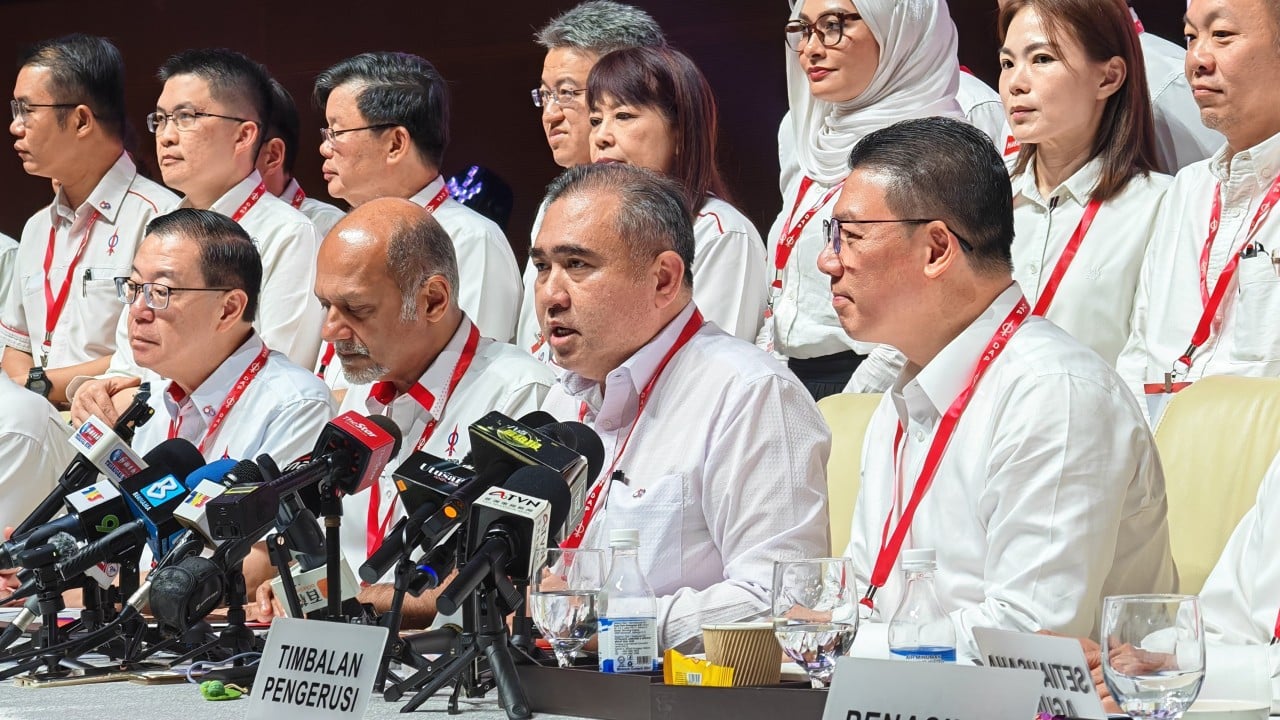
The mechanics of coalition governance in Malaysia operate on a cold transactional calculus. When the Democratic Action Party convened its national congress to determine whether its ministers should vacate their executive portfolios, the resulting vote was not an endorsement of unbridled optimism. Nearly nine in ten delegates voted to remain inside the unity government headed by Prime Minister Anwar Ibrahim. This outcome averted immediate administrative collapse, but framing this decision simply as a victory for national stability misses the underlying structural pressures defining contemporary Malaysian politics.
Staying inside the cabinet preserves the legislative arithmetic required to keep the administration afloat, yet it exacts a severe operational toll on the party’s core constituency. Evaluating this dynamic requires dissecting the systemic trade-offs facing Malaysia's largest parliamentary bloc.
The Structural Dilemma of Coalition Incumbency
For decades, the party built its brand as an uncompromising opposition force capable of mobilizing urban, non-Malay voters through sharp critiques of institutional patronage and racialized governance. Transitioning from opposition insurgency to executive incumbency fundamentally alters this political utility function.
Being inside the federal government means absorbing the political fallout of compromise. The administration has faced consecutive electoral setbacks, from state-level losses in Sabah to erosion in Johor and Negeri Sembilan. These defeats reflect a widening friction point: the urban base expects aggressive structural reforms and egalitarian policy shifts, while the broader unity government must pander to conservative Malay-Muslim electorates to counter the electoral threat posed by the Perikatan Nasional opposition bloc.
When a party holding forty parliamentary seats chooses to absorb executive responsibility without commanding the absolute levers of prime ministerial power, it exposes itself to asymmetric political costs. It shares the blame for unfulfilled manifesto promises and sluggish institutional overhauls, yet it lacks the unilateral authority to fast-track those very reforms.
The Cost Function of Departure
The alternative to staying in the cabinet was an immediate withdrawal of ministerial posts, a move that would have triggered a severe confidence crisis for the administration. Analysts correctly noted that such a pullout could have fractured the parliamentary majority, potentially forcing early general elections before the mandated timeline.
For the party leadership, the cost function of leaving is defined by two distinct risks:
- Institutional Loss: Abandoning executive ministries means losing direct oversight of critical portfolios such as transport, where tangible administrative competence can be demonstrated to the electorate.
- Strategic Vulnerability: A premature exit risks handing political initiative to coalition partners like Barisan Nasional, who could frame the withdrawal as destabilizing petulance and capitalize on the resulting political vacuum.
The decision to stay confirms that the leadership values institutional continuity and proximity to state resources far above the short-term catharsis of protest politics. The party recognizes that operating within the system, however frustrating the compromises may be, offers a higher probability of long-term policy influence than returning to the margins of opposition.
The Mechanics of Structural Inertia
The pressure from the party rank-and-file demanding faster reforms is entirely rational from an organizational perspective. Grassroots members face direct pushback from voters who feel alienated by the administration's slow pace on institutional restructuring. However, the macro-political environment imposes rigid constraints on how fast the executive branch can move without triggering a severe majoritarian backlash.
In a plural society with deeply entrenched identity politics, any perception of rapid secular or egalitarian overhauls is swiftly weaponized by opposition factions to consolidate ethnic Malay anxiety. Consequently, the administration operates under a constraint model where stability is purchased by deferring contentious structural changes. The party's ministers are forced into a defensive posture, defending collective cabinet decisions publicly while managing internal dissent privately.
The Forward Strategic Play
The overwhelming vote to remain in the cabinet closes the window on immediate legislative disruption, but it sets a strict performance clock for the remainder of the parliamentary term. The leadership has chosen institutional integration over ideological purity, effectively betting that incremental policy delivery inside the government will eventually outweigh the friction of compromise.
The primary operational objective for the party moving forward must shift from passive coalition management to aggressive, behind-the-scenes timeline enforcement. Rather than accepting indefinite delays on governance reforms, the leadership must tie its continued parliamentary discipline to hard benchmarks for institutional modernization, ensuring that the price of executive stability is not the permanent erosion of its foundational credibility.