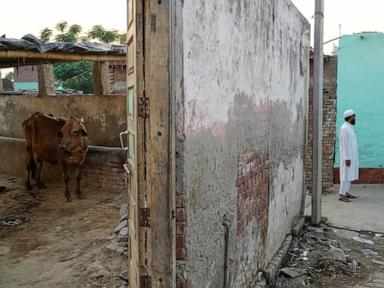
Shootings by police targeting suspected cow smugglers across parts of India have turned highway stops and night raids into lethal flashpoints, raising urgent alarms over impunity, institutional bias, and the erosion of ordinary courtroom justice. When law enforcement opens fire during livestock interdictions rather than relying on checkpoints, arrest warrants, and evidentiary chains, the state blurs the line between routine statutory enforcement and summary force. Critics, legal observers, and civil rights researchers argue that uneven enforcement—often intersecting with caste, class, and religious fault lines—threatens constitutional safeguards while leaving families of the dead or wounded with steep hurdles to accountability.
To understand how transport of cattle became a trigger for gunfire, you have to look at the collision between rigid state cattle-protection laws and everyday rural economics. Cattle are not just sacred symbols in majoritarian politics or protected animals under state statutes; they are also working capital, collateral, and liquid savings for millions of small farmers, dairy producers, and livestock traders. When a farmer needs cash quickly for a medical bill, a wedding, or a failed harvest, selling a cow or bullock can be the fastest option. When laws tighten, restrict movement across district or state borders, or criminalize transport without paperwork that smallholders rarely possess, legitimate commerce and illicit smuggling get tangled together on rural roads at night.
How Highway Interdictions Turn Into Shootings
Night patrols on state and national highways are tense by design. Officers stationed to intercept vehicles suspected of moving cattle unlawfully often operate in dark stretches with limited backup, fast-moving trucks or pickups, and drivers who may fear mob violence or severe penalties if stopped.
That environment creates a hair-trigger dynamic. A driver who fails to halt at a makeshift barrier or accelerates past a patrol car can quickly be cast in official accounts as fleeing danger or posing a threat to officers on the road. Once shots are fired, the narrative rarely stays confined to traffic control or property crime. It becomes a high-stakes confrontation where lethal force is frequently framed as self-defense or an unavoidable response to resistance.
Consider a hypothetical example to see how routine enforcement can spiral out of control. Suppose a small livestock trader in a border district buys three aging cattle at a local market and hires a driver to move them after midnight to avoid midday heat and highway delays. A night patrol signals the vehicle to stop near a dimly lit junction; the driver panics, thinking vigilantes are waiting ahead, and speeds up. Officers pursue and fire at the tires or cabin, striking the driver or a passenger. Even if investigators later ask whether less-lethal measures—such as road spikes, coordinated checkposts ahead, or vehicle registration tracking—could have stopped the truck safely, the immediate reality on the ground is a bullet wound or a body on the asphalt.
What makes these incidents especially troubling to legal analysts is the gap between alleged offenses and lethal outcomes. Suspected smuggling or transport violations are regulatory and criminal matters to be prosecuted under statute and penal codes, not capital offenses decided on a dark highway. When gunfire becomes a recurring feature of interdictions, public confidence in due process takes a direct hit.
Why Impunity Takes Root After Gunfire
Shootings rarely happen in a legal vacuum. They persist when internal reviews, magisterial inquiries, and prosecutorial follow-through move slowly or defer heavily to official versions of events.
Police departments routinely invoke self-defense, sudden attack, or attempts to escape when explaining why officers discharged firearms. Without independent eyewitnesses, clear dashcam or body-worn footage, or prompt, transparent ballistic and forensic scrutiny, counter-accounts from injured survivors, bystanders, or grieving relatives face an uphill climb. Families who are poor, rural, or socially marginalized often lack the money, legal connections, and time to push petitions through local courts while dealing with trauma and social stigma.
Procedural protections also shape what happens next. Statutory provisions and administrative norms governing police action can make prosecuting on-duty officers difficult unless clear misconduct or lack of justification is established early. Even when inquiries are ordered, delays are common. Witnesses turn reluctant or unreachable. Memories fade. By the time a judicial review or rights commission inquiry gains traction, momentum has often stalled.
When state force goes unexamined or unpunished, the message sent far beyond the shooting site is that certain lives carry less procedural weight than others.
💡 You might also like: Why the 1971 Warning in Balochistan Is More Than Just Talk
Impunity is reinforced by politics and local pressures. In regions where cattle protection is heavily politicized, law enforcement faces intense pressure to look tough, visible, and decisive. Showing hard action against alleged smugglers can satisfy vocal constituencies and project strength. Yet projecting strength through gunfire is different from building durable rule of law, which depends on restraint, accurate intelligence, and airtight prosecutions that hold up in court.
The Fault Lines of Bias and Vigilantism
Any honest look at police shootings tied to cow smugglers has to confront bias—both implicit and structural. Bias does not require a single officer to harbour explicit malice in every case for outcomes to skew unevenly across communities.
In many parts of India, livestock trade, leather work, and transport intersect closely with religious minorities, Dalits, and economically vulnerable rural groups. When stereotypes link a particular identity automatically with criminality or disrespect for sacred norms, presumption of innocence weakens long before a case reaches a magistrate. A vehicle stopped at night with livestock and a Muslim or Dalit occupant is far more likely to be viewed through a lens of suspicion than a routine commercial movement with clear political backing.
There is also a corrosive overlap between state policing and vigilante pressure. Over the past decade, self-appointed cow-protection groups have gained visibility and political volume in several states. Even where police act officially rather than alongside vigilantes, the broader climate shapes behavior. Officers operating in a charged environment may feel pushed toward aggressive action rather than measured de-escalation, while citizens may assume—rightly or wrongly—that rough justice faces few real checks.
At the same time, it is worth examining the counter-arguments and operational complexities that security officials and proponents of strict cattle laws raise. Supporters of stringent enforcement argue that illegal cattle smuggling is not always a harmless informal trade; organized syndicates sometimes operate across borders, use fake papers, drive recklessly to evade capture, and occasionally clash with patrols or local residents. From a policing standpoint, officers argue they are tasked with enforcing laws passed by elected legislatures while managing understaffed night shifts and real physical risks on dangerous roads.
Acknowledging operational risks does not excuse disproportionate force. A modern police force is trained and equipped precisely because civilian policing is harder than shooting first. If a truck speeds past a checkpoint, chasing it blindly and firing into a moving vehicle endangers motorists, bystanders, and officers alike. Intelligence-led tracking, coordinated relay checkposts, toll and highway camera networks, and controlled containment are standard policing tools that reduce risk without turning highways into shooting galleries.
What Accountability Actually Requires
Reforming this pattern does not start with grand slogans. It starts with basic accountability and practical changes to how night operations and post-shooting investigations are run.
- Mandatory independent review: Every police shooting resulting in death or serious injury should trigger an automatic, time-bound, and transparent investigation independent of the local station house involved, with findings made public where legally permissible.
- Strict firearms and pursuit rules: Clear, enforceable standard operating procedures must spell out when officers may draw and fire weapons, restricting gunfire strictly to imminent threat to life rather than fleeing vehicles or suspected property and transport offenses.
- Objective evidence collection: Expanding body cameras, patrol vehicle recording, GPS logs, and chain-of-custody rules for weapons and ammunition helps replace he-said-she-said disputes with verifiable facts.
- Protection for families and witnesses: Legal aid, timely compensation frameworks where state fault or procedural lapse is found, and protection against intimidation ensure aggrieved families are not forced out of the legal process by exhaustion.
- Smarter, lawful enforcement: Replacing ad-hoc night ambushes with structured inter-state coordination, transparent documentation rules for legitimate livestock movement, and prosecution backed by real evidence targets actual crime without trashing civil liberties.
None of these steps will magically erase deep social tensions overnight. Laws around cattle, livelihoods, and identity remain fiercely contested, and courts still have to navigate complex evidentiary standards in contested cases. Still, a constitutional democracy is judged not by how harshly it treats suspects before trial, but by how faithfully its institutions restrain their own power when emotions run high.
Every time a bullet replaces a lawful arrest on a rural road, the state trades long-term legitimacy for a fleeting show of force—and leaves the rest of the country to live with the damage.