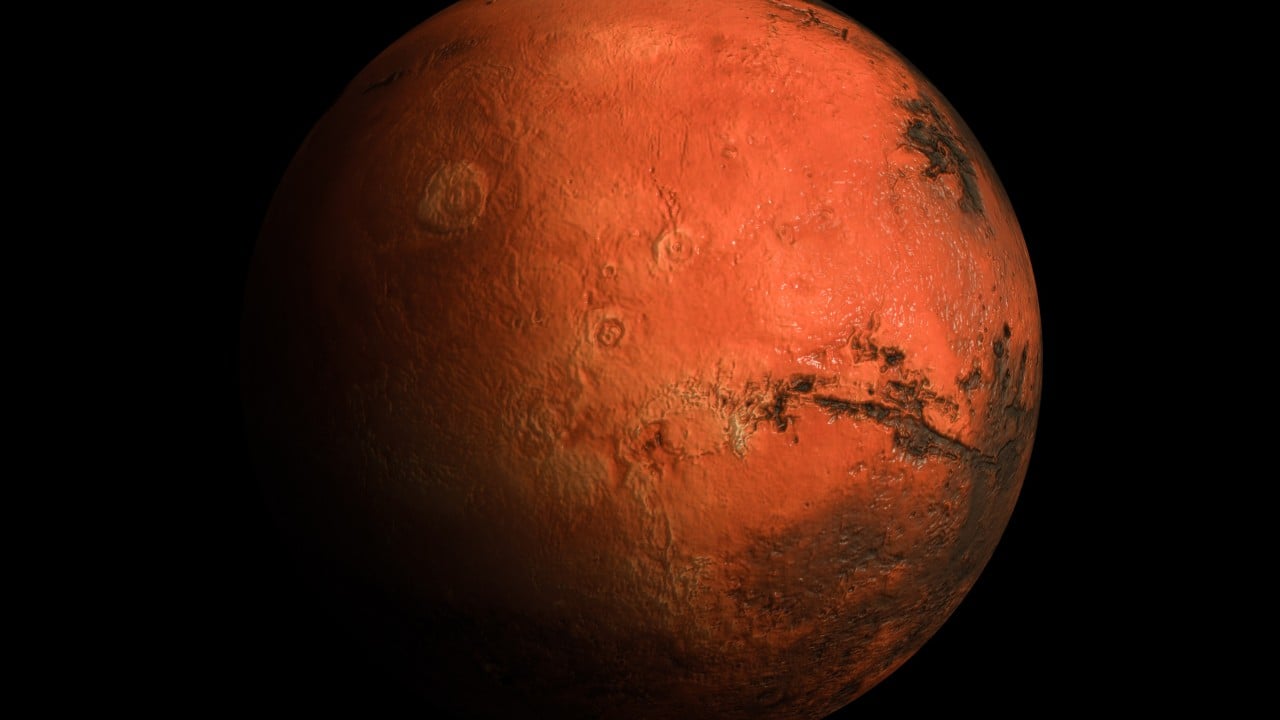
The mathematics of interplanetary expansion are relentlessly cruel. Every kilogram lifted past Earth gravity well costs thousands of dollars in chemical propellant, structural reinforcement, and sheer aerodynamic engineering. Hauling steel beams, pressurized modules, and reinforced concrete to the red dust of Mars is an economic impossibility. Space agencies and private aerospace syndicates hit a hard ceiling decades ago. You cannot freight an entire civilization across interplanetary void inside cargo fairings.
Survival on a hostile world requires shifting from transport to cultivation.
Recent laboratory breakthroughs point toward an audacious pivot. Researchers are proving that Martian shelters can be grown rather than built, utilizing engineered yeast, biopolymers like gelatin, and raw Martian sand. This is not science fiction. It is a desperate biochemical necessity driven by the crushing weight of physics. If humanity intends to plant permanent footprints on a world bathed in lethal radiation and locked in sub-zero winters, the architecture must emerge directly from the soil beneath our boots.
The Logistics Dead End of Earth Built Infrastructure
Consider the payload capacity of modern heavy-lift rockets. Even the most ambitious modern launch vehicles top out at carrying fractions of a hundred metric tons to low Earth orbit, with even smaller margins left for trans-Mars injection. A single traditional habitat module weighing twenty tons devours millions of dollars and massive operational resources before it ever leaves the launchpad.
Now scale that requirement to support a permanent scientific outpost, let alone an industrial colony. Dozens of habitats, radiation shielding walls, landing pads, and pressurized tunnels demand thousands of tons of material. Shipping that mass from Earth is a non-starter.
Early mission architectures relied heavily on inflatable structures shielded by loose regolith shoveled over top by robotic rovers. While functional for short-duration stays, loose dirt offers zero structural integrity against internal pressure differentials. If a habitat breaches, or if high-velocity dust storms scour the protective overburden away, the system collapses.
Engineers needed a way to glue the dust together. Traditional Portland cement requires water, high-temperature kilns, and limestone raw materials that simply do not exist in usable deposits on Mars. Synthetic biology offers an alternative path. By harnessing metabolically altered microorganisms, researchers can turn local regolith into solid, load-bearing stone using ambient carbon dioxide and sunlight.
Synthetic Biology Meets Martian Regolith
The core mechanism relies on microbial induced carbonate precipitation and biopolymer cross-linking. Yeasts and bacteria are remarkably adaptable organisms. When genetically optimized, they can tolerate extreme environments, survive high-radiation pulses, and utilize local resources as feedstock.
Yeast serves a dual purpose in these proposed bio-composites. First, it acts as a cellular factory capable of producing structural proteins and organic polymers, such as gelatin-like matrices, under controlled bioreactor conditions. Second, specific strains can be engineered to precipitate minerals when supplied with calcium ions and urea analogs.
Martian regolith, however, is notoriously hostile to biological life. It is saturated with toxic perchlorates—salts that disrupt thyroid function and kill terrestrial microbes on contact. Furthermore, the soil lacks native organic carbon, meaning any introduced organism must be fed and sustained inside closed-loop life support systems until the material cures.
To overcome the perchlorate barrier, scientists are utilizing multi-stage washing processes combined with genetically hardy yeast strains engineered to detoxify the surrounding matrix. In a hypothetical field application, robotic rovers scoop raw regolith, pass it through a preliminary chemical neutralization chamber, and mix the processed dust with a slurry of engineered yeast, water, and organic binders.
The resulting paste can be 3D printed layer by layer into arched habitat shells, blast walls, and underground structural supports. As the yeast metabolizes and the biopolymers cure, the mixture hardens into a composite material that rivals low-grade terrestrial concrete in compressive strength.
The Mechanics of Bio Cementation
To understand why this approach works, look at how nature builds structures without kilns or heavy machinery. Coral reefs, mollusk shells, and bone are all organic-inorganic composites formed at room temperature through biomineralization.
Engineered yeast acts as the master coordinator in this artificial mineralization process. By expressing specific enzymes, the yeast alters the local pH of the regolith slurry, causing dissolved calcium and carbonate ions to lock together into a crystalline calcium carbonate lattice. This mineral framework weaves tightly through the grains of Martian sand, binding the jagged, unweathered particles into a cohesive solid.
Gelatin and other microbial-derived biopolymers provide immediate structural green strength. When you print a multi-story wall in low gravity, the material cannot slump or deform under its own weight before the mineralization process completes. The biopolymer acts as a molecular scaffold, holding the sand grains in place while the slower chemical crystallization hardens the block permanently.
The advantages over traditional building materials are profound. A bio-composite habitat can be manufactured with minimal energy input. It requires no massive industrial furnaces burning fossil fuels or electricity-hungry plasma torches. The primary inputs are solar energy to power the bioreactors, recycled greywater from human habitats, and atmospheric carbon dioxide, which the yeast can utilize during growth phases.
Failure Modes Deep Space Radiation And Thermal Shock
Every engineering solution introduces new vulnerabilities. A bio-composite habitat on Mars faces environmental stresses that would pulverize ordinary concrete within months.
Mars lacks a thick global magnetic field and boasts a paper-thin atmosphere. Cosmic rays and solar particle events slam into the surface continuously. While thick layers of regolith provide excellent radiation shielding, the structural walls themselves must withstand the constant bombardment without degrading at a molecular level. Organic binders like gelatin are susceptible to radiation-induced cross-linking breakdown over extended periods. If the protein chains fracture under persistent cosmic ray exposure, the compressive strength of the habitat walls will degrade catastrophically.
Thermal shock presents an equally severe threat. Equatorial surface temperatures on Mars can swing from comfortable room temperature at ground level during a summer noon down to minus eighty degrees Celsius by midnight. This drastic diurnal cycling causes rapid expansion and contraction of materials. If the coefficient of thermal expansion between the mineralized sand and the organic binder differs significantly, microscopic micro-fractures will propagate through the walls, letting internal air pressure leak out into the Martian vacuum.
Mitigating these failure modes requires developing resilient cross-linking agents and incorporating radiation-resistant inorganic fillers into the yeast slurry. Researchers are currently testing synthetic peptide sequences that mimic the extreme durability of marine mussel foot proteins, which remain flexible and adhesive under punishing wave action and temperature shifts.
Containment Protocols And Planetary Protection Realities
Introducing engineered microorganisms onto another celestial body triggers strict planetary protection protocols. International space law mandates that humanity must not contaminate other worlds with terrestrial biology, lest we ruin our only chance to discover native alien life.
An engineered yeast strain designed to thrive in harsh environments is, by definition, a hardy organism. If a bioreactor leaks or a structural wall erodes prematurely, viable yeast cells could escape into the Martian soil. Even if the perchlorates and radiation eventually kill them, the ecological footprint could permanently alter planetary soil chemistry.
Engineered containment strategies are mandatory. Synthetic biologists are programming genetic kill switches into these industrial yeast strains. These kill switches rely on synthetic dependency loops; the yeast is engineered to require a specific artificial nutrient molecule that does not exist in nature. If the organism escapes the controlled environment of the slurry mixer or habitat wall, it starves within hours due to the absence of its synthetic trigger molecule.
Despite these safeguards, skepticism remains high among veteran mission planners. Biology is inherently stochastic. Living systems mutate, adapt, and behave in unpredictable ways when exposed to deep space radiation environments that accelerate mutation rates. Relying on a living organism to construct the primary life-support enclosure of a human crew carries inherent risks that mechanical systems simply do not possess.
The transition from paper-based theoretical chemistry to actual deployment on the Martian surface will test the limits of synthetic biology. The scientific community is no longer debating whether we can mix sand and yeast in a controlled terrestrial laboratory. The real test begins the moment an automated lander drops a bioreactor into the dust of Acidalia Planitia, sealing the fate of the first pioneers inside walls grown from the very dirt that tries to kill them