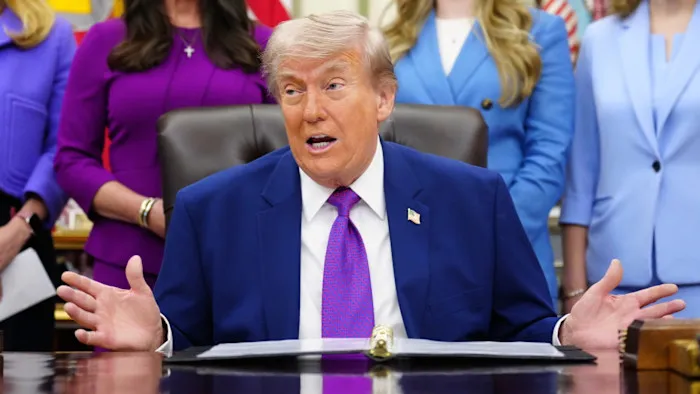
The fragile truce between the United States and Iran is currently being held together by little more than diplomatic habit and mutual exhaustion. On Monday, President Donald Trump declared the ceasefire to be on "life support" after flatly rejecting a counter-proposal from Tehran that he described as "totally unacceptable." While the world waits for the next move, the reality on the ground in the Persian Gulf is moving closer to a return to full-scale kinetic warfare.
This is not a mere diplomatic hiccup. It is a fundamental collision between two incompatible strategies of survival. Trump is betting that a "dual blockade" and the decapitation of the Iranian leadership will force a total surrender of the regime's nuclear ambitions. Meanwhile, the transitional authorities in Tehran—reeling from the February strikes that killed Supreme Leader Ali Khamenei—view their uranium stockpile as the only insurance policy they have left against total annihilation.
The Geometry of a Deadlock
The current impasse stems from a "15-point proposal" delivered via Pakistani mediators. The American side demands the immediate and verified removal of all highly enriched uranium from Iranian soil. In return, the U.S. offers conditional sanctions relief and the unfreezing of assets. To the White House, this is a generous exit ramp for a battered adversary. To Tehran, it is a demand for unilateral disarmament while the U.S. Navy maintains a stranglehold on their ports.
The physical reality of this conflict is defined by a "dual blockade."
- The U.S. Navy has effectively sealed off Iranian ports, preventing the export of sanctioned crude.
- Iran, despite significant damage to its naval assets, continues to obstruct the Strait of Hormuz, forcing global oil traffic into a costly, dangerous trickle.
This maritime standoff has created an economic feedback loop that neither side seems able to break. Trump promised that gasoline prices would drop "like a rock" once hostilities ended. Instead, they have remained stubbornly high as the "Project Freedom" tanker escorts were suspended to give diplomacy a chance—a chance that appears to have vanished.
The Nuclear Poison Pill
The technical core of the dispute is Iran’s stockpile of 60% enriched uranium. International observers have long noted that this material has no credible civilian use and sits just a short technical step away from weapons-grade.
During the Islamabad talks, reports surfaced that Iran offered a compromise: diluting a portion of the material and sending the rest to a third country, likely Russia. Trump’s rejection of this deal reveals the administration's "zero enrichment" standard. For the U.S. and its primary regional ally, Israel, any domestic Iranian enrichment capability is now viewed as a permanent threat that must be dismantled, not managed.
Prime Minister Benjamin Netanyahu has been blunt, stating that if the material isn't removed through "paper," it will be removed through "re-engagement." This is the "life support" Trump is referring to—the narrow window before the bombs start falling again.
The China Factor and the Leverage Trap
This week, the theater of conflict shifts to Beijing. President Trump is expected to pressure President Xi Jinping to cut off the remaining lifelines to the Iranian economy. China remains the largest buyer of Iranian "dark" crude, often transshipped through Malaysian waters to evade detection.
If Trump can convince Xi that a regional explosion is worse for Chinese manufacturing than expensive oil, the Iranian regime could find itself truly isolated. However, China has historically used Iran as a convenient friction point to distract American naval resources from the South China Sea.
"They changed their mind because they didn't put it in the paper," Trump remarked Monday, referring to alleged Iranian verbal agreements to surrender enriched material.
This lack of trust is the defining characteristic of 2026 diplomacy. When the initial strikes of Operation Epic Fury took out the heart of the Iranian government in February, it didn't just destroy buildings; it destroyed the hierarchy capable of making and enforcing a long-term deal. The current Iranian negotiators are looking over their shoulders at hardline IRGC remnants who view any concession as a death warrant.
The Domestic Price of Brinkmanship
While the geopolitical stakes are high, the domestic pressure on the White House is mounting. Approximately two-thirds of Americans currently blame the administration for the surge in energy costs. The logic of the blockade—starving the IRGC of funds—is sound in a vacuum, but in a globalized economy, it functions as a tax on the American consumer.
The administration’s hope is that the "unconditional surrender" rhetoric will eventually crack the Iranian resolve before the American public’s patience for $7-per-gallon gasoline runs out. It is a race against time.
If the ceasefire fails, the U.S. is prepared to resume "Project Freedom," using heavy naval escorts to force the Strait of Hormuz open. This would almost certainly trigger a response from Iranian shore-based missile batteries and "swarm" drone tactics. We have seen this movie before, but in 2026, the weapons are faster and the stakes include a global economy already teetering on the edge of a localized depression.
The "doctor" has walked into the room, and the prognosis is grim. The 1% chance of survival for this ceasefire depends on one side blinking in a staring contest where both participants have already lost their vision.
The naval blockade remains in place. The bombers are fueled. The only thing missing is the final spark.
Watch the Strait.