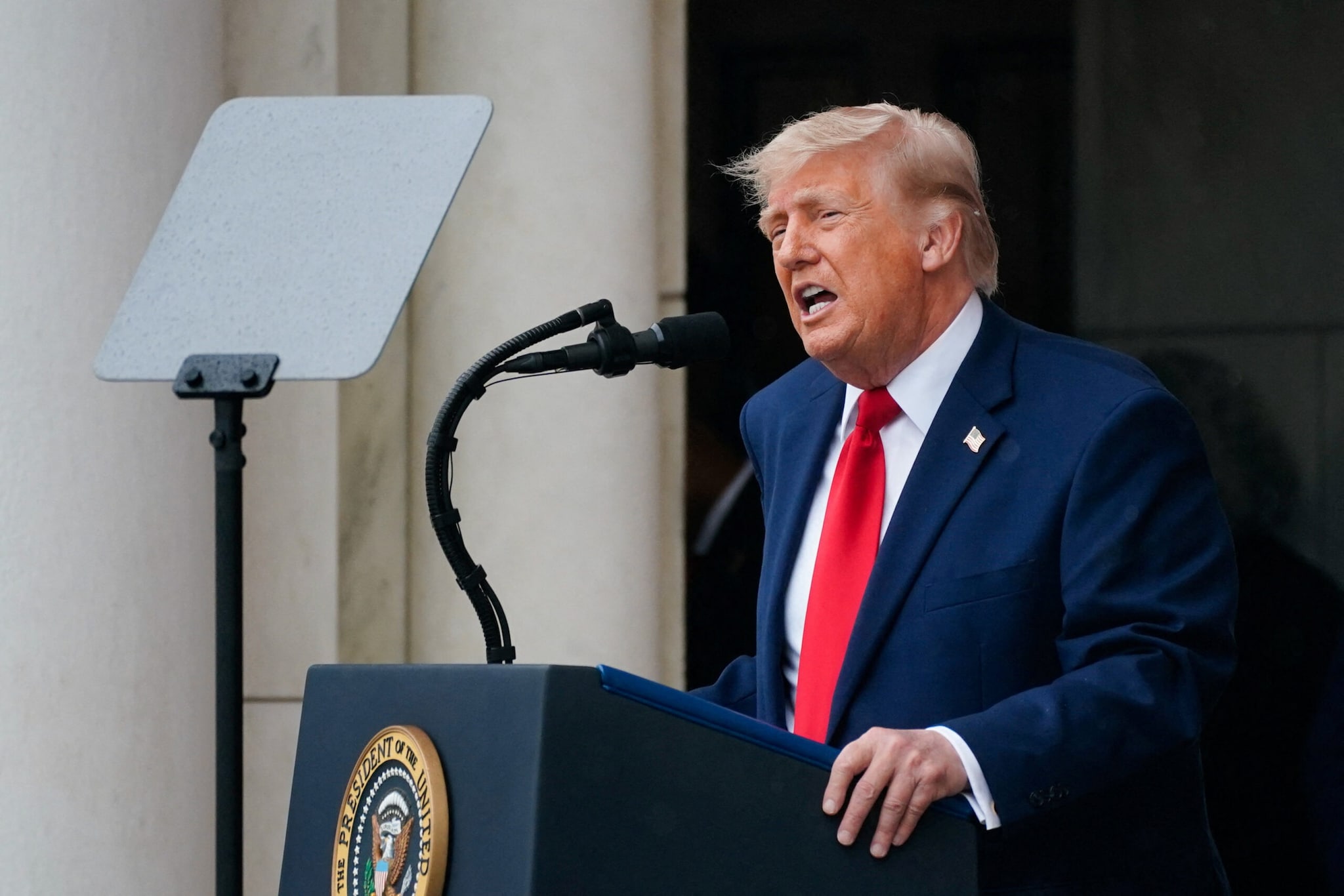
Donald Trump has flatly rejected Iran's demand for an upfront release of $24 billion in frozen assets, declaring on NBC's "Meet the Press" that financial concessions will only come after a definitive peace agreement is finalized. This brings the fragile diplomatic dance between Washington and Tehran to a volatile standstill.
Tehran had explicitly framed the multi-billion-dollar release as a baseline "trust test," offering to sign an interim peace deal if the administration immediately unlocked an initial $12 billion chunk. By responding with a firm "comes after," Trump has flipped the script, demanding total behavioral compliance and verified nuclear disarmament before a single dollar moves.
This transactional brinkmanship exposes a fundamental mismatch in how both nations view leverage, risking a dangerous return to military escalation in the region.
The Mirage of the Twenty-Four Billion Dollar Trust Test
The current diplomatic friction centers on a specific pool of capital. Mohsen Rezaei, a senior military adviser to Iranian Supreme Leader Ayatollah Mojtaba Khamenei, attempted to set the parameters of the talks by dangling the prospect of a phased peace deal. Under the Iranian blueprint, $12 billion would be un-designated on the spot upon signing an interim framework, with the remaining $12 billion to follow as milestones were met.
To Tehran, this is not an American handout; it is the repatriation of their own sovereign wealth, long trapped in international banking pipelines by sweeping Western sanctions. Rezaei openly called it a test that the White House must pass to prove its sincerity.
Trump sees it entirely differently. For a leader who has spent a decade publicly lambasting the 2015 nuclear agreement as a disaster, any upfront financial release looks too much like the historic "pallets of cash" policy he repeatedly weaponized against previous administrations.
The White House is operating on a logic of maximum leverage. The administration views the frozen funds—estimated globally to sit anywhere between $100 billion and $120 billion—not as a bargaining chip to be bartered away early, but as the final prize that Iran only receives once its nuclear infrastructure is entirely disassembled under American oversight.
A Drastically Altered Battlefield
This negotiation is not taking place in a vacuum. It follows a harrowing stretch of direct military confrontation that has fundamentally rewritten the geopolitical landscape of the Middle East. The regional proxy conflicts of the past decade have given way to overt, state-on-state violence involving direct American and Iranian kinetic engagements.
The domestic situation within Iran has also shifted in ways that make these talks highly unpredictable. Supreme Leader Ayatollah Mojtaba Khamenei has been entirely absent from public view since sustaining injuries in U.S. airstrikes during the peak of the recent fighting. Trump pointedly noted during his interview that there is a "good probability" the U.S. knows exactly where the reclusive leader is hiding.
This quiet power dynamic explains why Tehran is projecting an outward posture of extreme defiance despite facing immense economic distress. Rezaei’s public statements were laced with explicit threats meant to project strength to a domestic audience and regional proxies. He warned that if negotiations collapse and Washington resumes military strikes, Iran will widen the geographic scope of the conflict far beyond the Persian Gulf.
Iran has mapped out a scenario where it targets American bases stretching from the Strait of Hormuz down to the Indian Ocean, the Red Sea, and into the Mediterranean. Tehran has even floated the idea of imposing "maintenance fees" on commercial shipping traversing the strategic Strait of Hormuz, a critical bottleneck for a fifth of the world’s energy supplies. It is an aggressive attempt to show that while their economy is cornered, they still possess the conventional capability to disrupt global commerce.
Shifting Timelines and Carrots Without Sticks
The administration’s immediate diplomatic mechanics reveal a calculated willingness to compartmentalize regional issues to secure a quick victory. Trump confirmed he is not demanding that Lebanon or the disarmament of regional groups there be tethered to a short-term deal with Tehran. This is a tactical concession aimed at lowering the bar for an initial breakthrough.
Yet, the core American demands remain extraordinarily high. If an agreement is struck, the U.S. intends to directly oversee the physical removal and total destruction of all Iranian nuclear-related equipment. If those terms are rejected, the alternative offered by the White House is not a return to a frozen conflict, but aggressive military action designed to eliminate those capabilities by force.
The administration believes time is on its side. Trump noted that the Iranian leadership has operated without facing systemic, existential consequences for nearly half a century. From the White House perspective, the recent 100 days of conflict and the April 8 ceasefire have pushed Tehran into a corner where they ultimately have no choice but to capitulate to unprecedented terms.
The fatal flaw in this strategy is the assumption that a proud, deeply ideological regime will accept public humiliation in exchange for economic relief. By demanding everything upfront while refusing even partial financial concessions, the White House has left the Iranian leadership with no politically viable off-ramp. If the $24 billion standoff cannot be bridged by a creative diplomatic compromise, the current quiet period will serve merely as an intermission before a far wider regional explosion.