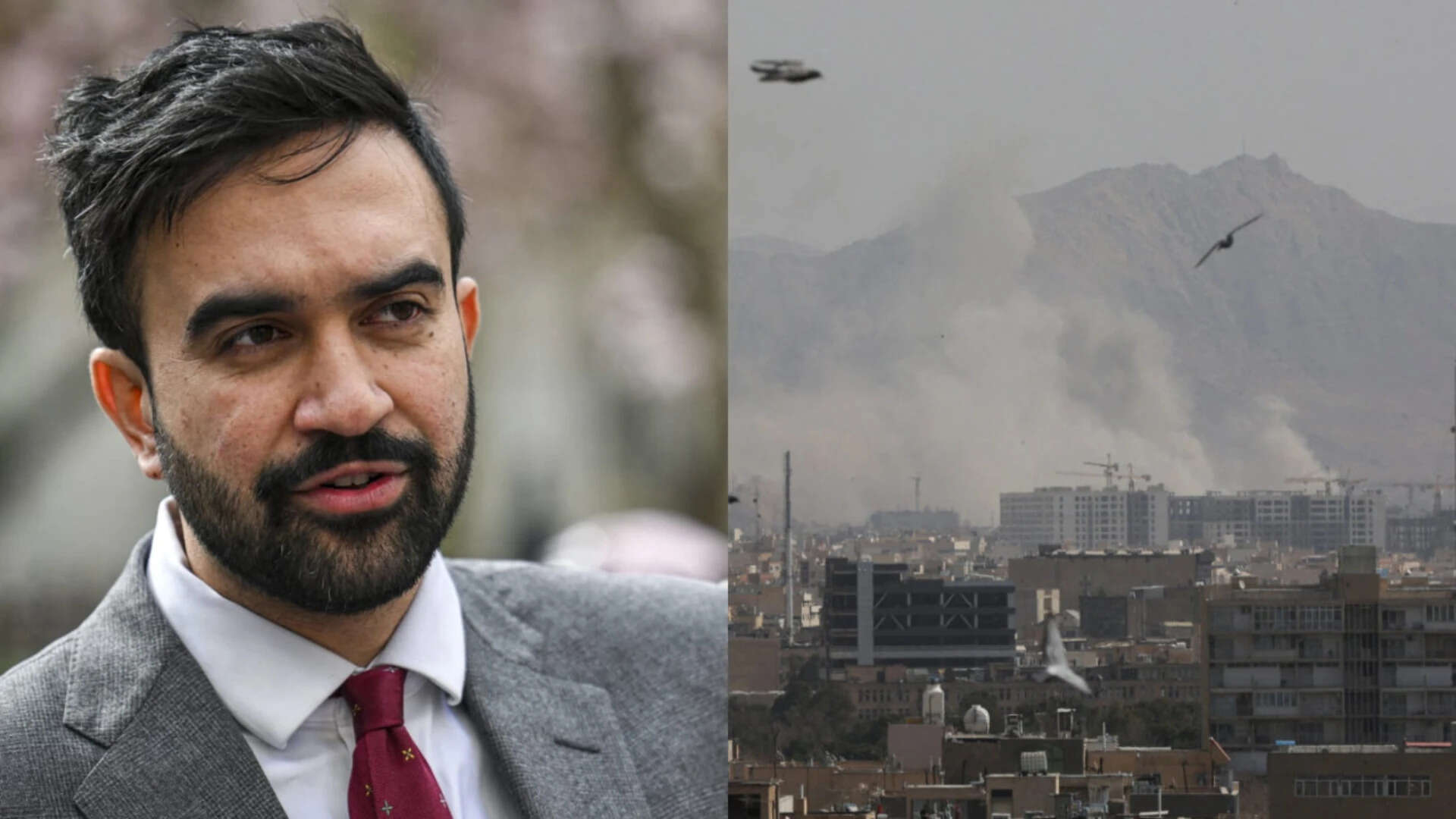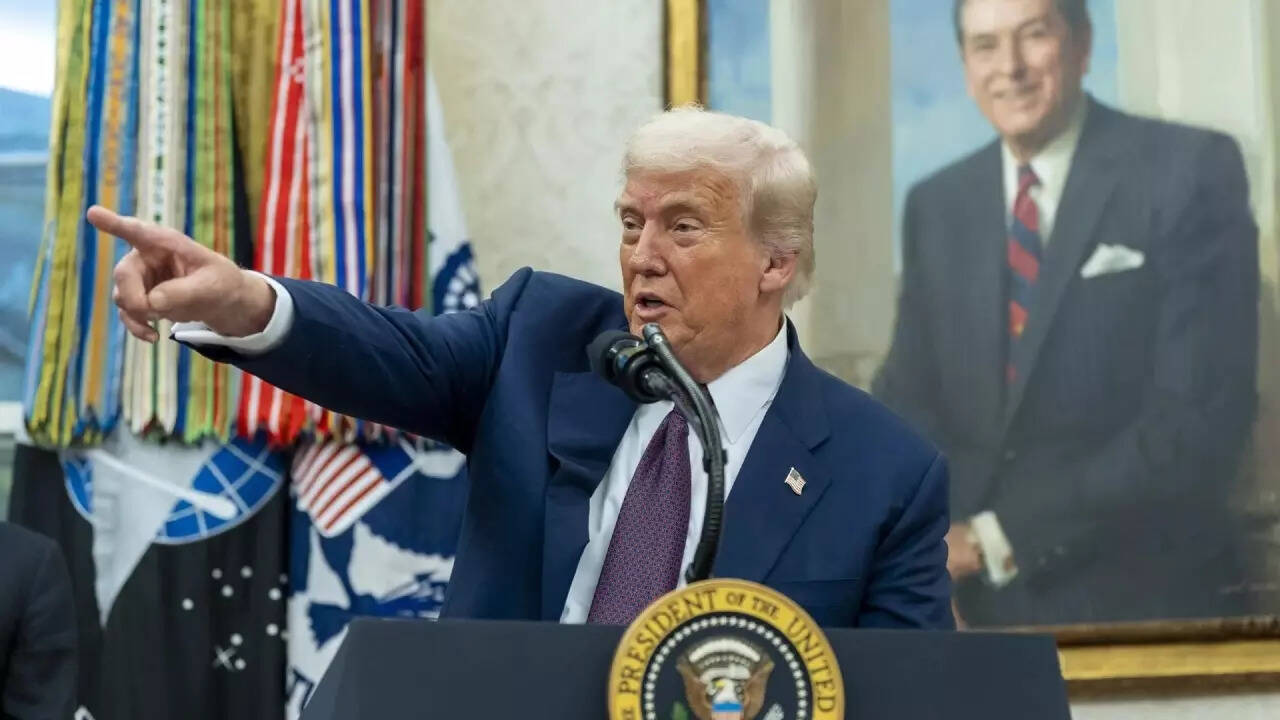
Donald Trump has signaled a potential end to the massive U.S.-Israeli military campaign against Iran, claiming he has “off-ramps” that could wrap up the operation within days. Speaking from Mar-a-Lago, the President suggested that while he has the capacity to "take over the whole thing," he is leaning toward a shorter, more surgical strike sequence that would effectively dismantle Tehran’s nuclear and missile infrastructure before withdrawing. This pivot comes as a shock to those expecting a multi-month siege, yet it aligns with Trump’s long-standing aversion to "forever wars" and his preference for high-leverage, short-duration psychological warfare.
The current operation, dubbed "Operation Midnight Hammer" by some and "Epic Fury" by others, began with a decapitation strike that reportedly killed Supreme Leader Ali Khamenei and dozens of top IRGC officials. Despite the body count and the smoke rising over Tehran, Trump appears to be using the chaos to force a lopsided deal rather than committing to a decade of nation-building.
The High Stakes of the Short Game
The logic of a short operation is simple. By obliterating the Iranian Revolutionary Guard Corps (IRGC) command-and-control centers and key nuclear sites in a matter of days, the administration hopes to leave the regime so hollowed out that it either collapses from within or begs for a seat at the negotiating table. Trump confirmed that Iranian leadership—or what remains of it—has already reached out to talk.
"They should have done it sooner," Trump told reporters, referring to the failed Geneva talks led by Steve Witkoff and Jared Kushner. The failure of those negotiations was the final trigger for the Friday night strikes. Now, the President is betting that the same officials who "played too cute" in Switzerland will be more compliant when their headquarters are in ruins.
This strategy carries immense risk. If the U.S. pulls back after only a few days, it leaves a power vacuum. Historical precedent suggests that radical elements often thrive in such voids. However, Trump’s advisors argue that the goal is not to fix Iran, but to break its ability to threaten the West.
The Cost of the First 48 Hours
While the President speaks of off-ramps, the reality on the ground is a sprawling regional conflict. The Pentagon confirmed the first three American service members were killed in the initial 48 hours of the campaign. In retaliation for the strikes on Tehran and Qom, Iran launched a "mega missile blitz" targeting U.S. naval assets in Bahrain and civilian infrastructure in Dubai and Abu Dhabi.
The IRGC, even in its fractured state, managed to punch through regional defense umbrellas. Missiles hit the Palm Jumeirah in Dubai, and air raid sirens have become a constant in Jerusalem. This is the "war of choice" that critics in Congress, led by Senator Tim Kaine and Representative Adam Smith, warned would spiral out of control. They argue that by bypassing the War Powers Act, the administration has ignited a fire it cannot easily extinguish.
Why Regime Change is the Unspoken Goal
Despite the talk of short timelines, the target list tells a different story. The U.S. and Israel aren't just hitting enrichment centrifuges. They are systematically dismantling the internal security apparatus—the Basij and IRGC Ground Forces—that keeps the regime in power.
- Decapitation: The removal of Khamenei and 40 senior leaders has left the "Leadership Council" in Tehran scrambling to maintain order.
- Infrastructure: The "raze to the ground" approach targeting the Iranian missile industry ensures that even if the regime survives, its teeth are pulled for a generation.
- Civilian Uprising: Trump’s direct appeal to the Iranian people to "take over your government" is a gamble on a popular revolution.
The administration is betting that the Iranian public, weary of decades of repression and the recent killing of 30,000 protesters by their own government, will seize this moment. It is a high-wire act. If the people do not rise, the U.S. is left with a wounded, humiliated, and even more radicalized enemy.
The Mirage of Diplomacy
Trump’s claim that he is open to talks while "bombs will be dropping everywhere" is classic maximum pressure. He noted that many of the people the U.S. was originally negotiating with are now "gone." This is not an exaggeration. The "big hit" on Saturday night effectively erased the diplomatic wing of the Iranian government.
The President's "off-ramp" might just be a tactical pause. By signaling a shorter operation, he keeps his domestic base happy—avoiding the optics of another Iraq—while keeping Tehran in a state of terminal uncertainty. It allows him to claim victory if the nuclear sites are confirmed destroyed, regardless of who is left running the country.
The world is watching to see if this "four weeks or less" timeline holds. If the U.S. exits too early, the IRGC remnants could reorganize. If it stays too long, it becomes the very quagmire Trump promised to avoid. The only certainty is that the Middle East has been permanently altered in a single weekend.
Ask me to analyze the specific impact of the strike on Iran’s Ghadr 1-H missile sites and how it changes the regional balance of power.