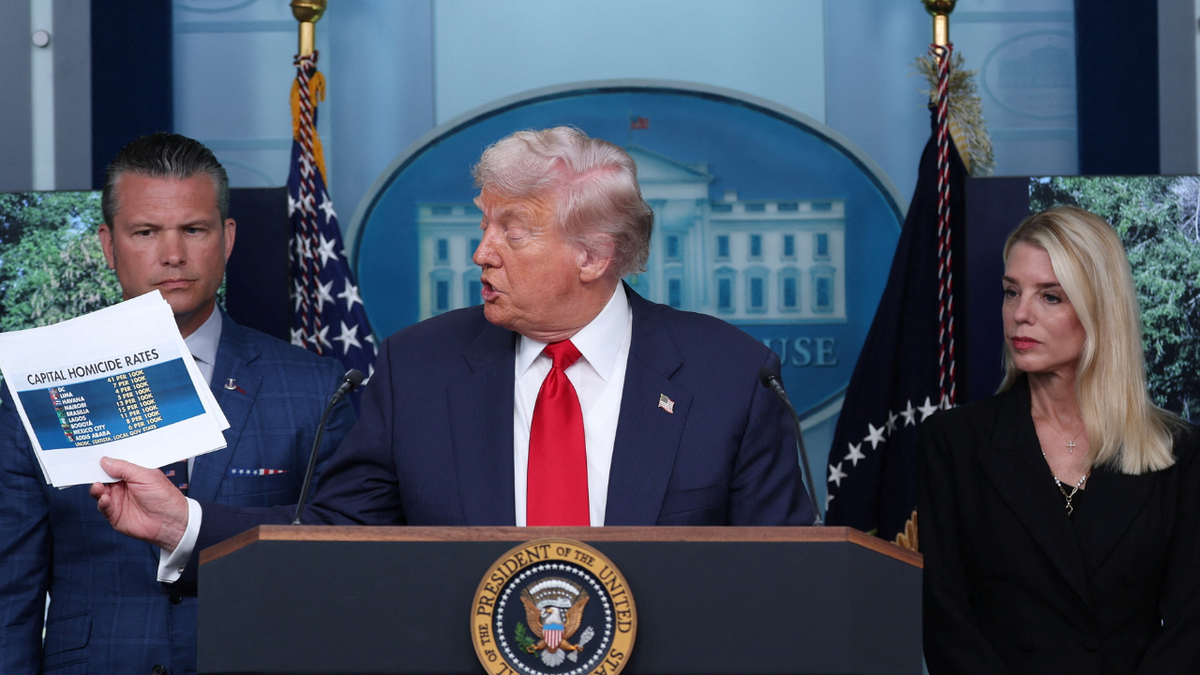
Donald Trump is betting the entire global energy market on a single word: "Give up." On day 62 of a conflict that has rewritten the rules of modern warfare, the White House is doubling down on a naval blockade intended to choke the Iranian economy into submission. It is a gamble of historic proportions. While the administration points to a $500 million seizure of Iranian crypto assets and a stalled fleet of tankers as proof of success, the reality on the water suggests a far more dangerous stalemate. Oil has breached $120 a barrel, American petrol prices are hitting four-year highs, and the "quick win" promised in February has dissolved into a grueling war of attrition.
The conflict has reached a psychological inflection point. For the first time since the initial strikes on February 28, the question is no longer who has the bigger hammer, but who has the higher pain tolerance. Trump’s "Operation Economic Fury" is designed to fill Iran’s storage tanks to the brim, forcing a total production shutdown within the next 20 days. But in Tehran, the rhetoric is anything but defeated. The regime is banking on the fact that every cent added to the price of a gallon of gas in the United States is a political bullet fired at the White House.
The Storage Deadline Myth
The logic behind the current U.S. strategy is simple math. If Iran cannot export its crude, it must store it. If it cannot store it, it must stop pumping. According to satellite intelligence and market analysts at Kpler, Iran has roughly 12 to 22 days of storage capacity remaining. The White House believes this deadline will force a total surrender.
However, this calculation ignores the "dark fleet" and the shifting geography of the global oil trade. While the U.S. Navy maintains a visible presence in the Strait of Hormuz, smaller, older tankers continue to move Iranian product through ship-to-ship transfers in the Gulf of Oman. These vessels, often flying flags of convenience and operating without transponders, are the regime's lifeline.
Furthermore, the Iranian Parliament Speaker, Mohammad Bagher Ghalibaf, recently mocked the blockade, claiming that no oil wells have "exploded" and that the high global prices are actually padding the regime's remaining revenue streams. This is the central irony of the conflict: by attempting to destroy Iran’s economy, the U.S. has created a global price surge that makes every barrel Iran does manage to sneak out twice as valuable.
The Invisible Infrastructure War
Beyond the naval standoff, a more sinister campaign is unfolding within Iran’s borders. For 62 days, the country has been under a total internet blackout. This is not just a tool for suppressing domestic dissent; it is a calculated effort to paralyze the nation’s technocratic class.
But the damage goes both ways. The U.S. Treasury, led by Scott Bessent, is attempting to dismantle Iran’s financial architecture via "Operation Economic Fury." The seizure of half a billion dollars in crypto assets was a significant blow, but it also signaled to other adversarial nations that the U.S.-led financial system is being fully weaponized. This has accelerated a shift toward non-Western payment systems, a move that could have long-term consequences for the dominance of the U.S. dollar.
In the shadows, the IRGC has threatened to target "civilian facilities" across the region if Trump carries out his threat to "decimate every bridge and power plant" in the country. This isn't just bluster. The IRGC has spent decades preparing for an asymmetric war, focusing on drone swarms and precision missiles that can bypass traditional missile defense systems to hit desalination plants and refineries in neighboring Gulf states.
The Domestic Fracture
At home, the $25 billion price tag of the war is starting to weigh on the American public. While the President remains defiant, the political consensus is thinning. Democratic leadership has characterized the operation as a "reckless war of choice," pointing to the rising costs of food and fuel as a direct tax on the American middle class.
The administration’s messaging has been inconsistent. One day, the goal is "regime change"; the next, it is a "non-nuclear deal." This ambiguity has left allies in a difficult position. The UAE has already signaled its discomfort by distancing itself from OPEC's traditional alignment, and the "Global Sumud Flotilla" incident—where Israeli forces raided aid boats—has only increased international pressure for a ceasefire.
The Missing Peace
Negotiations are currently at a dead end. Iran’s latest proposal, brokered by Pakistan, was rejected by the White House because it demanded a permanent end to the war and sovereign control over the Strait of Hormuz without making immediate concessions on its nuclear program.
The U.S. is demanding $270 billion in war reparations and a total dismantling of Iran’s uranium stockpile. These are maximalist positions. In the world of high-stakes diplomacy, when neither side can afford to lose face, the result is usually a "frozen conflict" that bleeds both sides dry.
The current strategy assumes that the Iranian regime is a rational economic actor that will fold once the math stops working. History suggests otherwise. Revolutionary regimes often find their greatest strength when backed into a corner, using external threats to justify internal repression.
As the 8 p.m. deadline looms and the "whole civilization" rhetoric escalates, the world is watching to see if the blockade will actually break the regime or simply break the global economy first. The next 20 days will determine if this is the end of the war or merely the end of the beginning.
Watch the price of Brent crude. If it stays above $120, Tehran believes it is winning the war of nerves, regardless of what the White House says at a podium. Prepare for a prolonged era of energy volatility.



