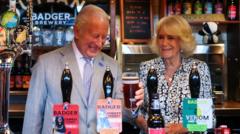
When a reigning monarch steps behind a bar to pour a pint of stout and mutters about drowning sorrows, the media naturally flocks to the photo opportunity. It is the perfect blend of royal duty and relatable human theater. Yet, beneath the cheerful clinking of glasses and the rehearsed jokes lies a much darker reality for the hospitality industry.
While King Charles III made headlines for his self-deprecating humor during a visit to a community-run pub, the broader story is not about royal public relations. It is about the systemic collapse of the British pub. These institutions are the cultural and social glue of thousands of towns, but they are vanishing at an unprecedented rate. What was meant to be a lighthearted moment actually highlighted a painful truth. For millions of Britons and thousands of publicans, drowning sorrows is not a metaphor. It is a daily economic necessity.
The Mirage of the Community Owned Pub
To understand why the British pub is in terminal decline, one must look closely at the model celebrated during the King's visit. The pub in question was a community-owned enterprise, rescued from closure by local residents who pooled their resources to save their local.
This model is frequently championed as the ultimate savior of the industry. On paper, it sounds flawless. Local people buy shares, volunteers help run the business, and the pub becomes a non-profit hub that serves the community rather than corporate shareholders.
The reality is far less romantic.
Community ownership is a desperate, last-resort measure, not a sustainable industry standard. It requires an extraordinary amount of unpaid labor, local wealth, and goodwill. Most struggling pubs are located in working-class neighborhoods where residents do not have spare cash to buy shares, let alone the free time to manage a complex hospitality business.
By celebrating these rare success stories, policymakers and commentators shift the burden of survival onto the public. It creates a convenient narrative that if a pub closes, it is because the community did not care enough to save it. This is a profound misunderstanding of the economic forces at play.
The Triple Squeeze of Modern Hospitality
Running a pub has never been easy, but the current economic climate has made it almost impossible. Publicans are currently trapped in a brutal triple squeeze that leaves zero room for error.
- The Energy Epidemic: Pubs are highly energy-intensive operations. Keeping cellars cold, kitchens running, and dining rooms warm requires massive amounts of power. When commercial energy contracts skyrocketed, pubs were left entirely exposed without the price caps that protected residential consumers.
- The Labor Deficit: Finding experienced staff has become a nightmare. A combination of changing immigration laws and a post-pandemic shift in workforce priorities has left the hospitality sector desperately short-staffed, forcing owners to raise wages just to keep the doors open.
- The Supply Chain Shock: The cost of everything from carbon dioxide for draft lines to the potatoes in the fryer has risen steadily. Breweries, facing their own soaring production costs, have passed those increases down to the publicans, who have no choice but to raise prices.
When a pint of beer nudges closer to the ten-pound mark in major cities, consumers inevitably pull back. They drink at home. They buy cheap supermarket alcohol and socialize on their sofas. The pub ceases to be a regular habit and becomes a rare luxury.
The Tax System That Punishes Publicans
The deepest structural flaw in the British hospitality industry is a tax system that actively penalizes physical businesses while favoring online giants and supermarkets.
The Injustice of Business Rates
Business rates are a tax on physical property. Because pubs require large, prominent buildings to accommodate customers, they pay a disproportionately high amount of business rates compared to their actual revenue. An online retailer shipping goods from a giant, automated warehouse in an industrial park pays a fraction of the property tax per pound of turnover compared to a historic town-centre pub.
Governments have offered temporary relief and discounts, but these are sticking plasters on a gaping wound. Publicans cannot make long-term investment decisions when their tax liabilities are subject to the whims of annual political budgets.
The VAT Disparity
Then there is the Value Added Tax. In the UK, supermarkets pay zero VAT on most food items, allowing them to sell alcohol and meals at prices pubs cannot hope to match. The moment that same food or drink is served in a pub, it is hit with a twenty percent tax.
Industry bodies have spent years lobbying for a permanent reduction in VAT for hospitality, pointing to European models where lower tax rates on restaurants and bars have preserved vibrant public spaces. These pleas have largely fallen on deaf ears in Whitehall, where short-term Treasury revenue targets consistently triumph over long-term cultural preservation.
The Beer Duty Myth
Governments love to boast about freezing beer duty. It makes for great headlines and allows politicians to pose with pints in front of the cameras, claiming they are supporting the working-class consumer.
It is a statistical illusion.
A freeze in beer duty does not reduce a publican's costs; it merely prevents them from rising even faster. It does nothing to address the vast gap between the price of a pint in a pub and a can in a supermarket. The beer duty freeze is a political gesture that provides almost no practical relief to a business facing a thirty percent increase in its food and utility bills.
The Cultural Cost of Quiet Streets
When a pub closes, a community loses more than a place to drink. It loses its informal community center.
Pubs are where local sports teams meet, where charity fundraisers are organized, and where lonely individuals find their only human interaction of the day. The decline of the pub directly correlates with the rising epidemic of loneliness and social isolation.
Replacing a historic pub with a block of luxury flats or a convenience store permanently alters the social fabric of a neighborhood. Once these spaces are gone, they do not return. No developer is building new, independent pubs with character and history.
The Inevitable Consolidation
The future of the British pub scene is not independent, character-filled locals. It is corporate consolidation.
The businesses surviving the current crisis are largely managed houses owned by massive pub companies and breweries. These corporate giants have the scale to negotiate cheaper supply contracts, the financial cushion to absorb energy shocks, and the ability to run on razor-thin margins across hundreds of sites.
While this keeps the doors open, it sanitizes the experience. The quirky, historic, slightly eccentric pub run by a local family is replaced by a standardized, corporate template where every menu, every interior paint color, and every beer selection is identical.
To save what is left of the independent pub trade, the British government must move beyond photo opportunities and cheap rhetoric. It requires a fundamental restructuring of business rates, a permanent reduction in VAT for hospitality, and a recognition that these businesses are essential cultural assets deserving of protection. Without these systemic changes, the sight of a publican pouring a pint to drown their sorrows will cease to be a witty remark and become the defining epitaph of an entire industry.


