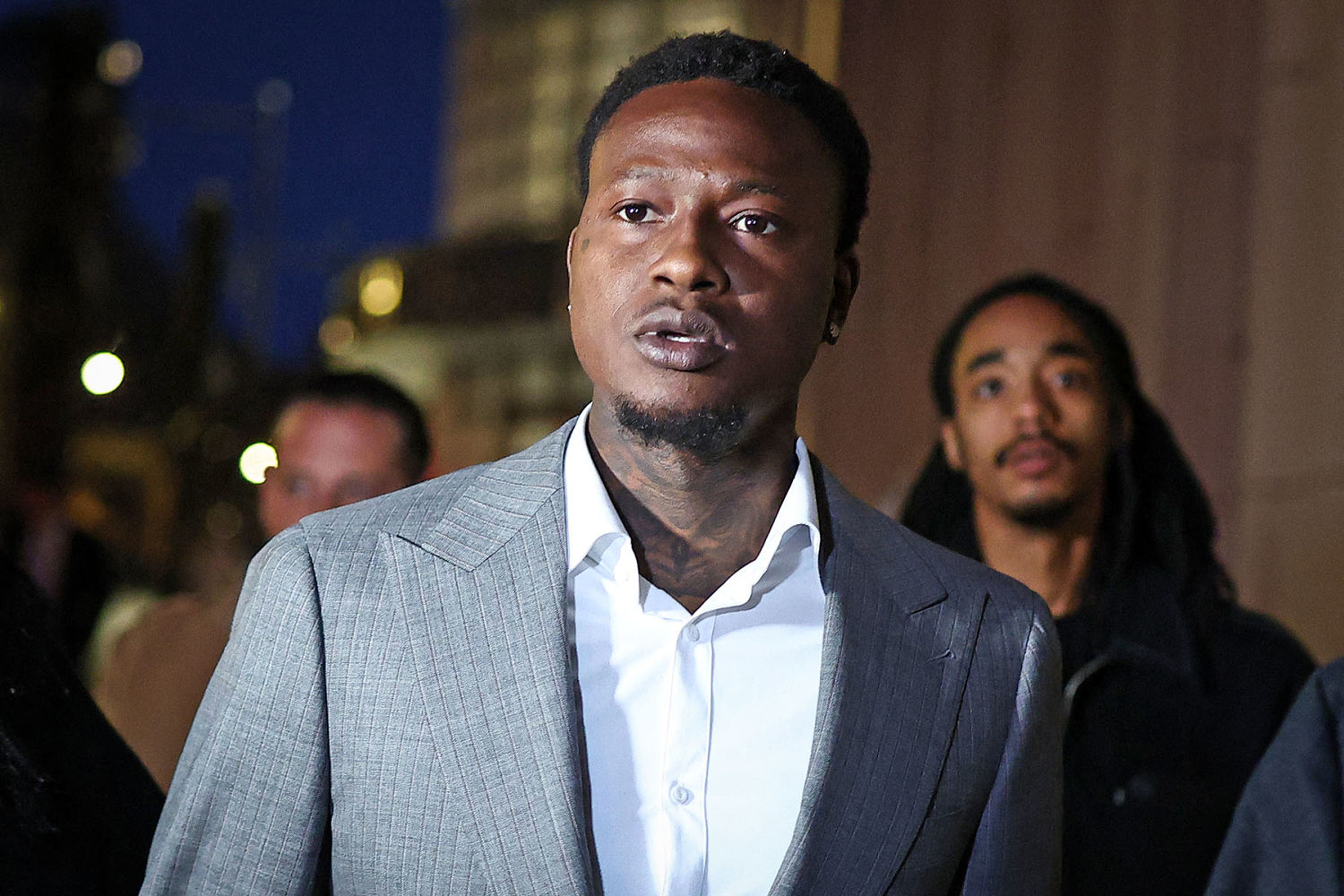
Former NBA guard Terry Rozier has pleaded not guilty to new federal bribery and wire fraud charges following a sweeping superseding indictment in a Brooklyn federal court. The case has kept the 32-year-old off the court entirely this season, threatening to end his professional career. Federal prosecutors allege that Rozier accepted financial bribes to manipulate his own game statistics, intentionally exiting a March 2023 game early under the guise of an injury to enrich a network of illicit sports bettors. While the defense frames the new charges as a desperate attempt by the government to salvaging a flawed legal theory, the unfolding scandal exposes a much deeper systemic vulnerability within professional sports. The rapid legalization and normalization of sports wagering have created an environment where the integrity of the game is actively colliding with the massive financial incentives of the gambling industry.
The Mechanics of the Manipulation
The federal government's case against Rozier hinges on a highly specific sequence of events that took place on March 23, 2023, while he was playing for the Charlotte Hornets. According to the superseding indictment, Rozier allegedly conspired with his longtime childhood friend, Deniro Laster, and an Instagram sports betting influencer named Marves Fairley, who operated under the handle "Vezino Locks." For a deeper dive into this area, we suggest: this related article.
The strategy was simple yet devastating to the integrity of the game. Rozier allegedly informed his associates that he intended to leave the matchup against the New Orleans Pelicans early by fabricating or exaggerating a lower leg injury. Armed with this non-public, insider information, the betting ring directed more than $200,000 in wagers targeting the "under" lines on Rozier’s individual player proposition statistics, including points and assists.
The plan was executed with near-precision. Rozier checked out of the game after playing just over nine minutes, finishing the night with zero points and citing right foot discomfort. To get more background on the matter, in-depth reporting is available on NBC Sports.
However, the internal logistics of the alleged conspiracy quickly degraded into a dark comedy of errors. While Rozier managed to keep his scoring and assist totals below the sportsbook thresholds, he accidentally grabbed four rebounds before exiting. That total pushed him over the betting line for that specific metric, spoiling a portion of the syndicate's wagers.
The indictment reveals that because the betting scheme was only partially successful, Rozier and his co-conspirators held a tense post-game negotiation to discount his promised $100,000 bribe. The parties ultimately agreed on a reduced payout of approximately $70,000. Laster allegedly collected the cash illicitly and drove through the night to Rozier's residence, where the federal government claims the two men sat together to count the physical currency.
The Defense Strategy and Legal Loopholes
Rozier, who remains free on a $3 million bond secured by his Florida property, has maintained his complete innocence from the moment the FBI initially arrested him in October. His lead defense attorney, Jim Trusty, has taken an aggressive stance against the Department of Justice, arguing that the shifting nature of the charges indicates weakness in the prosecution's underlying legal framework.
The core of the defense strategy relies on a recent U.S. Supreme Court precedent that significantly narrowed the scope of the federal wire fraud statute. Trusty argues that the government’s original theory—that Rozier defrauded commercial sportsbooks by depriving them of accurate information—does not constitute a federal crime under the high court's current interpretation of property rights and fraud.
According to the defense, the introduction of the superseding indictment, which added charges of honest services wire fraud conspiracy and bribery in sporting contests, is a tactical pivot. The government is now forced to argue that Rozier did not just trick sportsbooks, but actively defrauded the NBA and the Charlotte Hornets of his honest services as an employee.
A Network of Corruption
The case against Rozier is not an isolated incident of a rogue athlete making a poor decision. It is part of a massive, multi-jurisdictional federal crackdown that has netted more than 30 individual defendants, including several notable figures linked to organized crime and traditional mafia gambling rings.
The true scale of the operation came to light just hours before Rozier’s new plea, when his co-conspirator Marves Fairley pleaded guilty to conspiracy and bribery charges. Fairley admitted in open court that he ran an extensive network utilizing insider information to manipulate betting outcomes across the NBA, the NCAA, and even the Chinese Professional Basketball League.
The rot extends beyond the baseline. Former NBA player and coach Damon Jones has already pleaded guilty for his role in selling confidential lineup changes and locker room medical reports to high-stakes bettors. Meanwhile, Portland Trail Blazers coach and NBA Hall of Famer Chauncey Billups has pleaded not guilty to separate federal charges involving high-stakes, mafia-backed illegal poker games.
The Illusion of League Oversight
When the unusual betting activity surrounding the March 2023 Hornets game first triggered internal red flags across major commercial sportsbooks like DraftKings and FanDuel, the NBA’s initial internal investigation yielded nothing. The league publicly stated at the time that it found no definitive evidence that Rozier had violated its strict anti-gambling policies.
This failure highlights a massive structural flaw in how professional sports leagues police themselves in the modern era. The NBA relies heavily on data-sharing partnerships with sportsbooks to flag unusual line movements or massive influxes of cash on specific player props. However, when an elite athlete can simply claim a "lingering lower leg injury" to exit a game, differentiating a legitimate medical issue from a deliberate, high-stakes fix is nearly impossible without the wiretapping and subpoena powers of the federal government.
The current model creates an irreconcilable conflict of interest. The NBA and its media partners have fully embraced sports betting as a core revenue driver, embedding live betting odds into broadcasts and signing lucrative sponsorship deals with the very companies being targeted by these schemes. The league cannot easily act as both the chief promoter of sports wagering and its most effective policeman.
The Micro-Betting Threat to Professional Sports
The specific nature of the allegations against Rozier exposes the unique danger that micro-betting and player proposition wagers pose to sports integrity. In the past, fixing a game required convincing an entire team, or at least multiple key players, to intentionally lose a matchup. That scale of conspiracy was difficult to hide and required massive financial outlays.
Today, a single disgruntled or compromised player can alter the financial outcome of millions of dollars in wagers without ever changing the final score of the game. A point guard can intentionally throw an extra turnover, a bench player can deliberately commit quick fouls to limit their playing time, or a starter can fake an injury after the first quarter. The outcome of the game remains untouched, but the specific, highly localized prop bets cash out perfectly for those in the know.
This micro-level vulnerability is particularly acute for mid-tier athletes or players nearing the end of their careers. While top-tier superstars earning supermax contracts are largely insulated from the financial temptation of a $100,000 bribe, the vast majority of professional athletes face far different financial realities and shorter career longevities. The temptation to secure a tax-free, cash payout for simply sitting out the second half of an insignificant regular-season game is a reality that sports leagues are deeply afraid to confront publicly.
The legal battle taking place in that Brooklyn federal courtroom will likely establish the future legal boundaries of sports gambling prosecution in the United States. If Rozier’s legal team successfully exploits federal statutory loopholes to secure a dismissal or an acquittal, the Department of Justice will find itself stripped of its most potent weapons to combat the manipulation of professional sports. If the prosecution secures a conviction, it will send a clear message to locker rooms across the country that the federal government is watching the injury reports far closer than the coaching staff ever could.
The NBA has placed Rozier on an indefinite, unpaid leave of absence, cutting off his multi-million dollar salary and forcing him to watch the twilight of his career slip away from a courtroom gallery. Regardless of the final verdict, the pristine image of the modern sports league—where every play is assumed to be an honest reflection of athletic competition—has been permanently compromised by the very cash flow that fueled its recent economic boom.