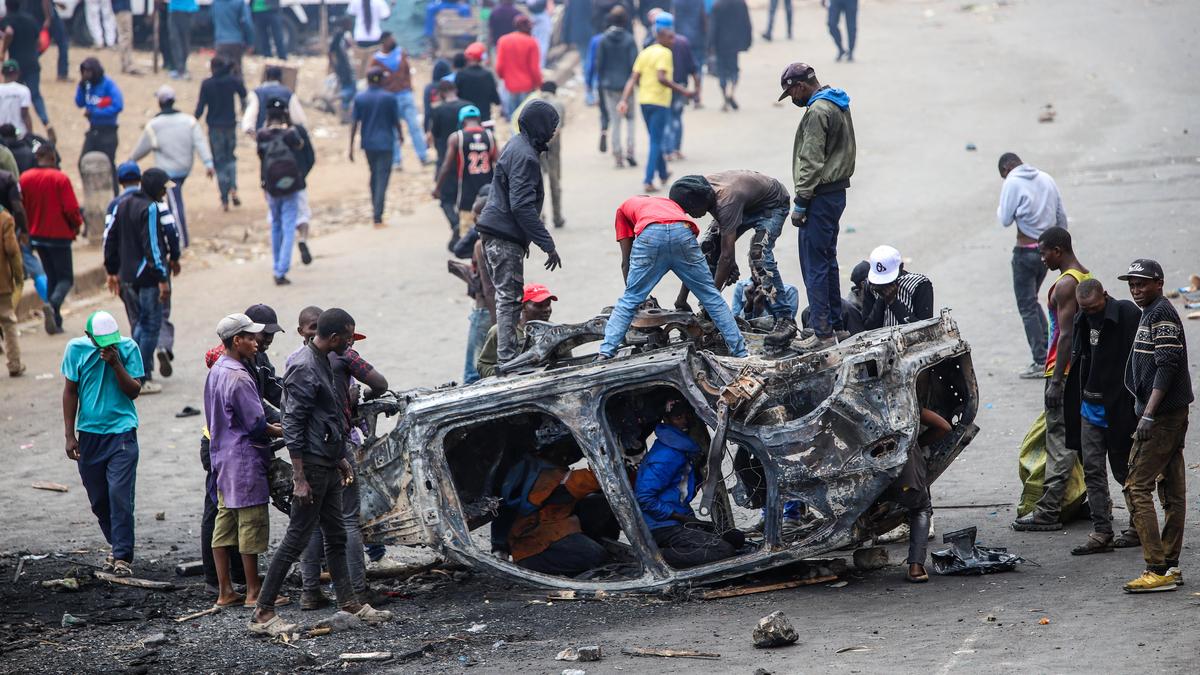
The standoff that paralyzed Kenya’s transit corridors this week did not end because the math changed. It ended because the political temperature became untenable. After two days of empty highways, four deaths, and a shuttered economy, President William Ruto and the leaders of the Transport Sector Alliance reached a fragile ceasefire in Mombasa. The deal is simple on the surface: a Sh10 reduction in diesel prices for the June cycle and a commitment to address the predatory insurance and auctioning laws that haunt the matatu industry.
But the relief felt by commuters on the streets of Nairobi and Mombasa today is built on a foundation of shifting sand. While the strike is officially "called off," the structural rot that triggered the chaos—predatory taxation, a controversial government-to-government (G-to-G) fuel deal, and a global energy market volatile from the conflict in Iran—remains entirely unaddressed.
The High Cost of a Sh10 Promise
To understand why the transport sector was willing to walk away from a strike that was effectively winning, one must look at the leverage used behind closed doors. The President’s offer of a Sh10 per litre reduction in diesel is a drop in the bucket compared to the Sh46 spike that ignited the protests. However, the government didn't just offer cheap fuel; they offered a lifeline to owners facing financial ruin.
By promising to review insurance policies and the aggressive tactics of auctioneers, the administration hit the operators where it hurts most: their balance sheets. For a matatu owner, the cost of fuel is a daily nightmare, but the fear of a repossession agent taking their vehicle is an existential threat. This pivot from fuel prices to "institutional reforms" allowed both parties to save face. The government avoided a total rollback of its tax regime, and the transport leaders could claim a victory for the long-term health of the industry.
The G-to-G Mirage and the Tax Wall
The administration’s defense remains consistent. President Ruto argues that without the current subsidies and the G-to-G arrangement with Gulf suppliers, diesel would be retailing north of Sh277 per litre. He points to the Sh13.74 billion already spent through the Petroleum Development Fund to cushion the blow.
Yet, the "global crisis" narrative only goes so far when neighbors are faring better. Transport stakeholders have grown increasingly vocal about the disparity between Kenya and landlocked Ethiopia, where pump prices remain significantly lower. The elephant in the room is the tax structure. The President explicitly rejected calls to slash the VAT on fuel back to 8%, claiming the revenue loss would "undermine government services."
It is a classic fiscal trap. The government needs the fuel tax to pay off its burgeoning international debt, but that same tax is choking the very commerce required to generate a healthy economy. This isn't just about the war in Iran or the Strait of Hormuz; it’s about a treasury that has backed itself into a corner where the only way out is to squeeze the consumer until they break.
A Sector Infiltrated and Fragile
The leaders of the Matatu Owners Association (MOA) were quick to apologize for the violence that erupted during the strike, blaming "goons" and "political interests" for the looting and vandalism. This is a strategic retreat. By distancing themselves from the chaos, they maintain their seat at the negotiating table.
The reality is that the public transport sector in Kenya is not a monolith. While the Federation of Public Transport Sector (FPTS) and the MOA have called for a return to work, the underlying anger among drivers and conductors—the people actually manning the Thika Road and Waiyaki Way routes—remains high. They are the ones paying the Sh232 price at the pump today, and a promised Sh10 discount in June does little to help them buy bread tonight.
The Pivot to Electric and Other Long Shots
In an effort to change the subject, the Mombasa talks touched on the transition to electric vehicles (EVs). It is a convenient distraction. While the "green transition" sounds sophisticated in a press release, it is a fantasy for a sector that can barely afford to replace a tire. There is no charging infrastructure, no affordable credit for EV acquisition, and no stable power grid to support a nationwide fleet of electric buses.
Talking about electric motors while the industry is bleeding out over diesel prices is a masterclass in political deflection. It buys time, but it doesn't move people from Githurai to the CBD.
The Looming Deadline
The strike has been called off, but the grievances have merely been archived. The "peace" we see today is a one-month trial. If the June price review doesn't deliver the promised relief, or if the talks on insurance and auctioneering prove to be more "consultation" without "action," the transport alliance will find itself back in the same position, likely with a more frustrated and less controllable base.
The government has successfully traded a nationwide shutdown for a few weeks of breathing room. They are betting that global oil prices will stabilize or that the public will lose its appetite for protest. It is a high-stakes gamble with the nation's mobility as the ante.
The next few weeks will reveal if this was a genuine resolution or a sophisticated stall tactic. For the millions of Kenyans who spend a third of their income on transit, the "victory" in Mombasa feels remarkably like a delay of the inevitable. The economy cannot run on promises, and it certainly cannot run on fuel that costs more than the goods being transported.