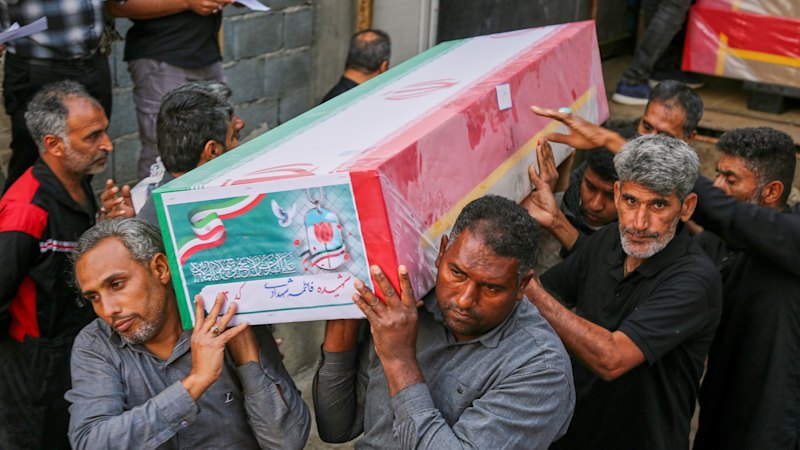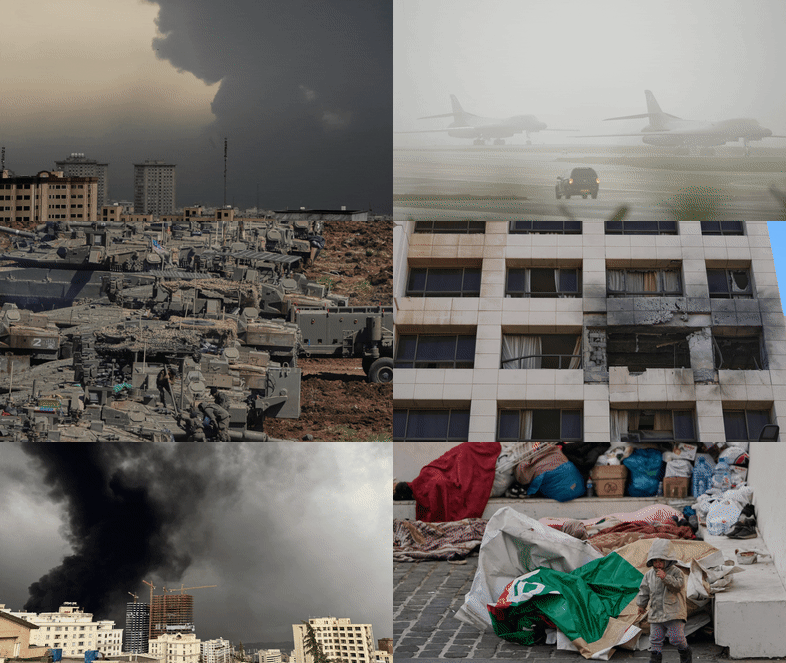
The rapid descent of the Persian Gulf into a theater of high-intensity warfare has reached a point of no return following the decapitation of the Iranian leadership. Operation Epic Fury, the joint U.S.-Israeli campaign that commenced on February 28, has not only dismantled the clerical hierarchy in Tehran but has effectively shattered the security architecture of the entire Middle East. While Western capitals frame the strikes as a necessary surgical intervention to neutralize a nuclear-threshold state, the reality on the ground in Kuwait City, Dubai, and Doha tells a story of a regional contagion that no one seems able to contain.
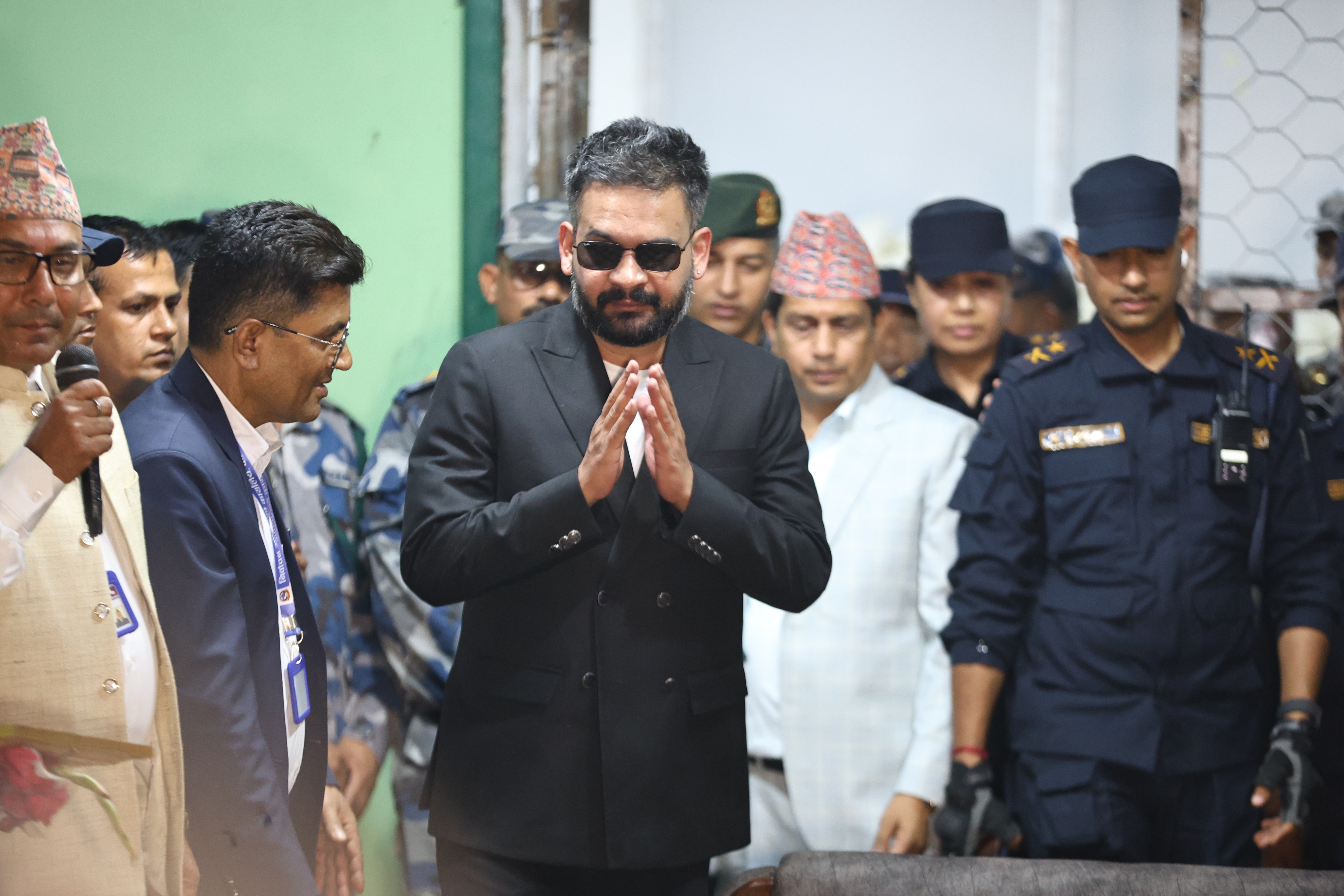
Foreign Minister Penny Wong has spent the last forty-eight hours performing a delicate diplomatic balancing act. Canberra is under immense pressure from Gulf partners to provide more than just moral support as Iranian drones and ballistic missiles rain down on non-belligerent nations. Wong has been explicit: Australia will not participate in a ground offensive. This refusal highlights a growing schism within the Western alliance. The United States and Israel appear committed to a total restructuring of the Iranian state, while middle powers like Australia are desperately trying to avoid being dragged into the muddy reality of a multi-year occupation.
The Succession Crisis in a Vacuum
In Tehran, the silence from the Assembly of Experts is deafening. Reports suggest a secret vote has already taken place to appoint Mojtaba Khamenei, the son of the late Supreme Leader, as the new head of the Islamic Republic. However, the formal announcement is being held back by a mixture of logistical chaos and existential fear. The building intended for the Assembly’s meeting was leveled in a follow-up strike on March 3, forcing the remaining clerics into hardened bunkers or remote provinces.
The appointment of Mojtaba would be a desperate attempt at continuity, yet it carries the risk of total internal collapse. He lacks the religious credentials of his father and is viewed by many within the Iranian street—and even segments of the traditional clergy—as a symbol of the "monarchization" of the revolution. If the Islamic Revolutionary Guard Corps (IRGC) forces his installation, they may find themselves fighting a civil war at the same time they are attempting to repel a foreign invasion. The Israeli government has already signaled that any successor, regardless of name or location, is a target for elimination. This "decapitation as a service" policy ensures that no stable interlocutor can emerge to negotiate a ceasefire.
Kuwait and the Cost of Proximity
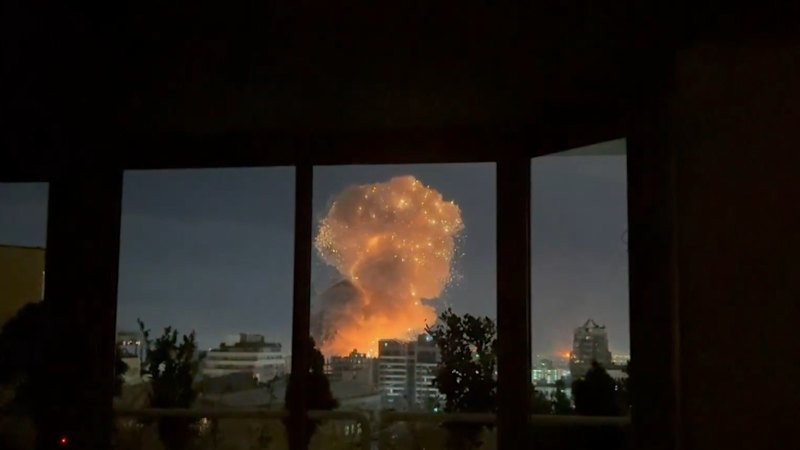
The most visible evidence of the war's expansion is currently visible from the shoreline of Kuwait City. The sight of a prominent tower engulfed in flames following an Iranian strike serves as a grim reminder that neutrality is a luxury the Gulf states can no longer afford. For decades, these nations hosted U.S. bases under the assumption of a security umbrella. That umbrella has now become a lightning rod.
The incident involving the accidental downing of three American F-15Es by a Kuwaiti F/A-18 Hornet underscores the sheer friction of this conflict. In a sky crowded with Iranian suicide drones, cruise missiles, and coalition interceptors, the margin for error has evaporated. This "friendly fire" catastrophe is a symptom of a command-and-control system pushed beyond its limits. It is one thing to run a simulation; it is another to manage a crowded battlespace when every radar blip could be a kinetic threat to a desalination plant or an oil terminal.
The Economic Shrapnel
Oil has cleared $92 per barrel, and the trajectory is pointed firmly toward the triple digits. The Strait of Hormuz, the world’s most critical energy artery, is effectively a no-go zone for commercial shipping. While President Trump has promised naval escorts and U.S.-backed insurance for tankers, the insurance markets are not biting. You cannot insure a vessel against a swarm of a thousand drones when the success rate of interceptions is falling as batteries run dry.
Russia has emerged as the sole beneficiary of this wreckage. By maintaining its lines to Tehran while watching Western energy prices spike, Moscow is clawing back the geopolitical relevance it lost in the early 2020s. Every Iranian missile that hits a Gulf refinery is a deposit into the Kremlin’s war chest.
The Mirage of a Short War
There is a dangerous sentiment circulating in the corridors of the Albanese government that this conflict will last "weeks, not months." This is a profound miscalculation of the IRGC’s "deep state" resilience. Iran has spent forty years preparing for this exact scenario. Their strategy is not to win a conventional battle against a superior air force, but to make the cost of victory so high that the Western public demands a retreat.
By targeting civilian hubs and international airports in Qatar and the UAE, Tehran is holding the global economy hostage. They are betting that the world will tire of $7-a-gallon gas and stranded travelers long before the IRGC runs out of hidden missile silos in the Zagros Mountains.
Australia’s refusal to commit ground troops is a pragmatic admission that there is no clear exit strategy. We have seen this film before in Baghdad and Kabul. You can remove a leader in an afternoon; you cannot build a stable neighbor out of the rubble in a decade. The current trajectory suggests we are not witnessing the end of a regime, but the beginning of a decade of regional fragmentation.
The focus now shifts to whether the West will pivot from destruction to stabilization, or if the "Epic Fury" will simply leave behind a permanent void.
Would you like me to analyze the specific impact of the Strait of Hormuz closure on global supply chains for the next fiscal quarter?