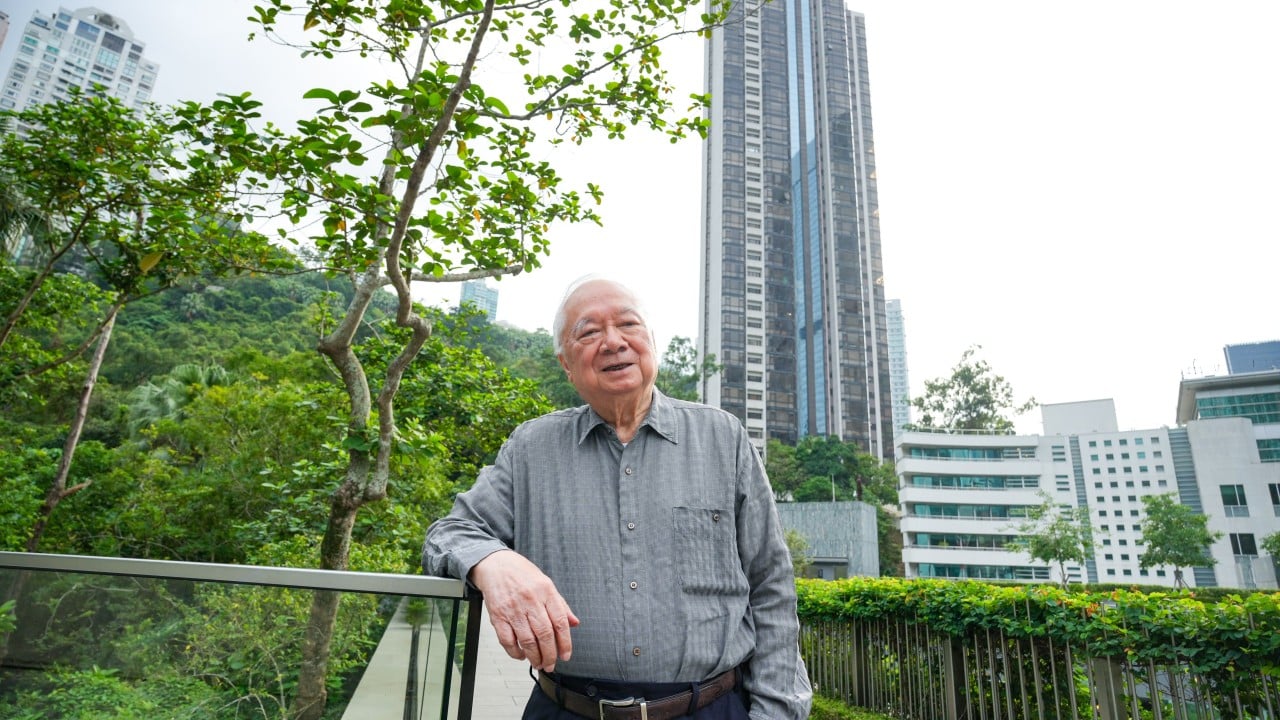
Hong Kong property tycoon Gordon Wu has once again called for the revival of massive land reclamation off Lantau Island, framing it as the ultimate solution to the city’s chronic housing shortage. Yet, viewing this proposal solely through the lens of urban planning misses the deeper economic and political forces at play. The reality is that the Lantau reclamation plan is not just a blueprint for new land; it is a high-stakes gamble to reshape Hong Kong’s economic hierarchy, pit old-money tycoons against Beijing’s new integration agenda, and risk the city's financial reserves on an outdated infrastructure model.
For decades, Hong Kong’s property market has operated as a tightly controlled oligopoly. The government restricts land supply, and a handful of mega-developers bid up prices, ensuring astronomical profits. When Hopewell Holdings founder Gordon Wu champions the East Lantau Metropolis—originally envisioned as a 1,700-hectare artificial island cluster—he is positioning himself against the traditional landed tycoons who hold vast land banks in the New Territories. Wu, whose career was built on massive infrastructure projects like the Guangzhou-Shenzhen Superhighway, has always favored engineered solutions over negotiated land hoarding. By creating entirely new territory from the sea, the government could theoretically bypass the agonizingly slow process of buying back agricultural land from rival developers.
However, the financial math behind this ocean-filling ambition has shifted drastically.
The Trillion Dollar Equation That No Longer Adds Up
When the government first pushed the "Lantau Tomorrow Vision," initial cost estimates hovered around HK$624 billion. Critics and independent economists quickly pointed out that with inflation, overruns, and complex marine engineering, the actual price tag would easily clear HK$1 trillion. In the past, Hong Kong could treat such figures as manageable milestones because its fiscal reserves were flush, often exceeding HK$1.1 trillion.
Times have changed. A prolonged property slump, dwindling land sale revenues, and consecutive fiscal deficits have eroded Hong Kong's financial cushion. Spending nearly the entirety of the city’s remaining reserves on a single, decades-long engineering project is no longer just risky. It is fiscally perilous.
+-----------------------------------+-----------------------------------+
| Fiscal Indicator                  | Historical Peak (Circa 2018-2019) | Current Fiscal Reality (Mid-2020s)|
+-----------------------------------+-----------------------------------+
| Fiscal Reserves                   | HK$1.17 Trillion                  | Approx. HK$600-700 Billion        |
| Annual Land Sale Revenue          | Over HK$120 Billion               | Deeply Depressed / Failed Tenders |
| Project Cost (Lantau Reclamation) | Est. HK$624 Billion               | Projected over HK$1 Trillion      |
+-----------------------------------+-----------------------------------+
The economic engine that was supposed to self-fund this reclamation has stalled. The business model relied on selling the newly reclaimed premium commercial land to multinational corporations and local developers. But Hong Kong's commercial office market is facing unprecedented vacancy rates. Global firms are downsizing their footprints in Central, let alone committing to a yet-to-be-built central business district in the middle of the sea. Selling residential plots on an artificial island to cover the costs of building it requires a roaring, upward-trending property market. Without that, the government risks borrowing heavily to fund a project that yields negative financial returns.
The Northern Metropolis Collision
Gordon Wu’s insistence on Lantau ignores the elephant in the northern half of the territory. The government has already pivoted its strategic focus toward the Northern Metropolis, a massive development plan hugging the border with Shenzhen. This is not just a geographical shift; it is a geopolitical directive.
Beijing wants Hong Kong integrated seamlessly into the Greater Bay Area. The Northern Metropolis serves this purpose perfectly by anchoring Hong Kong’s technology and economic future directly to Shenzhen’s industrial powerhouse.
Hong Kong cannot afford to build two mega-projects simultaneously. Choosing where to pour concrete is a declaration of strategic priority.
Building out the Northern Metropolis requires hundreds of billions of dollars for transit infrastructure, land resumption, and tech-hub development. If the city commits its dwindling capital to reclaiming land off Lantau, it starves the northern border project of vital resources. The Northern Metropolis has existing land, existing populations, and a direct mandate from the central government. Reclaiming Lantau requires fighting the ocean, building immense subsea tunnels, and waiting at least fifteen years before the first apartment building can even be topped out.
The Myth of the Flat Land Shortage
The core argument for filling in the sea has always been that Hong Kong has run out of space. This is a carefully maintained illusion.
Hong Kong does not suffer from an absolute shortage of land; it suffers from a systemic failure in land utilization. Thousands of hectares of brownfield sites—agricultural land currently used for open storage, container yards, and illegal dumping—sit underutilized in the New Territories. Furthermore, major developers hold massive land banks of agricultural tracts that they deliberately sit on, waiting for the government to build infrastructure nearby or negotiating endlessly over land premium conversions.
Reclamation is favored by certain segments of the bureaucracy because it is politically cleaner. When the government reclaims land from the sea, there are no indigenous villagers to compensate, no complex land titles to unravel, and no protracted legal battles with entrenched property dynasties. It is a blank slate. But choosing the engineering-heavy route simply because the political route requires breaking up local land monopolies is an incredibly expensive form of cowardice.
Engineering Risks in an Era of Climate Volatility
The technical challenges of the proposed Lantau reclamation are frequently downplayed by its beneficiaries. Moving billions of tons of sand and marine mud to create a stable island platform is a monumental task. The environmental toll on marine ecology and the remaining populations of the pink dolphin is well documented, but the direct threat to the infrastructure itself is a growing concern.
Climate patterns have grown increasingly volatile. Severe typhoons regularly batter the South China Sea, bringing storm surges that test the limits of existing coastal defenses. Designing an artificial island to withstand these rising sea levels requires building substantial sea walls, which pushes the engineering costs even higher. If the height estimations are off by even half a meter, the entire multi-billion-dollar district risks catastrophic flooding during a super typhoon.
Relying on massive infrastructure deployment to project economic confidence is an old playbook. Gordon Wu used it brilliantly in the 1980s and 1990s to connect the Pearl River Delta, driving the manufacturing boom that transformed the region. But the tools of the late 20th century are poorly suited for the economic realities of today. Hong Kong's future competitiveness does not depend on how much mud it can dump into the ocean; it depends on its ability to lower business costs, retain global talent, and foster an environment where technology and services can thrive without being suffocated by real estate costs.
Reviving the Lantau reclamation plans right now would provide a massive, long-term windfall for construction conglomerates, engineering firms, and maritime contractors. For the taxpayers of Hong Kong, however, it represents a direct path toward structural fiscal deficits, locking up public wealth in fixed assets that the changing global economy may no longer value. The city must face the reality that its decades-long reliance on real estate expansion as a proxy for economic growth has reached its natural, environmental, and financial limit.