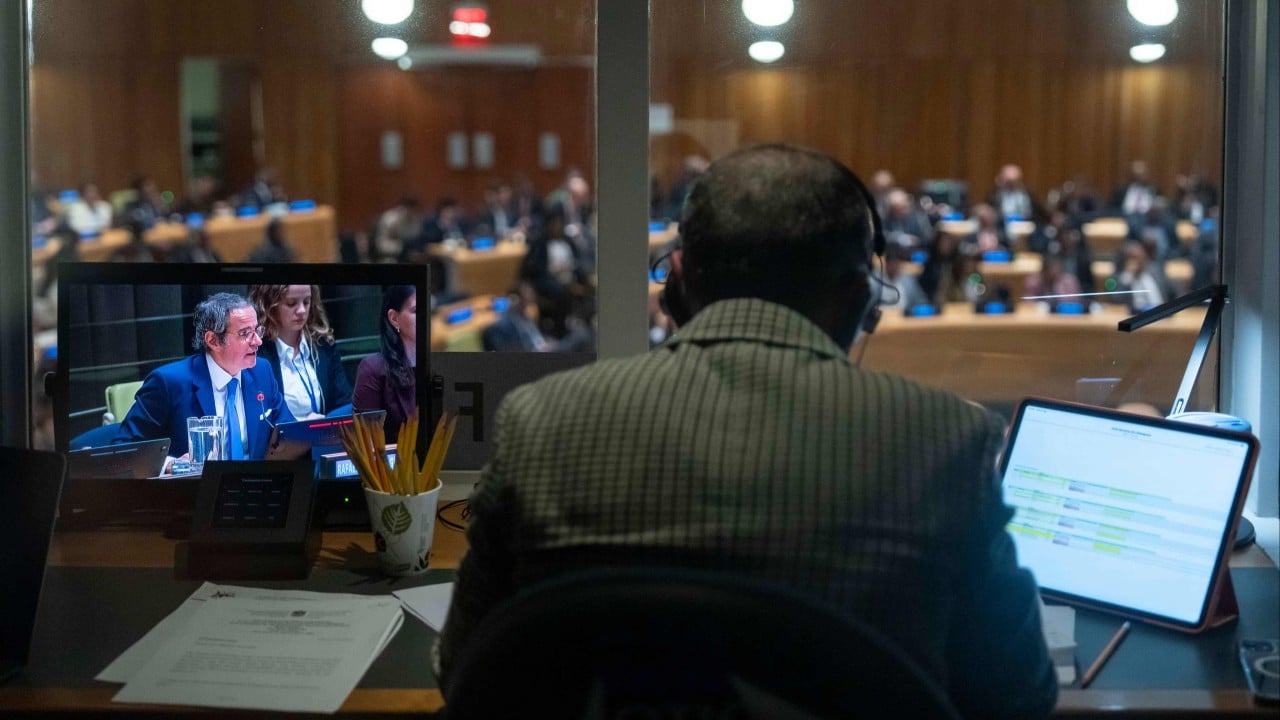
The race to succeed António Guterres is officially out of the shadows. This week, the cavernous Trusteeship Council Chamber in New York played host to a ritual that is part job interview, part political theater, and entirely indicative of a global body in the midst of an identity crisis. Four candidates—Michelle Bachelet, Rafael Grossi, Rebeca Grynspan, and Macky Sall—stepped before the General Assembly to pitch their vision for a United Nations that many fear has become a relic of a bygone era.
While the public-facing "interactive dialogues" suggest a new age of transparency, the reality of the selection process remains a cold calculation of geopolitical leverage. The 193 member states might ask the questions, but the five permanent members of the Security Council (the P5) still hold the only votes that truly matter. As the world watches these four hopefuls navigate three-hour gauntlets of questioning, the underlying tension is clear: the next Secretary-General will inherit an organization where trust is evaporating, budgets are cratering, and the threat of a direct confrontation between nuclear powers is higher than it has been in decades.
The Illusion of Transparency
For eighty years, the UN Secretary-General was chosen behind the heavy, soundproof doors of the Security Council. That changed slightly in 2016, and the current 2026 cycle is leaning even harder into the appearance of a democratic process. Yet, the televised hearings are a curated spectacle. Candidates are asked about the "three pillars"—peace and security, development, and human rights—but the answers are often polished diplomatic maneuvers designed to avoid offending any of the veto-wielding powers.
The math of the selection is unforgiving. To win, a candidate needs nine affirmative votes in the Security Council and, crucially, zero vetoes from the U.S., China, Russia, France, or the UK. This creates a "lowest common denominator" effect. The most visionary, disruptive, or bold candidates are often the first to be discarded because they have inevitably stepped on the toes of a superpower. What remains is frequently the person who is the least objectionable to everyone, rather than the most capable of leading.
The 2026 Contenders and the Shadow of the Veto
The current field is a study in contrasting styles and regional priorities.
Michelle Bachelet, the former President of Chile and UN Human Rights chief, carries the most significant political weight. Her pitch centers on "quiet diplomacy" and early intervention. However, her past stances have already put a target on her back. U.S. domestic politics are already leaking into the East River; some Republican lawmakers have publicly called for a veto against her, citing her record on reproductive rights and her handling of human rights reports during her previous UN tenure.
Rafael Grossi, the Argentine head of the International Atomic Energy Agency (IAEA), is positioning himself as the "crisis manager." Having spent the last few years navigating the nuclear minefields of Ukraine and Iran, Grossi argues that the UN cannot afford a leader who sits in an "ivory tower." He is the pragmatic choice, but his proximity to the West’s nuclear standoff with Russia makes him a complicated sell for Moscow.
Rebeca Grynspan of Costa Rica, currently leading UNCTAD, is leaning into her identity as an economist and the daughter of refugees. Her focus is on the "fading trust" in multilateralism and the urgent need for financial reform. She is making a play for the Global South, emphasizing that the UN's relevance depends on its ability to solve poverty and debt crises, not just talk about them.
Macky Sall, the former President of Senegal, represents the African bloc's growing demand for a seat at the high table. If the UN is to maintain legitimacy, it cannot continue to treat the African continent as a secondary concern. Sall’s candidacy is a direct challenge to the traditional European and American grip on the Secretariat.
The Unspoken Geography Rule
While there is no formal rule on regional rotation, an informal "gentleman’s agreement" usually dictates whose turn it is. Many argue that Eastern Europe was skipped when Guterres was selected, yet the war in Ukraine has made it nearly impossible for the P5 to agree on any candidate from that region. This has shifted the momentum toward Latin America and Africa.
The push for the first female Secretary-General is also at a breaking point. In 80 years, the UN has had nine chiefs; all have been men. The General Assembly’s President, Annalena Baerbock, has been vocal about the need for the organization to reflect the 8 billion people it serves. If a man is chosen again in 2026, the UN’s claims of promoting gender equality globally will be viewed as nothing more than institutional hypocrisy.
The Financial Abyss
Beyond the personality of the leader, the "how" of the job is becoming impossible. The UN is broke. Several major member states are behind on their dues, and the organization is frequently forced into "cash-conserving" modes, cutting travel and non-essential services just to keep the lights on.
Any candidate promising a "new era" of UN intervention is ignoring the ledger. The next Secretary-General will spend more time acting as a debt collector and a budget cutter than a peacemaker. The organization's inability to enforce its own resolutions in Gaza or Ukraine has led to a collapse in its moral authority, which in turn makes it harder to justify its massive operating costs to domestic taxpayers in the West.
The P5 Standoff
The most dangerous factor in this race is the total breakdown of communication between the permanent members. During the Cold War, the U.S. and USSR could occasionally agree on a "neutral" Secretary-General. Today, the friction between Washington and Beijing, combined with the total isolation of Moscow, means the Security Council is effectively paralyzed.
There is a real risk that the 2026 process could result in a deadlock. If the P5 cannot agree, the UN faces a leadership vacuum at the exact moment its presence is most required. The candidates are being asked how they will handle "the future," but the immediate task is surviving the present without the organization splintering into competing regional factions.
The Metric of Success
A successful Secretary-General is often defined by what they prevent rather than what they achieve. It is a thankless role. They are expected to be the world's moral conscience while remaining a subservient administrative officer to five warring masters.
The interactive dialogues in New York this week are a necessary step toward legitimacy, but they are not where the deal will be struck. Watch the delegates' dining room and the private suites of the Waldorf Astoria more closely than the televised chamber. That is where the real interviews are happening, and where the next leader of the world’s most flawed but essential body will be anointed.
The winner won't be the person with the best vision. They will be the person who manages to survive the gauntlet of five different, and often contradictory, national interests without losing their soul or their vote. Whether that person can actually lead the UN out of its current paralysis is a question no interview can truly answer.
Stop looking at the podium. Watch the vetoes.