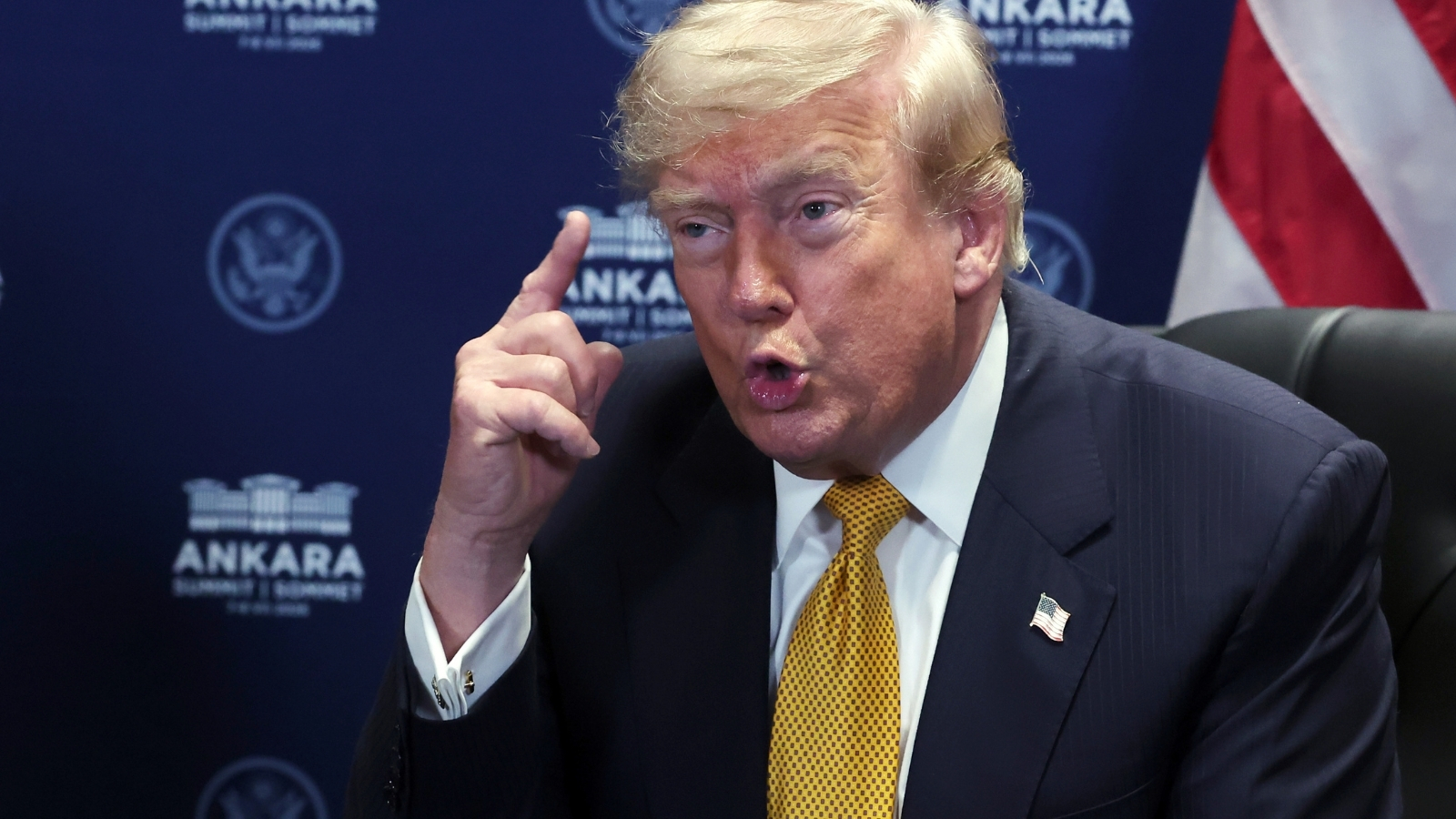
The fragile interim agreement designed to halt the military conflict between the United States and Iran has shattered less than a month after its signing. Speaking from the NATO summit in Ankara, President Donald Trump declared the June 17 Memorandum of Understanding effectively finished following a heavy exchange of missile and drone strikes across the Persian Gulf. The immediate catalyst was a midnight operation by U.S. forces hitting more than 80 targets near the Strait of Hormuz, which triggered a retaliatory barrage from Iran against American bases in Kuwait and Bahrain.
While Washington points to recent Iranian attacks on commercial oil tankers as a clear violation of the truce, the underlying reality reveals a deeply flawed diplomatic framework that was designed to fail from the beginning.
The Illusion of the Seventeen June Memorandum
The brief peace achieved in June was built on deliberate ambiguity rather than concrete consensus. Negotiators from both sides rushed to assemble a 14-point framework to pause a war that began in February 2026, but key clauses regarding the administration of the Strait of Hormuz were left dangerously open to interpretation.
The United States entered the agreement under the assumption that maritime traffic would instantly revert to pre-war standards, meaning completely unhindered passage for all commercial vessels. Tehran, however, viewed the document as a formal recognition of its temporary wartime jurisdiction over the narrow waterway. Iranian officials claim the text granted them administrative control over shipping lanes for at least 30 days from the date of signing.
This core disagreement turned critical when the U.S. Navy attempted to establish an alternate southern transit route through the strait, running closer to the territorial waters of Oman. Washington viewed this as a practical measure to safeguard international merchant shipping while formal talks continued in Islamabad. Tehran saw it as an unauthorized alteration of regional borders and a direct violation of their sovereignty.
To reassert authority, the Islamic Revolutionary Guard Corps began targeting vessels using the new route. Within a 24-hour window, three commercial tankers—the Marshallese-flagged Al Rekayyat, the Saudi-flagged Wedyan, and the Liberian-flagged Cyprus Prosperity—were struck by drones and unguided projectiles. The attack on the Al Rekayyat was particularly damaging, as the vessel was transporting a massive cargo of Qatari liquefied natural gas, sending shockwaves through global energy markets.
Secret Sanctions and the Weaponization of Oil Waivers
The public narrative focuses heavily on the kinetic exchange of missiles and naval drones, but the true undoing of the ceasefire occurred in the financial sector. Central to Iran’s willingness to halt hostilities was a temporary U.S. Treasury Department waiver that permitted the country to resume limited crude oil exports until August 21. For a domestic economy crippled by months of intensive bombardment and severe isolation, this waiver was a vital economic lifeline.
Behind closed doors, Washington used the waiver not as a stable foundation for peace, but as a day-to-day enforcement mechanism. The moment the first drone struck the Saudi tanker in the strait, the White House moved to cancel the export license. The formal revocation occurred on Tuesday morning, hours before the physical military strikes began.
By cutting off Iran’s ability to sell its oil legal revenue streams vanished instantly. This economic retaliation gave Iranian hardliners the leverage they needed to override diplomatic channels. Mohammad Bagher Ghalibaf, the speaker of the Iranian parliament and a primary figure in the negotiation process, stated that the re-imposition of oil sanctions proved the United States was negotiating in bad faith. From the perspective of Tehran, the financial strike preceded the military escalation, rendering the ceasefire void before the first American Tomahawk missile left its launcher.
The Anatomy of the Midnight Strikes
The military response executed by U.S. Central Command was massive, aimed at permanently reducing Iran's capability to enforce its claimed toll system in the shipping lanes. Western intelligence had monitored the buildup of fast-attack craft and anti-ship missile batteries along the rugged coastline of the Hormozgan province for days.
The operation commenced shortly after midnight, utilizing carrier-based aircraft and naval destroyers stationed in the Arabian Sea. According to military logs, the strikes targeted four primary infrastructure layers:
- Coastal Radar Facilities: Early warning installations along the cliffs of Qeshm Island and the port city of Bandar Abbas were neutralized to blind local command structures.
- Anti-Ship Missile Units: Mobile launchers equipped with indigenous cruise missiles were tracked via satellite and struck before they could deploy to firing positions.
- Air Defense Systems: Russian-supplied and locally manufactured surface-to-air missile batteries were targeted to ensure total air superiority for Western forces.
- The Mosquito Fleet: More than 60 small, fast-attack boats operated by the Revolutionary Guard naval wing were destroyed while docked or hidden in tidal coves near Sirik.
The destruction was extensive, but it failed to achieve deterrence. Within hours of the American bombardment, Iran executed a coordinated response that demonstrated its remaining strategic depth. Utilizing ballistic missiles launched from inland underground silos, Iranian forces targeted the dynamic web of American military installations across the western side of the Gulf.
Air defense sirens sounded across Kuwait and Bahrain as fragments of intercepted missiles fell near facilities hosting thousands of American personnel. While initial reports indicate minimal U.S. casualties due to early warning shelters, the political damage was absolute. The sheer volume of the Iranian counter-response proved that months of warfare had not broken Tehran's command structure or its willingness to engage in high-stakes brinkmanship.
Political Theatre on the NATO Stage
The timing of the military escalation forced the crisis directly onto the agenda of the NATO summit currently underway in Ankara. President Trump used a joint press appearance with NATO Secretary General Mark Rutte to launch an unscripted tirade against both the Iranian leadership and America's European allies.
Characterizing the Iranian government as untrustworthy and erratic, Trump signaled an immediate shift away from the diplomatic track managed by his Middle East envoy Steve Witkoff and his son-in-law Jared Kushner. Although the president noted that advisors could continue talking if they wished, his personal rhetoric suggested that the administration is preparing for a return to total containment and sustained military pressure.
The diplomatic friction extended far beyond the Middle East. Trump expressed deep dissatisfaction with the broader NATO alliance, reviving long-standing grievances regarding defense spending and operational support. Specifically, the White House remains furious that major European powers refused to grant overflight rights or allow the utilization of continental airbases for bombing missions inside Iran. Only the United Kingdom provided limited operational support, allowing targeted strikes from specific domestic bases after initial resistance from Downing Street.
This internal alliance friction was amplified by a renewed public demand from the American president regarding the acquisition of Greenland, a topic that distracted from the pressing security discussions regarding the Gulf. The juxtaposition of a collapsing Middle Eastern peace agreement with eccentric geopolitical demands has left European diplomats deeply concerned about the consistency of Western strategy moving forward.
The Friction of a Fragmented Alliance
The reluctance of continental Europe to back the U.S. military campaign stems from a profound difference in economic vulnerability. While the United States has achieved relative energy independence through domestic shale production, European economies remain highly sensitive to fluctuations in the global supply of crude oil and liquefied natural gas. The immediate 6% spike in Brent crude prices following the breakdown of the truce threatens to derail fragile economic recoveries across Europe.
Furthermore, European intelligence agencies have consistently warned that a total collapse of the Iranian state would trigger an unprecedented migration crisis and destabilize neighboring Iraq and Turkey. By forcing a military solution without a clear post-war stabilization plan, Washington is pursuing a path that its closest allies view as reckless.
Spain's outright rejection of the proposed 3.5% defense spending target further aggravated the American delegation, prompting explicit threats from Trump to alter trade relationships with Madrid. This infighting demonstrates that the conflict with Iran is actively fracturing the Western security umbrella, creating strategic opportunities for adversarial powers to expand their influence in the region.
Negotiators in Islamabad remain at their desks, but they are drafting proposals for a reality that no longer exists on the ground. The 14-point memorandum has been replaced by smoking ruins along the Strait of Hormuz and activated air defense batteries across the Gulf. With the oil waivers revoked and the fast-attack fleets destroyed, neither side possesses the political space to retreat without losing face. The conflict has returned to its rawest form, governed not by signed documents or diplomatic protocols, but by the volatile mathematics of structural deterrence and economic warfare.