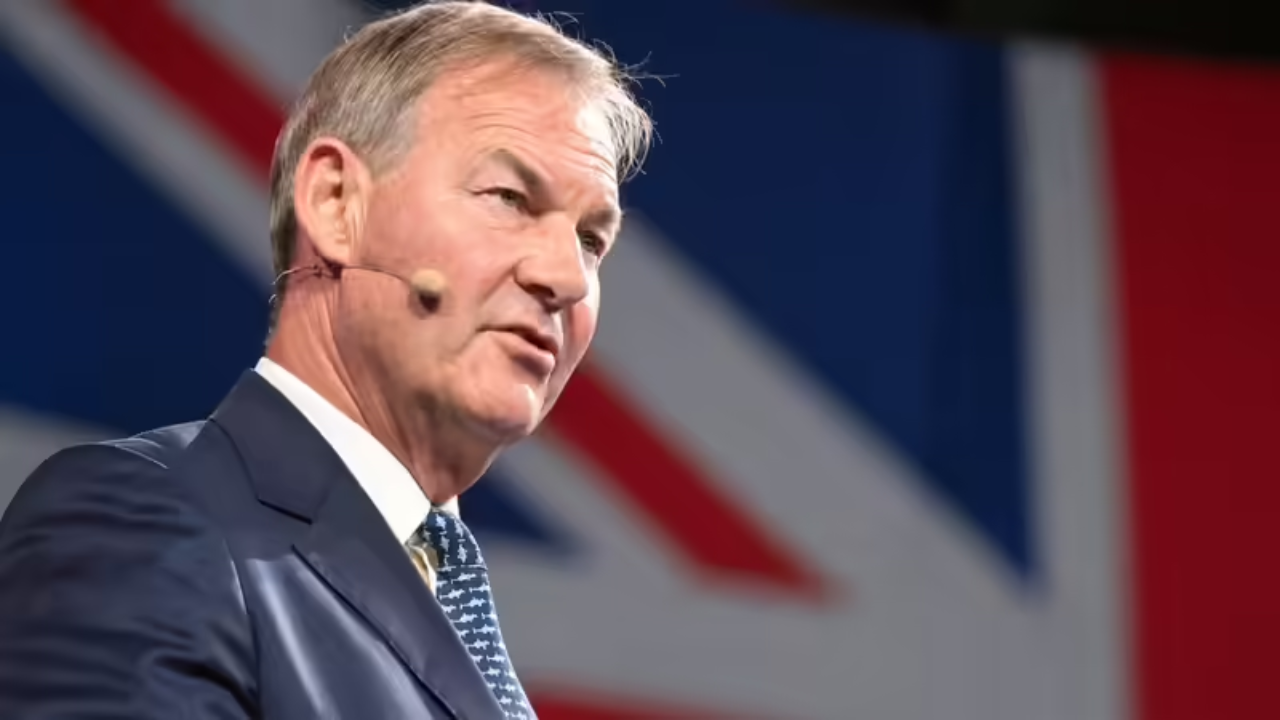
The furious political row surrounding Member of Parliament Rupert Lowe and his crowdsourced "Rape Gang Inquiry" highlights a fundamental breakdown in how the United Kingdom handles institutional child sexual exploitation. While political opponents accuse Lowe of using a deeply sensitive issue to inflame racial and religious tensions, the core failure remains unaddressed: decades of systemic complacency by state authorities have created a profound deficit of public trust, leading to competing, weaponized parallel investigations.
The controversy peaked following the mid-June 2026 release of a privately funded report commissioned by Lowe. Opponents, including Green Party co-leader Zack Polanski and former Scottish First Minister Humza Yousaf, swiftly condemned the Great Yarmouth MP, accusing him of attempting to "demonise" specific minority communities. Lowe hit back, claiming that his detractors are attempting to suppress a necessary national conversation out of a paralyzing fear of being labeled racist.
This political theater masks a more disturbing reality. The state's historical failure to protect vulnerable children has opened the door for private actors to crowd-fund their own parallel justice systems.
The Battle of the Reports
Britain currently finds itself in the bizarre position of running two simultaneous national investigations into group-based child sexual exploitation.
The official, taxpayer-funded mechanism is the Independent Inquiry into Grooming Gangs. Established by the Home Office following the 2025 Casey rapid audit, this statutory inquiry formally began its work on April 13, 2026, under the leadership of Baroness Anne Longfield. Backed by a £65 million budget, it possesses full statutory powers to compel witnesses and demand documentation.
Lowe’s alternative, the "Rape Gang Inquiry," bypassed the state entirely. Financed through a £600,000 crowdfunding campaign and championed by his political vehicle, Restore Britain, this private panel lacked legal teeth but moved with aggressive speed.
The private report beat the statutory inquiry to publication by months, releasing its harrowing findings in June 2026. The text features graphic accounts from survivors, including high-profile activist Sammy Woodhouse, detailing historic abuse and alleged collusion by local police and social services.
Predictably, the two operations have split the political spectrum along predictable fault lines.
| Inquiry Profile | The Statutory Public Inquiry | The Private Crowdfunded Inquiry |
|---|---|---|
| Chair / Lead | Baroness Anne Longfield | Rupert Lowe MP & Private Panel |
| Budget | £65 million (Public funds) | ~£600,000 (Crowdfunded) |
| Legal Powers | Statutory (Can subpoena witnesses) | Non-statutory (Voluntary cooperation) |
| Primary Objective | Systemic policy reform and institutional audit | Naming perpetrators and launching private prosecutions |
The Mechanics of Private Justice
Because Lowe’s panel lacked the power to subpoena hostile witnesses, it relied heavily on whistleblowers, survivors, and public records. Where institutional figures refused to appear, the panel simply read the planned questions into the public record during livestreams, turning non-attendance into a visible admission of institutional defensiveness.
The strategy has now shifted from fact-finding to direct legal action. Armed with surplus crowdfunding capital, Lowe announced intentions to bypass the Crown Prosecution Service entirely, initiating private prosecutions against alleged perpetrators and the state enablers who looked the other way.
Race, Religion, and the Suppression of Data
The most explosive element of the row centers on ethnic and religious data.
In a public statement on X, Lowe explicitly tied the offenses to religion, stating that "there is a clear link between religion and these abhorrent crimes... That religion is Islam." He argued that political correctness has acted as a shield for Pakistani-heritage offenders, allowing abuse networks to operate with impunity for decades because local authorities feared community backlash.
Opponents counter that such sweeping generalizations are inaccurate and dangerous. They point out that child sexual exploitation cuts across all demographics, and that the vast majority of child abusers in the UK are white men operating within family structures.
The statistical truth is complex and weaponized by both sides. The 2025 National Audit on Group-based Child Sexual Exploitation, conducted by Baroness Casey, noted that historic data collection by police forces was too inconsistent to draw definitive national conclusions regarding ethnicity. However, the audit also acknowledged that in specific localized areas—such as Rotherham, Rochdale, and Oldham—there were undeniable, disproportionate patterns of British-Pakistani men targeting vulnerable, frequently white working-class girls in care.
By failing to gather clean, unvarnished national data for decades, the British establishment created an information vacuum. Political factions have filled this void with their own narratives.
Institutional Defensiveness as a Catalyst
The reason a politician can successfully crowdfund a rival inquiry is because the state’s own record on this issue is catastrophic.
From the 2014 Jay Report into Rotherham to subsequent multi-agency reviews in Greater Manchester, the diagnostic findings have remained identical for over a decade. Local authorities, social services, and police forces repeatedly demonstrated a profound lack of professional curiosity. Vulnerable young people were dismissed as "lifestyle choices" or deemed complicit in their own exploitation. Whistleblowers within the system were routinely bullied, silenced, or sidelined to protect municipal reputations.
Even when the Independent Inquiry into Child Sexual Abuse delivered its final, sweeping recommendations in late 2022, implementation stalled. In early 2025, the Home Office admitted to the House of Commons that none of the core recommendations had been properly enacted.
This multi-year policy paralysis broke the trust of survivors. When the state repeatedly fails to execute its most basic duty—protecting children and prosecuting rapists—the public loses faith in the neutrality of its institutions.
The Limits of Parallel Justice
Lowe’s approach offers immediate, visceral satisfaction to a frustrated public, but it introduces deep systemic complications.
Private prosecutions are notoriously difficult to sustain. They lack the vast investigative machinery of the state, and any high-profile trial initiated by a political figure runs the immediate risk of being derailed by claims of prejudice or abuse of process. If these private legal maneuvers fail on technicalities in open court, it risks delivering a catastrophic blow to the very survivors seeking closure.
Furthermore, utilizing parliamentary privilege to name suspected perpetrators outside a courtroom is a dangerous legal high-wire act. While it bypasses contempt of court restrictions, it can inadvertently compromise active police investigations or compromise the fairness of future trials, leading to cases being thrown out entirely.
The statutory inquiry led by Baroness Longfield remains the only mechanism capable of enforcing structural change across police forces and local councils. Yet, because it operates within the slow, deliberate machinery of the state, it is viewed with deep skepticism by those who believe the establishment is hardwired to protect itself.
Britain is now trapped in a toxic cycle. Institutional failure breeds political opportunism; political opportunism triggers institutional defensiveness; and the actual victims of exploitation are left stranded between a slow-moving state apparatus and a highly politicized private crusade.
Justice requires cold, clinical, and aggressive state action, completely decoupled from the culture wars. Until the official statutory inquiry delivers unvarnished truths and real criminal accountability, the vacuum will continue to be filled by those willing to fund their own versions of the truth.