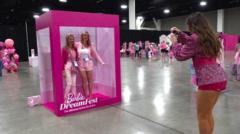
The neon pink promise of the Barbie Dream Fest in Florida has dissolved into a chaotic sequence of refund demands and accusations of professional negligence. What was marketed as an immersive celebration of the world’s most iconic fashion doll turned into a cautionary tale of event planning failure, leaving families stranded in long lines for attractions that either didn’t exist or failed to meet even the most basic safety standards. This was not merely a case of overpromising. It was a fundamental breakdown in the logistics and licensing execution that governs modern high-stakes fan experiences.
When thousands of ticket holders arrived at the South Florida venue, they expected the polished, high-production value synonymous with the Mattel brand. Instead, they found a sparsely decorated shell of an event. Parents reported waiting over three hours for single-minute photo opportunities, while advertised "exclusive" merchandise was nowhere to be found. By the second day, the organizers were forced to issue a formal apology and begin the messy process of processing mass refunds. However, the damage to the brand and the wallets of local families was already done.
Anatomy of a Themed Event Collapse
The failure of Barbie Dream Fest reveals a growing rot in the "pop-up" experience economy. These events rely on heavy social media marketing—often using polished stock imagery and 3D renders—to drive pre-sale tickets long before a single piece of scaffolding is erected. When the reality on the ground fails to match the digital render, the fallout is instantaneous.
In this instance, the logistics failed at the most granular level. Flow management was non-existent. An event of this scale requires a specific ratio of staff to attendees to manage "choke points," which are the areas where crowds naturally slow down, such as ticket scanning or gift shop exits. Reports from the ground suggest the staff-to-guest ratio was dangerously low, leading to the "mosh pit" atmosphere described by several disgruntled parents.
The Licensing Gap
A major overlooked factor in these disasters is the distance between the intellectual property owner and the third-party promoter. Mattel, the owner of the Barbie trademark, often licenses the name to regional production companies. This creates a dangerous "accountability gap."
- The Promoter’s Goal: Minimize overhead to maximize the split of the gate receipts.
- The Brand’s Goal: Maintain long-term prestige and fan loyalty.
- The Conflict: If the promoter cuts corners on security, air conditioning, or decor, the brand suffers the reputational blowback while the promoter simply liquidates the specific LLC created for the event and moves on.
This disconnect is exactly why Florida’s Dream Fest felt more like a local carnival than a global brand activation. The "Investigative Journalist" lens shows that when these contracts are signed, they often lack strict "Quality of Experience" clauses that would allow a brand to shut down an event mid-day if standards aren't met.
The Economic Toll of Disorganized Logistics
Florida is a prime market for themed experiences, but it is also a graveyard for poorly executed ones. The heat alone acts as a physical tax on any event that fails to provide adequate cooling and hydration stations. At the Barbie Dream Fest, the lack of indoor climate control in certain "immersive" zones turned the pink paradise into a humid endurance test.
From a business standpoint, the refund process is rarely as simple as a one-to-one transaction. When an event of this magnitude fails, it triggers a chain reaction of financial disputes. Payment processors like Stripe or PayPal see a spike in "chargebacks," which are forced refunds initiated by banks. Too many chargebacks can lead to the event organizer being blacklisted from future payment processing, effectively killing their ability to operate under any name.
For the families, the "refund" only covers the face value of the ticket. It does not cover the $50 parking fees, the four-hour round-trip drives, or the expensive meals purchased on-site. The true cost of the Barbie Dream Fest failure is significantly higher than the $35 to $85 ticket price might suggest.
Security and Safety Under the Microscope
Crowd safety is the most chilling aspect of the Florida debacle. Eyewitness accounts detailed a lack of clear exits and a total absence of medical personnel in high-traffic areas. In the industry, this is known as "structural negligence."
If an emergency had occurred—a fire, a medical collapse, or a security threat—the bottlenecked entries would have prevented first responders from reaching the scene. This is a recurring theme in failed Florida events, where local permitting offices are often overwhelmed and fail to conduct rigorous on-site inspections the morning of an opening.
Why Refunds Aren't Enough
Issuing a refund is a legal shield, not a moral one. By offering money back, the organizers are attempting to "cure" the breach of contract to avoid class-action lawsuits. But in the age of viral social media, a refund cannot buy back the silence of a parent who spent their entire Saturday watching their child cry in a parking lot.
The industry needs a "Fan Bill of Rights" for these pop-up events. This would include:
- Mandatory Capacity Caps: No more selling tickets based on "fire code" maximums; sales should be based on "comfort maximums."
- Verified Imagery: Organizers should be legally required to label promotional materials as "Artist Renderings" if they do not reflect the actual physical build.
- Escrow Requirements: A portion of ticket sales should be held in escrow by a third party until the event concludes, ensuring that refund money is actually available and hasn't already been spent on marketing or talent fees.
The Future of the Pink Economy
Despite this failure, the demand for Barbie-themed content remains astronomical. The "Pink Economy" is worth billions, fueled by a mix of nostalgia and modern cultural relevance. However, the Florida incident proves that demand alone cannot sustain a business model built on flimsy logistics and outsourced quality control.
The "why" behind this specific failure is simple: greed. It is far cheaper to rent a warehouse and hang some pink curtains than it is to build a truly immersive world. The organizers bet that the strength of the Barbie brand would carry the weight of a mediocre production. They lost that bet.
Moving forward, fans must become more skeptical of "limited time" events that offer no physical address until days before the opening. These are often signs of a "ghost production," where the organizers are trying to stay one step ahead of local regulators.
Assessing the Damage to the Barbie Brand
Mattel has spent years carefully rehabilitating Barbie's image to be one of empowerment and high quality. Seeing that image associated with "police intervention" and "angry mobs" in Florida is a massive setback. While Mattel was not the direct operator, the public does not distinguish between the licensee and the licensor. To the average consumer, Mattel failed them.
The company will likely tighten its licensing requirements globally. We should expect to see a move away from these small-scale, regional "fests" toward larger, permanent installations like the Mattel Adventure Park. The era of the "unregulated pop-up" is reaching its expiration date because consumers are finally starting to fight back with their wallets and their legal teams.
How to Secure Your Refund
If you were caught in the Florida Dream Fest mess, do not wait for the organizer to reach out to you. The "system" for refunds is often designed to be cumbersome to discourage people from following through.
- Document Everything: Keep your digital tickets, photos of the poor conditions, and timestamps of how long you waited.
- Contact Your Bank: If the organizer does not provide a refund within 14 days, initiate a "service not as described" chargeback.
- Avoid Future Traps: Check the "About" section of event websites. If there is no physical office address or a list of previous successful events, it is a red flag.
The Barbie Dream Fest wasn't just a bad party. It was a failure of the modern experience economy, where the desire for "the photo" has allowed subpar operators to thrive at the expense of the consumer. It is time to demand more than just a pink backdrop for eighty dollars. Demand competence. Demand safety. Demand the experience you were actually promised.