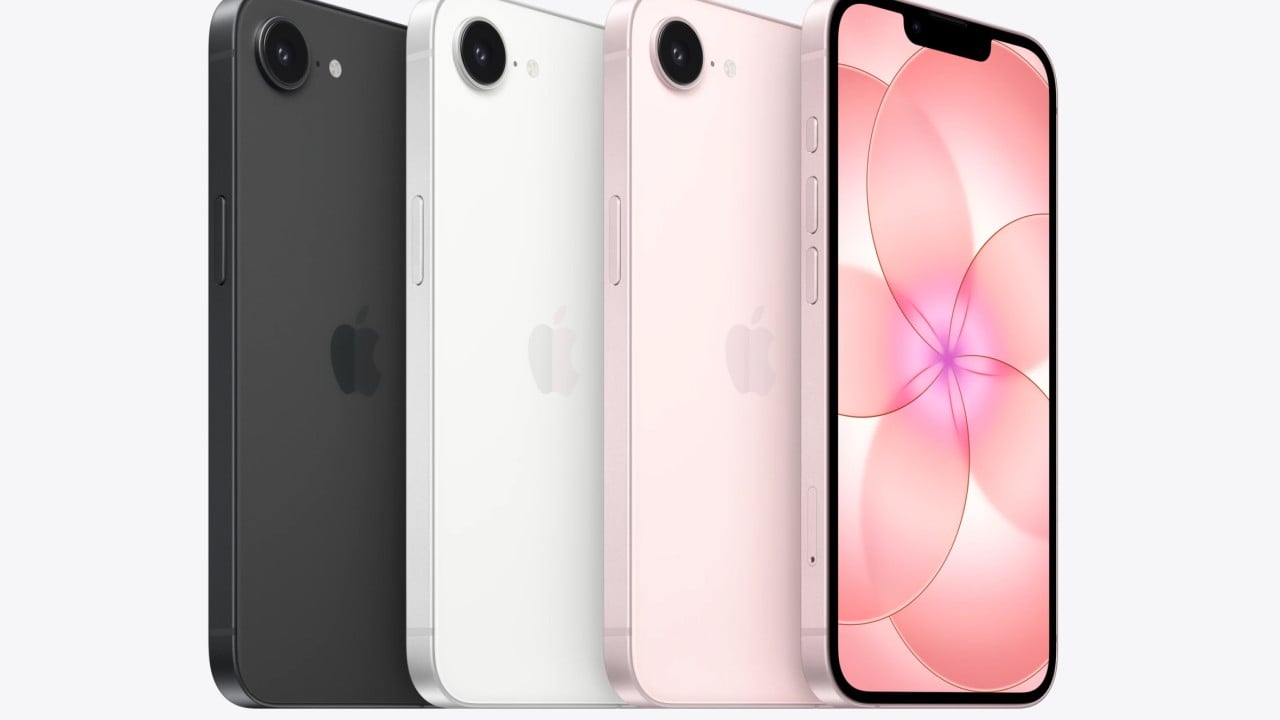
Apple is playing a dangerous game of chicken with the Chinese consumer. On March 2, 2026, Cupertino pulled the curtain back on the iPhone 17e, a device that represents less of a technological leap and more of a desperate financial firewall. Priced at $599 with a base storage of 256GB, the 17e is Apple’s most aggressive attempt yet to stop the bleeding in its most volatile market. But in the boardrooms of Shenzhen and the bustling electronics stalls of Huaqiangbei, the verdict is already leaking. This is not the "game-changer" the marketing copy suggests; it is a tactical retreat.
The smartphone market in China has fundamentally shifted under Apple’s feet. For years, the iPhone was the undisputed signifier of the urban elite. Today, it is just another handset in a sea of domestic powerhouses. In January 2026, Huawei officially reclaimed the top spot in Chinese market share, riding the momentum of the Mate 80 series. Apple, relegated to second place with roughly 17% of the market, is now fighting a two-front war. It must defend its premium tier from Huawei’s resurgence while simultaneously fending off value-driven titans like Xiaomi and OPPO in the mid-range.
The Mirage of Value in a Pro-Leaning Economy
The iPhone 17e is built on a foundation of "good enough." It carries the A19 chip, but early technical breakdowns reveal this is a binned variant—a six-core CPU paired with a four-core GPU, effectively a neutered version of the silicon found in the flagship iPhone 17. Apple is betting that the average buyer in Chengdu or Shanghai won't care about the missing GPU core. They are counting on the 256GB entry-level storage to act as the primary lure, doubling the previous generation's baseline without a price hike.
This strategy ignores a hard reality of the current Chinese economy. The "lipstick effect"—where consumers buy small luxuries during downturns—has morphed into a "specifications arms race." A Chinese consumer with $600 to spend is increasingly looking at the Xiaomi 16 or Honor's latest offerings. Those devices offer 120Hz LTPO displays, triple-lens camera arrays, and 100W fast charging. Apple is offering a 60Hz screen and a single 48MP rear camera.
The inclusion of MagSafe and Ceramic Shield 2 are welcome additions, but they feel like table stakes in 2026. When a domestic competitor can charge a phone to 100% in fifteen minutes, Apple’s "50% in 30 minutes" claim sounds like a relic from a previous decade. Apple is not selling technology here; it is selling the iOS ecosystem at a discount. The problem is that the ecosystem lock-in is weakening as HarmonyOS matures and cross-platform app parity becomes the norm.
Supply Chain Sovereignty and the India Factor
There is a subtext to the iPhone 17e that has nothing to do with megapixels or benchmarks. It is about where the phone is built. Apple is currently in the middle of a massive, painful divorce from its Chinese manufacturing base. By the end of 2026, the company aims to move the vast majority of iPhone production for the U.S. market to India.
This creates a bizarre irony for the Chinese consumer. The iPhone 17e sold in Beijing might still be "Assembled in China," but the manufacturing expertise and capital that once fueled local economies are moving elsewhere. This shift hasn't gone unnoticed by the Chinese government or the public. Nationalistic sentiment, once a minor factor in purchasing decisions, has become a primary driver. Choosing a Huawei is now viewed as an act of economic patriotism.
Apple’s C1X modem—a piece of in-house silicon debuted in the 17e—is a desperate attempt to reclaim supply chain sovereignty. By ditching third-party modems in its budget line, Apple saves on licensing fees and tightens its margins. But while Apple is focusing on internal cost-cutting, Chinese rivals are focusing on 5G-Advanced and satellite connectivity that actually works in the remote provinces. The 17e is a "world phone" that feels increasingly out of sync with the specific digital infrastructure of China.
The 60Hz Glass Ceiling
If there is one technical specification that illustrates Apple's arrogance, it is the 60Hz refresh rate. In 2026, every major Chinese competitor has moved even their $300 "youth" models to 90Hz or 120Hz. Navigating a social media feed on a 60Hz screen feels sluggish and dated.
Apple’s decision to gate-keep ProMotion for its more expensive models is a calculated move to protect its high-end margins. However, in the hyper-competitive Chinese market, this creates a "perceived quality" gap that no amount of branding can bridge. A consumer walks into a flagship store in Hangzhou, swipes on a Vivo for half the price, and sees fluid motion. They swipe on the iPhone 17e and see stutter. In that moment, the "Apple Magic" evaporates.
The Pricing Paradox
| Model | Starting Price (China Est.) | Base Storage | Refresh Rate |
|---|---|---|---|
| iPhone 17e | ¥4,399 | 256GB | 60Hz |
| Huawei Mate 80 (Base) | ¥5,499 | 256GB | 120Hz |
| Xiaomi 16 | ¥3,999 | 256GB | 120Hz |
Apple is positioned in a "no man's land." It is too expensive to be a true budget play and too compromised to compete with the domestic flagships. The 17e is essentially a vessel for Apple Intelligence. By including the A19 chip, Apple ensures the device can run its local language models, keeping users tied to services like iCloud and the App Store. But if the hardware feels like a throwback, will users even stay long enough to engage with the AI?
The HarmonyOS Threat
The biggest threat to the iPhone 17e isn't another piece of hardware; it’s the software. HarmonyOS has reached a tipping point. It is no longer an Android clone; it is a fully realized, independent ecosystem that integrates seamlessly with Chinese smart homes, cars, and wearables.
Apple’s "walled garden" is facing a formidable rival that is better adapted to the local environment. When a Chinese user buys an iPhone 17e, they are buying a device that often feels like a guest in its own country—struggling with localized app features or facing restrictions that domestic brands don't have. The 17e needs to be more than just "the cheap iPhone." It needs to be a reason to stay in the Apple ecosystem at a time when the exits are more inviting than ever.
The iPhone 17e is a defensive play from a company that used to define the offense. It is a solid, well-built smartphone that would have been a triumph in 2023. In 2026, against a resurgent Huawei and an increasingly sophisticated Chinese consumer, it feels like bringing a knife to a drone fight. Apple isn't losing China because its products are bad. It is losing China because it has stopped being the most interesting company in the room.
Would you like me to analyze the projected Q3 2026 shipment data for the iPhone 17 series to see how the "e" model is impacting Apple's overall average selling price?