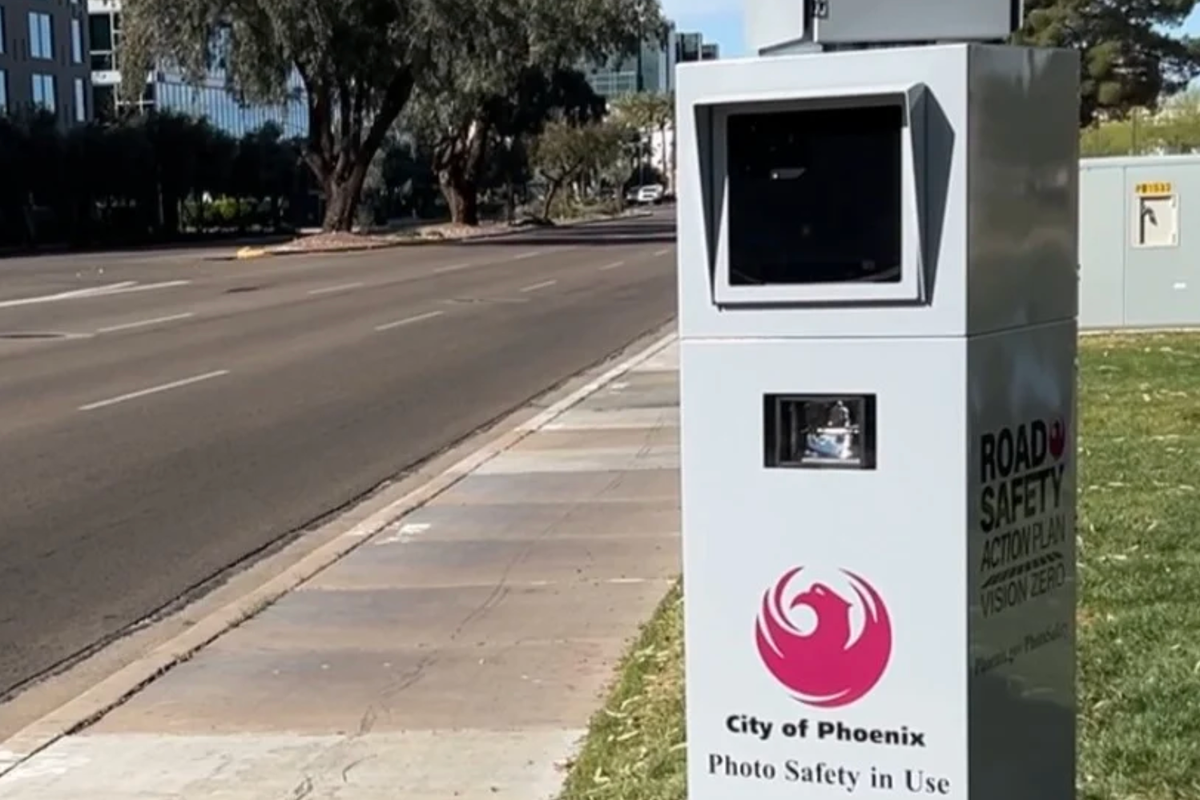
Paradise Valley is a wealthy enclave tucked between Phoenix and Scottsdale. It is known for its luxury resorts, multi-million dollar estates, and, more recently, a staggering volume of automated traffic tickets. Since the installation of a new photo enforcement system, the city recorded 30,000 traffic violations in just sixty days. That represents a citation issued roughly every three minutes. While municipal leaders point to these numbers as proof of a safety crisis, the sheer scale of the data suggests a deeper tension between public safety, revenue generation, and the limits of automated policing.
The math is relentless. Thirty thousand violations in two months is not just a statistic; it is a logistical whirlwind. It suggests that on any given stretch of road monitored by these new sensors, the flow of traffic is fundamentally at odds with the posted speed limits. When a system flags a driver every 180 seconds around the clock, the narrative shifts from "catching reckless outliers" to "penalizing the average commuter."
The Mechanics of the 180 Second Violation Cycle
Automated speed enforcement relies on a combination of radar or LIDAR sensors and high-resolution cameras. When a vehicle exceeds a pre-set threshold—often 11 miles per hour over the limit in Arizona—the system triggers. It captures the license plate and, in many jurisdictions, a clear image of the driver’s face to comply with state process server requirements.
The new hardware deployed in Arizona represents a significant leap in reliability. Older systems often struggled with low light or multi-lane interference. The current generation utilizes sophisticated tracking that can monitor multiple vehicles simultaneously across several lanes of traffic. This efficiency is exactly why the numbers have ballooned. The technology no longer "blinks." It catches every single infraction that meets the programmed criteria, leading to a density of citations that manual patrol units could never hope to achieve.
Infrastructure vs Behavior
Why are so many people speeding in the first place? To understand the surge, we have to look at the "85th Percentile Rule." This is a standard engineering principle suggesting that speed limits should be set at the speed that 85 percent of people drive naturally under free-flowing conditions.
When a camera captures a violation every three minutes, it indicates a massive disconnect between the road's design and its posted limit. Many of the streets in Paradise Valley and surrounding Maricopa County are wide, well-paved, and designed with safety margins that make 45 or 50 miles per hour feel comfortable to a driver. If the sign says 35, but the road feels like a 50, the human brain prioritizes the physical cues of the environment over the painted metal sign. The camera simply harvests the result of this engineering gap.
The Business of the Bolt On Camera
There is a quiet, lucrative industry behind these flashes of light. Most cities do not own or operate their speed cameras. Instead, they enter into contracts with private vendors who provide the equipment, the software, and often the administrative labor of processing the tickets. These companies frequently operate on a fee-per-citation model or a monthly lease that is justified by the volume of fines collected.
In this ecosystem, 30,000 violations represent a massive windfall. Even if only a fraction of those tickets result in paid fines after the "service of process" hurdles are cleared, the gross revenue is in the millions. This creates a perverse incentive structure. While a city might publicly state that the goal of the cameras is to reduce violations to zero, the private contractors and the municipal budget offices become reliant on the steady stream of "every three minutes" income. If everyone started obeying the law tomorrow, the system would become a massive financial liability for the city.
The Service of Process Loophole
Arizona law is unique. Unlike some states where a camera ticket is treated like a parking fine sent via mail, Arizona requires that a defendant be "served" with the citation. Many residents have learned that if they simply ignore the notice arriving in their mailbox, the city must send a physical process server to their door to make the ticket stick.
This creates a high-stakes game of hide-and-seek. The city has a limited window to serve the papers. If they fail, the ticket is dismissed. With 30,000 violations in two months, the local court systems and process servers are buried. The surge in data creates a bottleneck that actually reduces the efficiency of the legal system, as the sheer volume of "paper" outstrips the human capacity to enforce it.
Safety Tool or Stealth Tax
Proponents of the cameras cite the undeniable physics of a crash. Higher speeds lead to greater impact force and a higher probability of death. In a residential community like Paradise Valley, where pedestrians and cyclists share the road with high-end sports cars, the argument for slowing traffic is potent.
However, the "stealth tax" argument gains ground when the data shows that the majority of these 30,000 tickets are for speeds only slightly above the enforcement threshold. There is a vast difference between a driver doing 70 in a 35 and a driver doing 46 in a 35. By casting such a wide net, the system treats the commuter keeping up with traffic the same way it treats the street racer.
Public Trust and the Backlash Factor
The political cost of 30,000 tickets is high. When a significant portion of the voting population receives a fine in the mail, the appetite for automated enforcement sours. We have seen this play out across the United States. Cities like Houston and states like Ohio have seen massive rollbacks of camera programs after public outcries or successful ballot initiatives.
The Arizona surge is a test case in saturation. There is a tipping point where the number of citations stops being about "law and order" and starts being perceived as "harassment." When a city hits the "one every three minutes" mark, it has likely crossed that line.
The Technological Future of Enforcement
We are moving toward a world where the "flash" of a camera is obsolete. New systems use "Average Speed Over Distance" (ASOD) tracking. Instead of catching you at a single point, these systems record your plate at Point A and Point B, calculating your speed based on how long it took you to travel between them. This eliminates the "brake-and-zoom" behavior where drivers slam on their brakes for the camera and speed up immediately after.
Furthermore, noise-detecting cameras and weight-in-motion sensors are being integrated into these roadside units. The goal is a total-monitoring environment. But as Arizona shows us, more data does not always lead to more compliance. It often just leads to more friction.
The Path to Real Speed Reduction
If the goal is truly safety, the solution isn't more cameras. It is road diet.
Narrowing lanes, adding bump-outs, installing roundabouts, and using textured pavement are proven ways to naturally slow drivers down. These physical interventions don't require a process server or a monthly fee to a private vendor. They work 24 hours a day without issuing a single ticket. The reason cities prefer cameras over concrete is simple: cameras pay you, while concrete costs you.
The 30,000 violations in Arizona should be viewed as a diagnostic report. The road is telling the city that its design and its laws are out of sync. Until the infrastructure changes, the cameras will keep flashing, the vendors will keep collecting their fees, and the residents will keep waiting for a process server to knock on their door.
Stop looking at the camera. Look at the road.