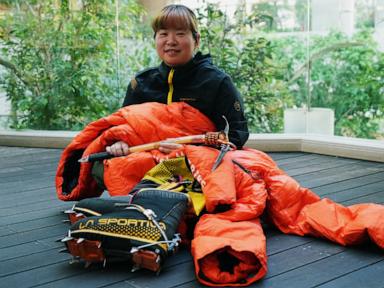
Naoko Watanabe recently became the first Japanese woman to scale all 14 of the world’s 8,000-meter peaks, completing a grueling, multi-year campaign across the Himalayas and Karakoram ranges. While mainstream coverage has painted her achievement as a simple triumph of human spirit and outdoor joy, the reality of high-altitude mountaineering is far darker. Watanabe's success exposes a deeply commercialized, high-risk industry that relies heavily on underpaid Indigenous labor, supplementary oxygen, and extreme environmental degradation. Her journey highlights the sharp divide between old-school alpine purism and the modern, logistics-driven era of peak bagging.
The Illusion of the Solo Climber
The romantic myth of the lone explorer conquering a mountain by sheer willpower is dead. Modern high-altitude mountaineering is an exercise in industrial logistics. To stand on top of K2 or Everest today requires an army of Sherpas, fixing kilometers of nylon ropes, establishing camps, and carrying heavy oxygen cylinders up vertical ice faces.
Watanabe’s achievement cannot be divorced from this massive infrastructure. Western and Asian clients pay tens of thousands of dollars to guiding agencies that orchestrate these expeditions down to the minute. The true engine of these climbs is the high-altitude workers—primarily from the Sherpa ethnic group in Nepal and Balti porters in Pakistan. They take the maximum risk, fixing the lines and breaking trail through avalanche-prone zones before the paying clients ever leave base camp.
This commercial setup has fundamentally shifted what it means to be an elite climber. Historically, mountaineering valued the style of the ascent over the summit itself. Climbing without bottled oxygen, finding new routes, or moving in a lightweight "alpine style" without fixed camps were the hallmarks of greatness. Today, the checklist mentality dominates. Climbing all 14 peaks has become a data-driven race where speed and financial backing often matter more than traditional technical skill.
The Oxygen Equation
An overwhelming majority of modern 8,000-meter summits are achieved using supplementary oxygen. This practice completely changes the physiological reality of the death zone, the altitude above 8,000 meters where the human body cannot survive indefinitely.
Using oxygen effectively lowers the perceived altitude by several thousand meters. It keeps the body warm, sharpens cognitive function, and dramatically reduces the risk of frostbite. Purists argue that using bottled oxygen is akin to using an electric motor during a marathon. Yet, without it, the commercial industry would collapse. The pool of humans capable of climbing all 14 peaks without gas is remarkably small, and the death toll would be unpalatable to corporate sponsors and guiding companies.
The Crowded Dead Zone and Environmental Decay
The rush to complete the 14-peak checklist has created dangerous bottlenecks on the world’s highest mountains. Photos of hundreds of climbers waiting in line at the Hillary Step on Everest or the Bottleneck on K2 are no longer anomalies; they are the seasonal norm.
These crowds create immediate safety hazards. When a climber is forced to wait for hours in a stationary line at 8,500 meters, their oxygen supply dwindles. Hypothermia sets in. Frostbite blackens fingers and toes. In the mountains, delay is a death sentence, and the commercialization of these peaks means that inexperienced climbers who lack the skills to move quickly often block those behind them.
Beyond the human cost, the environmental toll is devastating. The highest camps on Everest and K2 have been described as open garbage dumps.
- Abandoned Tents: Shredded nylon tents left behind by commercial expeditions unable or unwilling to carry them down.
- Human Waste: Feces that remain frozen in the ice for decades, slowly contaminating the water sources of the valleys below.
- Oxygen Canisters: Hundreds of empty metal cylinders littering the South Col and Camp 4.
The "leave no trace" ethos taught in lower-altitude recreation is completely abandoned in the scramble for an 8,000-meter summit. The sheer difficulty of survival at that altitude means that trash removal is a luxury few commercial teams prioritize, despite rising permit fees intended to fund cleanup efforts.
The Shift in Japanese Mountaineering Culture
Watanabe’s achievement marks a significant departure from Japan’s historical relationship with the Himalayas. During the mid-20th century, Japanese climbing clubs operated with military-style discipline. They targeted first ascents and highly technical routes, often accepting high casualty rates as the price of national prestige.
Names like Junko Tabei, the first woman to climb Everest in 1975, came from an era where corporate sponsorship was minimal and expeditions were self-managed, grueling affairs. Tabei faced intense sexism in a male-dominated Japanese climbing culture, yet she pushed forward with minimal reliance on the commercial safety nets available today.
Watanabe represents the modern iteration of the sport: pragmatic, media-conscious, and reliant on global logistics networks. While she speaks of sharing joy and inspiring others, her path required navigating a complex financial landscape of sponsorships and media rights. The narrative has shifted from national honor and technical exploration to personal branding and list completion.
The Ethics of Risk and Indigenous Labor
The deadliest aspect of the 14-peak race is the asymmetrical distribution of risk. For every wealthy or sponsored climber who reaches a summit and returns home to a media tour, multiple low-altitude porters and high-altitude guides face permanent disability or death.
When an avalanche hits the Khumbu Icefall, it is almost always the Sherpas who are caught in it. They are the ones who must pass through the treacherous, shifting ice labyrinth dozens of times per season to set up camp for clients who will pass through it only twice. While life insurance payouts and safety regulations have improved over the last decade due to worker strikes and international pressure, the economic disparity remains stark. A Western or Japanese climber chooses to face the death zone for personal fulfillment; an Indigenous guide faces it because it is the only viable path to economic mobility in a developing nation.
This reality casts a long shadow over any celebration of peak bagging. The joy of the summit is bought with the sweat and blood of a local workforce whose names rarely make the international headlines.
The Commercial Future of the High Peaks
The race for the 14 peaks is evolving into an even more commercialized spectacle. Speed records are broken regularly, not because climbers are getting tougher, but because helicopter logistics have revolutionized the sport. Elite climbers are now flown directly from the base camp of one 8,000-meter peak to the base camp of another, completely skipping the traditional, weeks-long trekking approaches that allowed for natural acclimatization and provided economic support to remote villages along the way.
This monetization of the high peaks shows no signs of slowing down. Governments like Nepal's rely heavily on the millions of dollars generated by climbing permits, creating little incentive to strictly regulate the number of climbers or mandate higher environmental standards. The mountains are treated as finite resources to be mined for prestige and profit.
Watanabe’s completion of the 14 peaks is an undeniable feat of physical endurance and mental stamina. But it should not be viewed through a lens of uncritical celebration. It is a stark reminder of what mountaineering has become: a highly managed, high-stakes industry where the ultimate prize is often a corporate sponsorship, and the true cost is borne by the mountain environment and the people who call those ranges home. Climbers who wish to truly honor these spaces must look past the simple joy of the summit and confront the heavy machinery that put them there.